


Will the explosion of the bond market trigger the next financial tsunami? Wall Street bear Peter Schiff warns: the pressure on US debt will escalate, and the stock market will be “bloodwashed”
The Zhitong Finance App learned that at a time when global investors are keeping an eye on drastic fluctuations in risky assets, well-known pessimistic economist Peter Schiff (Peter Schiff) recently issued a stern warning: the next financial tsunami that will sweep the world will not be the source of turmoil in the cryptocurrency market, but the seemingly uneventful US Treasury bond market.
This well-known investor, who has long been bullish on gold, said bluntly in his latest podcast that the collapse of the US Treasury bond market could trigger a chain reaction, affecting the stock market, real estate, and even cryptocurrencies. He expects that with the simultaneous correction of various types of risk assets, investors will eventually withdraw from these fields and switch to gold for safe haven.
The real collapse will begin in the bond market
Schiff warned that the bond market is already beginning to crack. Currently, the yield on US 10-year treasury bonds is hovering around 4.57%, while the yield on 30-year treasury bonds has surpassed 5%. In his opinion, this is just the beginning; both have the momentum to rise sharply.
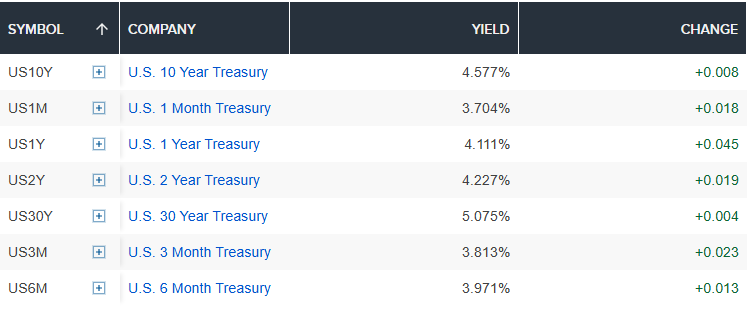
“Higher yields will push up borrowing costs across the board,” Schiff said, which would directly put pressure on stock market valuations and exacerbate the already severe housing affordability crisis. According to Freddie Mac's latest weekly survey, the average interest rate on 30-year fixed mortgages in the US has reached 6.49%, leaving many potential buyers out of the market as a result.
He further analyzed that once real estate falls deeply, the Federal Reserve will be forced to bail out the market, and the bailout measures will mean a new round of increased currency production and greater inflationary pressure.
The Oriental Source of the Bond Market Warning: The Chain Impact of Soaring Japanese Yields
Schiff's concerns about US Treasury bonds are not an isolated voice. Roger Montgomery (Roger Montgomery) of Montgomery Investment Management also issued a similar warning, believing that the US stock market and bond market are in a dangerous collision trajectory.
Against the backdrop of stubborn inflation, US two-year Treasury yields have surpassed the federal funds rate — a technical signal that has accurately predicted the Fed's interest rate hikes every time in the past 30 years. “The Federal Reserve has almost been pushed to a corner. If it hesitates not to raise interest rates, the bond market will experience a more intense sell-off because it lags behind the inflation curve,” Montgomery said.
However, the variables that are more likely to break the fragile balance come from Japan. The yield on Japan's benchmark 10-year treasury bond recently surpassed 2.9%, hitting a 30-year high, and was sold off for nine consecutive trading days, setting the record for the longest continuous decline in nearly 20 years. Although the absolute value of 2.9% is far lower than the 4.57% yield of US bonds, structural changes in Japan's interest rate pattern as the world's third-largest bond market are causing a huge shock across markets.
The core mechanism of this huge shock is Japanese yen arbitrage trading. Over the years, investors have borrowed yen at a very low cost to invest in higher-yielding assets. As the Bank of Japan gradually raised interest rates and vowed to reduce support for the bond market, and Japan's Ministry of Finance directly interfered with the foreign exchange market several times, the financing side of arbitrage trading is being reversed. The August 2024 scene still left lingering feelings in the market: the Bank of Japan's unexpected interest rate hike at the time was compounded by weak US employment data. The rapid appreciation of the yen caused the Nikkei 225 index to plummet 12.4% in a single day, the biggest decline since “Black Monday” in 1987, and the S&P 500 index also fell 8.5% within a few days.
“(At the time) the market stabilized within a week, so this incident was gently debunked as a one-off incident. But that's not the case,” financial commentator Michael Gayed (Michael Gayed) reminded.
Today, the same risk architecture has taken shape again, and the pressure is likely to be even greater. Japanese life insurance companies and pension funds hold 1.2 trillion US dollars in US Treasury bonds, making them the largest group of US debt overseas holders. Meanwhile, in the first quarter of this year, Japanese investors withdrew nearly $30 billion from US government bonds, institutional bonds, and municipal bonds, making the largest quarterly sell-off since 2022.
Albert Edwards (Albert Edwards), a global strategist at Société Générale, issued a soul-searching question about this: “If the 10-year Japanese Treasury yield continues to rise and converges to 4% in the US, do you really think US stocks can maintain a forward price-earnings ratio of more than 20 times? I seriously doubt that.”
How will the market withstand the impact of the bond market?
If the bond market storm actually radiates outward from Japan and spreads to the US through arbitrage trading and the sell-off of US bonds, major global assets will face a drastic repricing.
US stocks and cryptocurrencies are about to face a correction
According to Montgomery statistics, the current rise in US stocks is almost entirely driven by a few artificial intelligence (AI) and semiconductor giants. Excluding the technology, media, and telecom sectors, most stocks in the S&P 500 are already below their February highs. Only about 55% of the S&P 500 constituent stock prices are above the 200-day EMA, and the market's indicators of rising and falling numbers have also turned downward.
Montgomery warned that history showed that this extreme narrowing of width would eventually end in a drastic downward correction. More dangerously, interest spreads on US high-yield corporate bonds are widening, indicating that the credit market is already aware of the pressure on corporate cash flow ahead of time. When arbitrage funds are forced out of high-ranking tech stocks, this fragile balance is likely to collapse instantaneously.
As for the cryptocurrency market, Schiff, who has always been bearish on Bitcoin, once again sharply denied it. Bitcoin has declined by more than 28% during the year, and is still close to falling short of the record high of $12,6080 set in October 2025. Schiff pointed out that this in itself proves that Bitcoin has no safe-haven properties. “I believe that when tech stocks fall, Bitcoin is highly correlated — when tech stocks rise, it doesn't necessarily follow suit, but when tech stocks fall, it falls even worse.”
He also pointed the finger at the hypocrisy of Wall Street institutions. Citibank, Standard Chartered Bank, Bernstein, J.P. Morgan Chase, and Fundstrat gave target prices for Bitcoin ranging from $82,000 to $250,000, but none included them on their balance sheets. More direct evidence comes from the listed company Strategy (MSTR.US). The Bitcoin holder, the world's largest enterprise, headed by Michael Saylor, has recently been forced to sell around $230 million in bitcoins to pay preferred stock dividends. The trading discount on its common stock compared to Bitcoin assets held has been extended to nearly 40%, and the yield of preferred shares as high as 13.7% suggests that investors simply don't believe that Bitcoin can maintain sufficient growth to cover dividends.
Precious metals: the only safe haven from the storm
According to Schiff's deduction, whether the collapse of the bond market causes the Federal Reserve to print money to bail out the market, or whether inflation continues to rise high, the ultimate beneficiaries will be precious metals. After experiencing fluctuations that briefly fell below 4,000 US dollars in June, safe haven funds are currently being re-gathered in assets such as gold and silver, and are also poised to go.
Schiff predicts that the price of silver will reach $200 per ounce, while $50 will evolve into a long-term support level; the price of gold will first rise to $5,000, and eventually point to $10,000. He also believes that as investors gradually accept that high precious metal prices will be the norm in the long term, the valuation of the mining sector will also be re-valued.
“I believe the precious metals market is preparing for a major upturn, while the stock market is ready for a major downturn,” Schiff made it clear.
But in any case, Schiff's assertion has sent a clear signal to investors: the trend of the US Treasury bond market in the next few weeks will be a key litmus test for verifying their judgment.