
 Nasdaq
 華爾街日報
華爾街日報Palfinger AG (VIE:PAL) Doing What It Can To Lift Shares
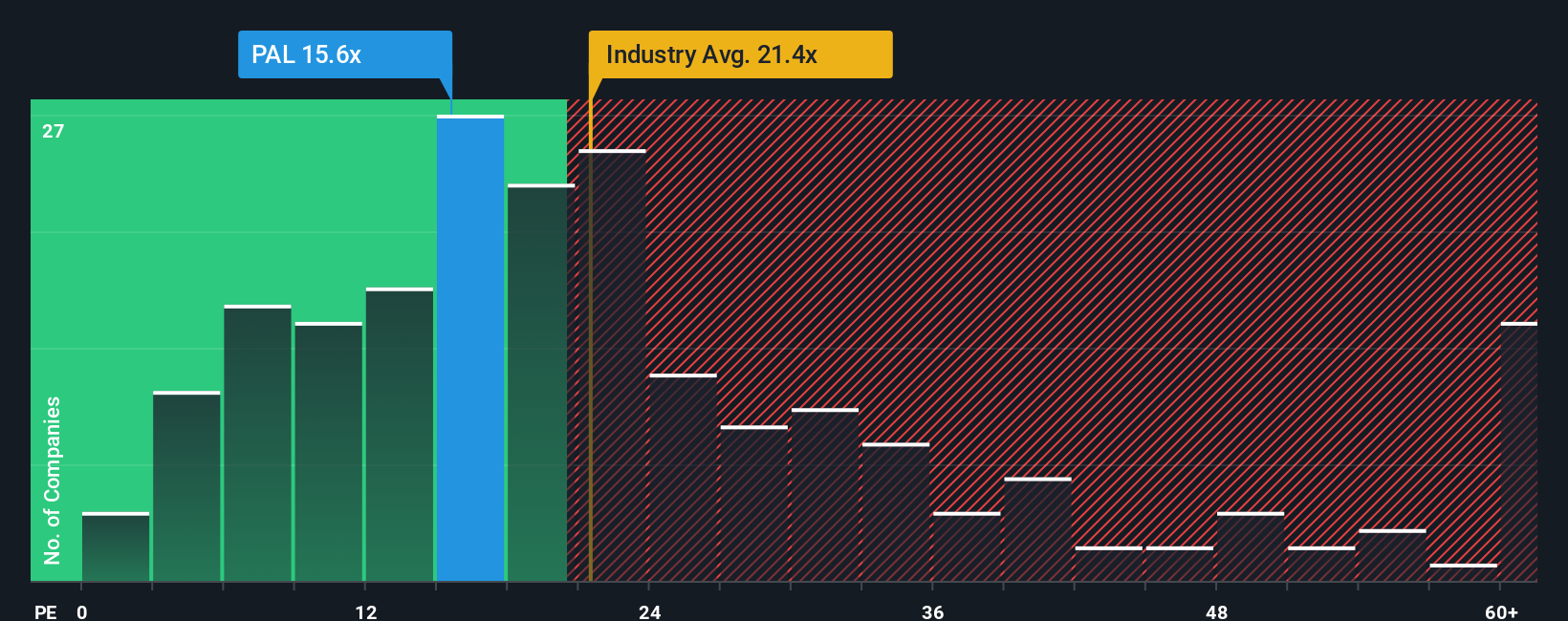
It's not a stretch to say that Palfinger AG's (VIE:PAL) price-to-earnings (or "P/E") ratio of 15.6x right now seems quite "middle-of-the-road" compared to the market in Austria, where the median P/E ratio is around 16x. However, investors might be overlooking a clear opportunity or potential setback if there is no rational basis for the P/E.
With earnings that are retreating more than the market's of late, Palfinger has been very sluggish. It might be that many expect the dismal earnings performance to revert back to market averages soon, which has kept the P/E from falling. If you still like the company, you'd want its earnings trajectory to turn around before making any decisions. Or at the very least, you'd be hoping it doesn't keep underperforming if your plan is to pick up some stock while it's not in favour.
Check out our latest analysis for Palfinger
How Is Palfinger's Growth Trending?
In order to justify its P/E ratio, Palfinger would need to produce growth that's similar to the market.
Taking a look back first, the company's earnings per share growth last year wasn't something to get excited about as it posted a disappointing decline of 26%. Regardless, EPS has managed to lift by a handy 19% in aggregate from three years ago, thanks to the earlier period of growth. Although it's been a bumpy ride, it's still fair to say the earnings growth recently has been mostly respectable for the company.
Shifting to the future, estimates from the five analysts covering the company suggest earnings should grow by 38% over the next year. With the market only predicted to deliver 23%, the company is positioned for a stronger earnings result.
In light of this, it's curious that Palfinger's P/E sits in line with the majority of other companies. Apparently some shareholders are skeptical of the forecasts and have been accepting lower selling prices.
The Key Takeaway
It's argued the price-to-earnings ratio is an inferior measure of value within certain industries, but it can be a powerful business sentiment indicator.
Our examination of Palfinger's analyst forecasts revealed that its superior earnings outlook isn't contributing to its P/E as much as we would have predicted. There could be some unobserved threats to earnings preventing the P/E ratio from matching the positive outlook. It appears some are indeed anticipating earnings instability, because these conditions should normally provide a boost to the share price.
You always need to take note of risks, for example - Palfinger has 2 warning signs we think you should be aware of.
You might be able to find a better investment than Palfinger. If you want a selection of possible candidates, check out this free list of interesting companies that trade on a low P/E (but have proven they can grow earnings).
Have feedback on this article? Concerned about the content? Get in touch with us directly. Alternatively, email editorial-team (at) simplywallst.com.
This article by Simply Wall St is general in nature. We provide commentary based on historical data and analyst forecasts only using an unbiased methodology and our articles are not intended to be financial advice. It does not constitute a recommendation to buy or sell any stock, and does not take account of your objectives, or your financial situation. We aim to bring you long-term focused analysis driven by fundamental data. Note that our analysis may not factor in the latest price-sensitive company announcements or qualitative material. Simply Wall St has no position in any stocks mentioned.