
 Nasdaq
 華爾街日報
華爾街日報Eight figures to understand the energy transformation process in 2025: clean energy is advancing rapidly, and fossil energy is bucking the trend
The Zhitong Finance App learned that for supporters of the energy transition, the challenges of 2025 can be described as one after another: the US clean energy policy has gone backwards drastically, European wind power has experienced a “windless season”, corporate wind power investment has shrunk, and coal power production capacity has rebounded strongly. But the year also nurtured hope — global battery energy storage installations reached record highs, dozens of countries broke records for the share of solar power generation, and sales of electric vehicles continued to rise in major automotive markets.
The following eight charts will sort out the key milestones and developments affecting the global energy transition process in 2025, and list the core data indicators that need to be focused on in 2026 and the future.
China leads the clean energy circuit
China continues to lead the global clean energy development, and ranks first in the world in terms of installed nuclear power, photovoltaics, wind power and biomass energy. Clean electricity production is about to achieve strong growth for the seventh year in a row. According to data from the energy think tank Ember, China's clean power generation increased 15.4% year-on-year in the first 11 months of 2025.
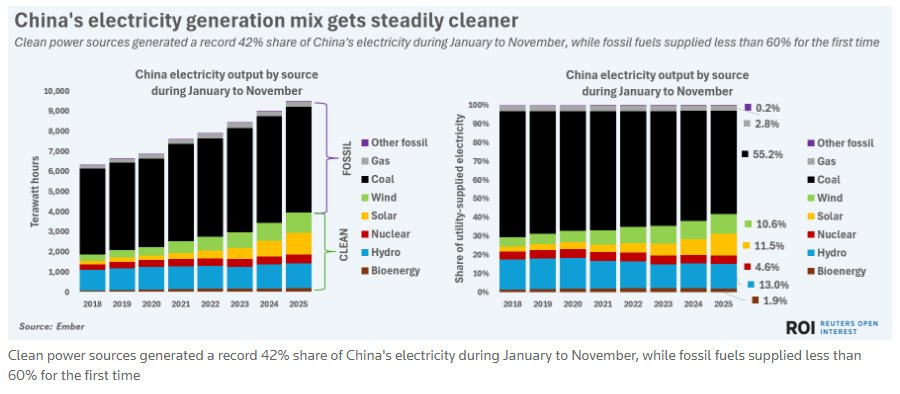
In 2025, the share of clean energy generation in the total electricity supply of the national grid will exceed 40% for the first time, while the share of fossil energy generation will drop to an all-time low.
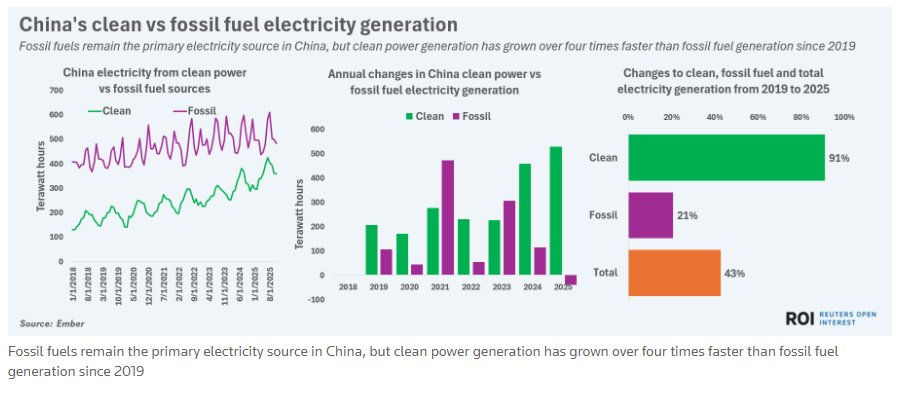
Although fossil energy is still the core pillar of China's power system, since 2019, the growth rate of clean energy generation has reached more than four times the growth rate of fossil energy generation.
Over the next ten years, as China continues to expand the installed scale of photovoltaics, wind power, nuclear power and energy storage, the share of clean energy in the national power generation structure is expected to increase further.
China's clean technology going overseas is also unstoppable. According to customs data compiled by Ember, China's clean technology exports exceeded 180 billion US dollars in the first 10 months of 2025, setting a new record.
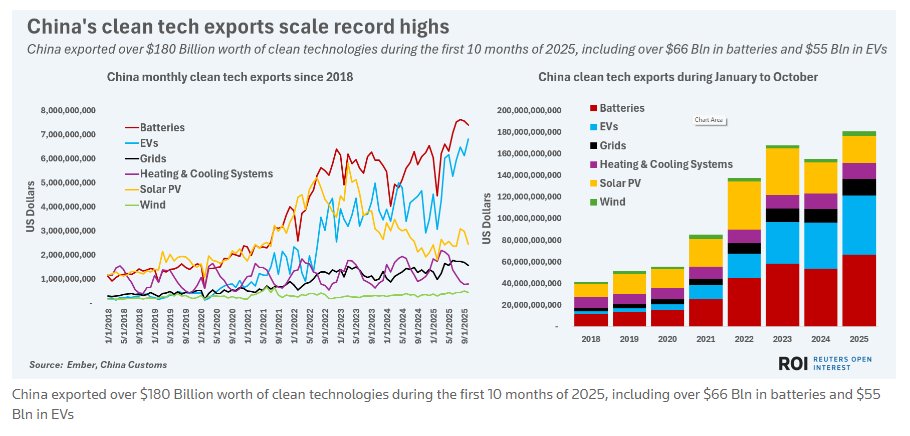
Among them, energy storage systems became the most prominent export category, with sales of nearly 66 billion US dollars; electric vehicle exports followed by about 54 billion US dollars. Exports of power grid equipment and HVAC also set new records, consolidating China's position as the world's core supplier of electrification hardware.
The shift in US policy is dragging down transformation
In stark contrast to China's rapid advance, the US clean energy process was reversed in 2025. The federal renewable energy support policy was abolished during Trump's second term, and tax credits for power developers were drastically cut. This move is expected to seriously affect US clean energy investment in the next few years, thereby further deepening the US power system's dependence on fossil energy.
Although natural gas is still the main source of electricity in the US, the sharp rise in gas prices in 2025 squeezed power plant profits and stimulated the biggest increase in coal power output.
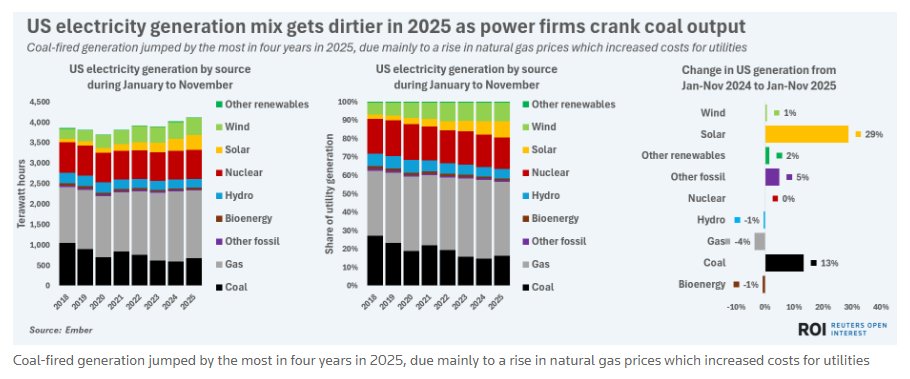
According to Ember data, US coal and electricity production increased 13% year-on-year in January-November, reaching a new high of nearly three years. Since the carbon dioxide emission intensity of coal power far exceeds that of gas and electricity (coal power emits more than 900,000 tons of carbon dioxide per terawatt-hour, gas and electricity is about 550,000 tons), carbon emissions from the US power industry will rise simultaneously in 2025. Total carbon emissions from coal, gas and electricity reached 1,526 billion tons in the first 11 months, an increase of 3% over the same period in 2024, the highest level since 2021.
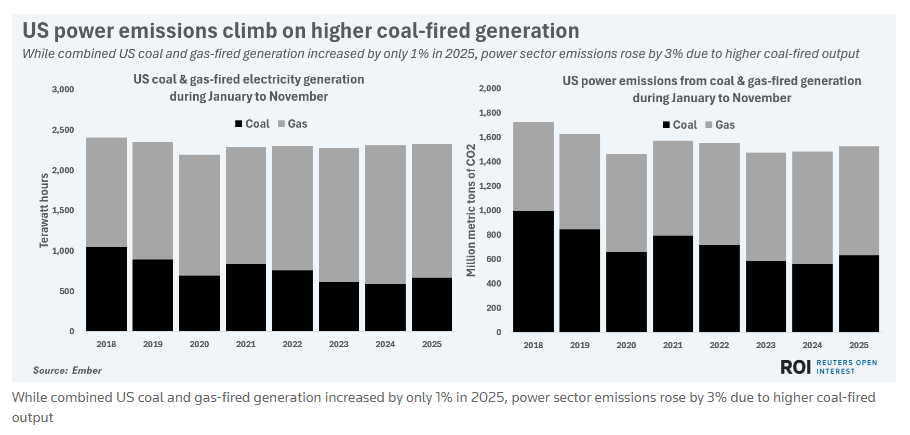
Given that the average annual price of natural gas in the US is expected to be about 50% higher in 2025 than in 2024, utility companies may rely more on lower-cost coal to meet winter demand, which means that pollution levels in the power industry are likely to rise further in 2026 and beyond.
Energy storage explosion and silent revolution
Despite the rise in coal and electricity consumption in the US in 2025, its battery energy storage installation also set a record, aiming to consume surplus wind power. According to statistics from the clean energy data portal Cleanview, the total installed battery energy storage capacity in the US will exceed 39 gigawatts in 2025, an increase of 43% over 2024.
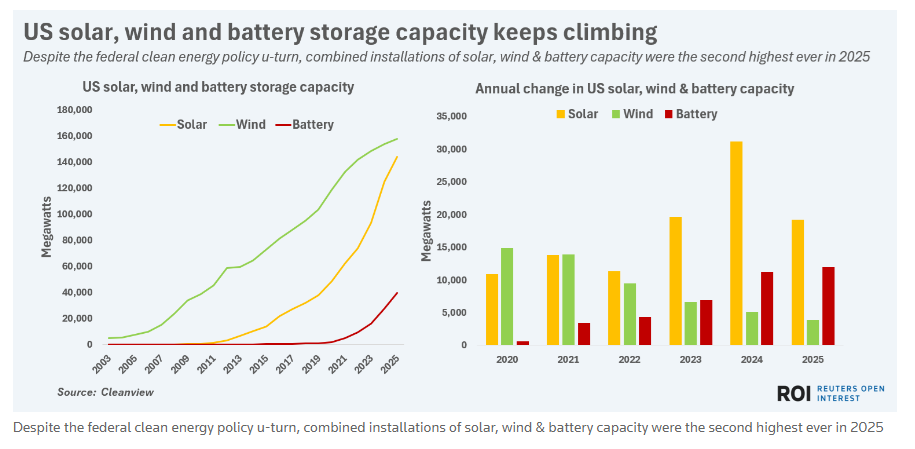
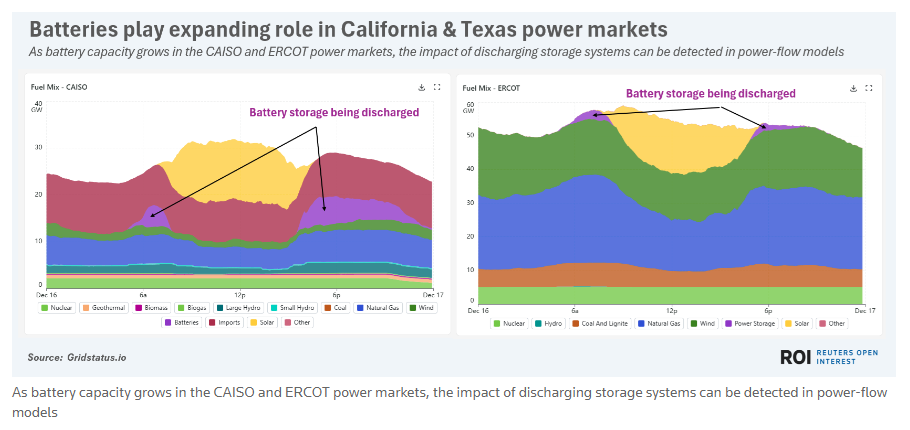
This rapid increase is reshaping the power flow dynamics of critical power grids. New energy storage capacity in California and Texas can substantially change the power supply structure during peak electricity consumption periods.
According to data from the grid status data platform Grid Status, the largest energy storage application market in the US, about 15% to 18% of electricity comes from energy storage systems during peak hours in the evening, which significantly reduces the demand for natural gas and other power sources.
At the Texas Electricity Reliability Commission Grid (ERCOT), an emerging market for energy storage, about 3% of electricity is supplied by energy storage during peak periods. Although this share may seem small, it has already achieved a breakthrough from the level of almost zero a year ago.
Solar energy systems also performed well in 2025, accounting for a new high share of power grids in many countries. China and the US have dominated discussions on solar installed capacity for a long time, but the popularity of solar power generation in recent years has enabled both developed countries and emerging economies to achieve large-scale applications.
In 2025, the share of solar power generation in countries such as Bulgaria, Pakistan, Hungary, and Poland exceeded 20% several times, effectively reducing carbon emissions while reducing electricity costs.
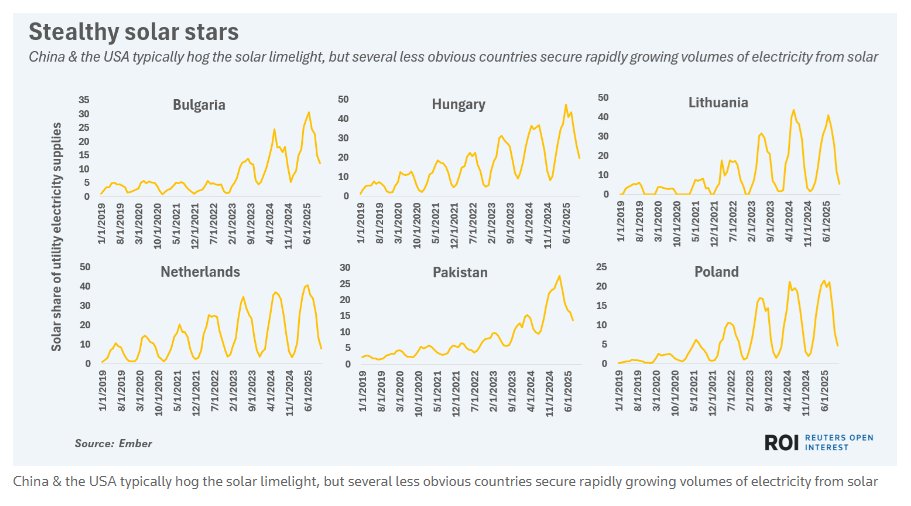
Looking ahead to 2026, the share of solar power generation in more countries is expected to reach a new high. Even with repeated policies in major economies such as the US, this silent energy revolution will inject lasting impetus into the global energy transition.