
 Nasdaq
 華爾街日報
華爾街日報We Think TBS HoldingsInc (TSE:9401) Can Stay On Top Of Its Debt
The external fund manager backed by Berkshire Hathaway's Charlie Munger, Li Lu, makes no bones about it when he says 'The biggest investment risk is not the volatility of prices, but whether you will suffer a permanent loss of capital.' When we think about how risky a company is, we always like to look at its use of debt, since debt overload can lead to ruin. We can see that TBS Holdings,Inc. (TSE:9401) does use debt in its business. But should shareholders be worried about its use of debt?
When Is Debt Dangerous?
Debt assists a business until the business has trouble paying it off, either with new capital or with free cash flow. In the worst case scenario, a company can go bankrupt if it cannot pay its creditors. While that is not too common, we often do see indebted companies permanently diluting shareholders because lenders force them to raise capital at a distressed price. By replacing dilution, though, debt can be an extremely good tool for businesses that need capital to invest in growth at high rates of return. The first thing to do when considering how much debt a business uses is to look at its cash and debt together.
What Is TBS HoldingsInc's Debt?
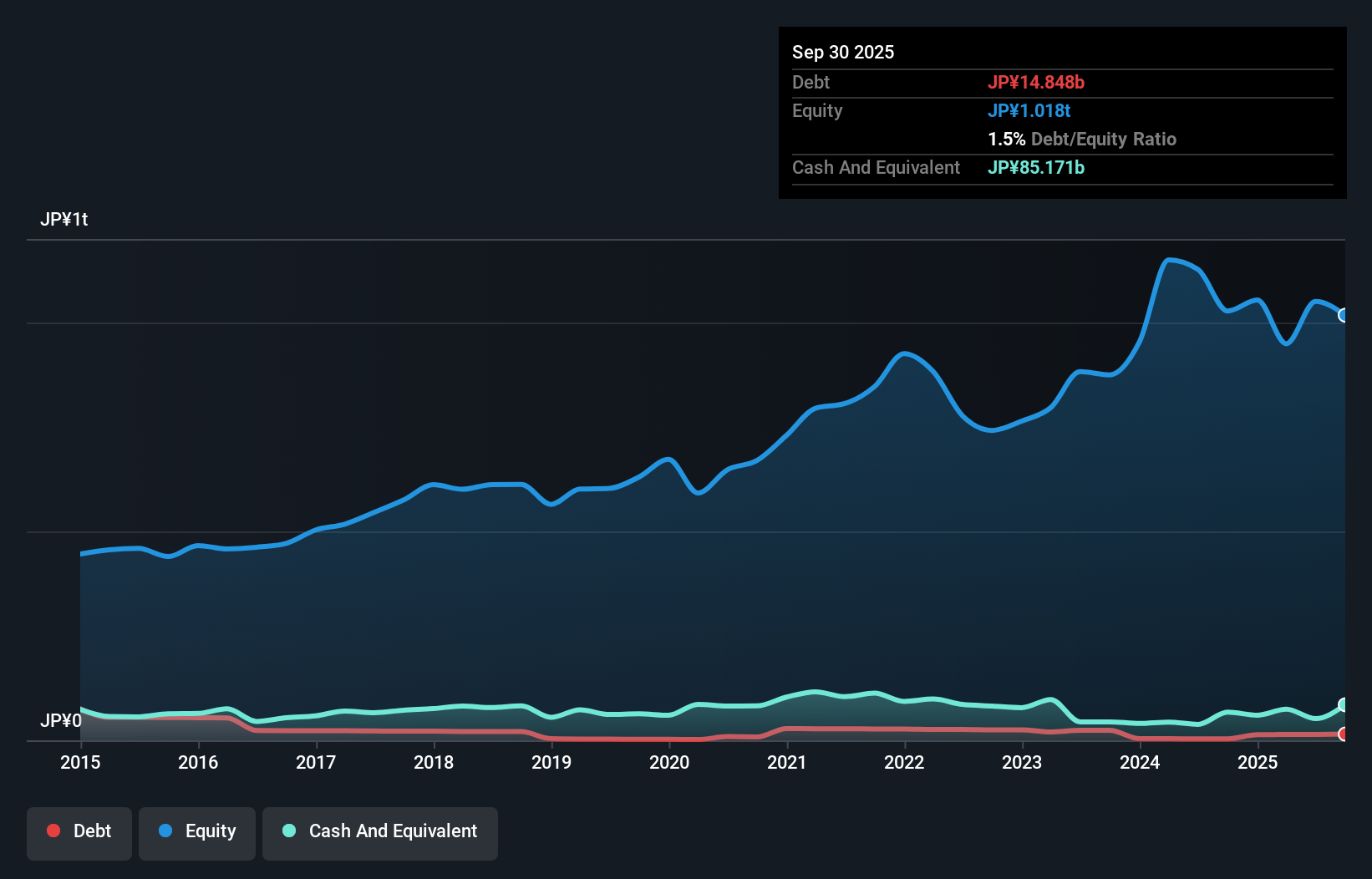
As you can see below, at the end of September 2025, TBS HoldingsInc had JP¥14.8b of debt, up from JP¥3.58b a year ago. Click the image for more detail. However, it does have JP¥85.2b in cash offsetting this, leading to net cash of JP¥70.3b.
How Healthy Is TBS HoldingsInc's Balance Sheet?
We can see from the most recent balance sheet that TBS HoldingsInc had liabilities of JP¥116.0b falling due within a year, and liabilities of JP¥263.2b due beyond that. Offsetting these obligations, it had cash of JP¥85.2b as well as receivables valued at JP¥87.1b due within 12 months. So it has liabilities totalling JP¥206.9b more than its cash and near-term receivables, combined.
TBS HoldingsInc has a market capitalization of JP¥906.1b, so it could very likely raise cash to ameliorate its balance sheet, if the need arose. But it's clear that we should definitely closely examine whether it can manage its debt without dilution. Despite its noteworthy liabilities, TBS HoldingsInc boasts net cash, so it's fair to say it does not have a heavy debt load!
See our latest analysis for TBS HoldingsInc
Also good is that TBS HoldingsInc grew its EBIT at 15% over the last year, further increasing its ability to manage debt. When analysing debt levels, the balance sheet is the obvious place to start. But ultimately the future profitability of the business will decide if TBS HoldingsInc can strengthen its balance sheet over time. So if you're focused on the future you can check out this free report showing analyst profit forecasts.
Finally, a business needs free cash flow to pay off debt; accounting profits just don't cut it. TBS HoldingsInc may have net cash on the balance sheet, but it is still interesting to look at how well the business converts its earnings before interest and tax (EBIT) to free cash flow, because that will influence both its need for, and its capacity to manage debt. In the last three years, TBS HoldingsInc's free cash flow amounted to 24% of its EBIT, less than we'd expect. That weak cash conversion makes it more difficult to handle indebtedness.
Summing Up
While TBS HoldingsInc does have more liabilities than liquid assets, it also has net cash of JP¥70.3b. And it also grew its EBIT by 15% over the last year. So we don't have any problem with TBS HoldingsInc's use of debt. The balance sheet is clearly the area to focus on when you are analysing debt. However, not all investment risk resides within the balance sheet - far from it. We've identified 2 warning signs with TBS HoldingsInc (at least 1 which is significant) , and understanding them should be part of your investment process.
If, after all that, you're more interested in a fast growing company with a rock-solid balance sheet, then check out our list of net cash growth stocks without delay.
Have feedback on this article? Concerned about the content? Get in touch with us directly. Alternatively, email editorial-team (at) simplywallst.com.
This article by Simply Wall St is general in nature. We provide commentary based on historical data and analyst forecasts only using an unbiased methodology and our articles are not intended to be financial advice. It does not constitute a recommendation to buy or sell any stock, and does not take account of your objectives, or your financial situation. We aim to bring you long-term focused analysis driven by fundamental data. Note that our analysis may not factor in the latest price-sensitive company announcements or qualitative material. Simply Wall St has no position in any stocks mentioned.