
 Nasdaq
 華爾街日報
華爾街日報Year-end inventory of the foreign exchange market: the US dollar's “unipolar” ebb down, and a multi-polar monetary order emerged
Since the beginning of this year, the US dollar index has shown an overall downward trend. The index fell sharply in the first half of the year, and although there was a slight rebound thereafter, the overall fluctuation was weak. The trend of the US dollar index is not only affected by factors such as US monetary policy, but also reflects changes in the attitude of global investors towards US dollar assets. As policy uncertainty rises, fiscal constraints strengthen, and dollar asset fluctuations increase, the “aura of privilege” that has long been formed around the US dollar is being repriced, and changes in its trend are also having an impact on the international financial system and the global economic landscape. At the same time, countries' monetary policies are also gradually shifting from coordination in the past to fragmentation and independence.
The US dollar had the greatest influence in the past, but now the international monetary system is moving towards multipolar development. Policy differentiation between central banks in many countries has led to differences in interest rate expectations and changes in exchange rates, which has also had a huge impact on the exchange rates of the US dollar and other currencies.
This year, as the US dollar declined, multiple potential risks gradually became apparent, and the US dollar's “unipolar” position in the international monetary system also wavered. The dollar continues to decline in global reserves. According to data from the International Monetary Fund (IMF), as of the end of the second quarter of 2025, the share of the US dollar in foreign exchange reserves made up of globally disclosed currencies fell to 56.32% from 57.79% at the end of the previous quarter. The share has been below 60% for 11 consecutive quarters, hitting a new low in 30 years.
ECB President Lagarde also said in June this year that due to changes in the composition of global reserve currencies and investors' adjustments in asset allocation, the US dollar's dominant position in international foreign exchange reserves “is no longer so certain.”
Rogoff, the former chief economist of the IMF, said bluntly that from the current US administration weakening the independence of the Federal Reserve and undermining international commitments, to other countries actively constructing alternative cross-border payment systems, the “privilege” of the US dollar dominating the global economy is facing unprecedented challenges.
ECB Governing Council and Bank of Italy President Fabio Panetta also said that the international monetary system may shift from the US dollar to several coexisting global monetary systems. Panetta said that although the US dollar will still be the key currency, the world “may gradually move towards a more multipolar pattern”. This shift may bring greater diversification, but if coordination problems occur, it may also increase volatility and risk of contagion.
In terms of monetary policy, the Federal Reserve and the monetary systems of other countries around the world have shown differences. Many developed countries are divided due to policy differences, developing countries are facing pressure from two-way capital flows, and exchange rate volatility is rising. The overall game in the foreign exchange market has intensified, and the pattern has been reshaped. At the end of the year, the Federal Reserve and the Bank of England cut interest rates one after another, the ECB stood still and even discussed interest rate hikes. The Bank of Japan also raised interest rates, and the path of each country may further diverge in 2026.
The US dollar and the main currency: the hegemon has fallen, and the heroes are fighting for the deer
USD: all the way to the downside
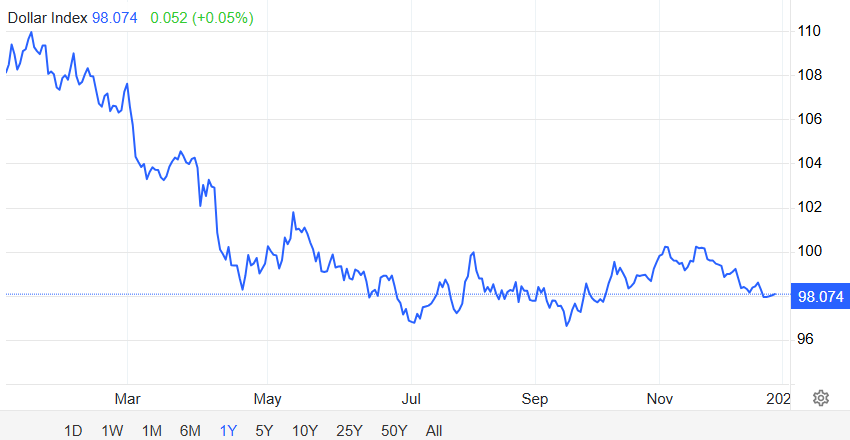
In 2025, the US dollar index experienced a “parabolic” decline. From its strong high at the beginning of the year, it fell sharply and hit a new low for many years. The market continued to hear discussions about the “dollar whale falling.”
The US dollar fell against all major currencies, and the US dollar index as a whole showed a trend of “falling high and fluctuating in the range”. The Bloomberg dollar index fell 9.6%, the biggest annual decline in nearly 9 years.
Specifically, the US dollar index briefly broke through the 110 mark at the beginning of the year, but only for a short time. Since then, it has declined rapidly since 110 points. In February, inflation data rebounded, signs of economic deceleration increased, discussions on the risk of “stagflation” were rekindled, and the dollar came under pressure, starting a downward trend.
Entering the second quarter, due to the impact of tariffs imposed by the US on global trading partners, global uncertainty surged, compounded by market concerns about the US economy facing “stagflation,” and the dollar continued to decline. Market shocks caused by the “equal tariff” policy led to a cumulative monthly decline of more than 4% in the US dollar in April.
In the end, the US dollar index fell 10.8% in the first half of the year, the worst performance for the same period since 1973. Since the second half of the year, market sentiment has abated, and the US dollar's “decline has narrowed” and turned volatile and consolidated.
The weakening of the US dollar is the result of multiple factors resonating, both short-term cyclical causes and deep structural changes.
The impact of tariff policy is significant. Since this year, Trump's tariff storm has swept the world, and changes in global investors' attitudes towards US dollar assets have closely affected the trend of the US dollar index. In April 2025, “equal tariffs” were introduced, greatly weakening the confidence of global investors in dollar assets as a “safe haven.” Tariffs have heightened market concerns about US economic growth prospects and inflation, prompting capital to withdraw from dollar assets.
Uncertainty about the US fiscal year is another negative factor for the US dollar, revealing a deep credit crisis. The financial status and credit of the US government affects the market's confidence in the US dollar. As America's record fiscal deficit and the size of government debt raise concerns, international rating agencies have downgraded the US government's credit rating. Government credit is the cornerstone of a sovereign currency, and its decline will destabilize the dollar. The slump in US bond auctions has also exacerbated the dollar's plight.
It is worth mentioning that after April of this year, interest rates on US bonds were decoupled from the US dollar exchange rate, and there was a rare “double kill” between the US dollar and US debt. Market concerns about US finance have further increased, and trust in US debt has declined, which in turn has led to weak expectations for the US dollar.
For a long time, US Treasury bonds, which were regarded as “safe-haven assets,” were sold off in large numbers after the US introduced “equal tariffs” in April 2025, and the yield remained high at 4% or more throughout the year. The US government made reducing US bond yields an important policy goal, but the yield did not fall but rose, indicating that investors have lost confidence in the US sovereign bond market.
Furthermore, changes in the market's expectations of the Fed's interest rate cut have now become an important factor affecting the short-term fluctuation of the US dollar. On December 10, after the Federal Reserve announced the third rate cut in the year, the US dollar recorded its worst performance in nearly 3 months on that day. The US dollar index closed down 0.43%, the biggest drop since September 16, reflecting the direct pressure on the dollar due to the interest rate cut decision.
The impact of future political factors on the independence of the Federal Reserve's monetary policy is also worth paying attention to. Then-President Trump has publicly criticized Federal Reserve Chairman Powell many times and hinted that his successor will be decided in advance. The market is betting on a more dovish chairman candidate, putting pressure on the dollar.
EUR/GBP: Strong rebound
Euros:
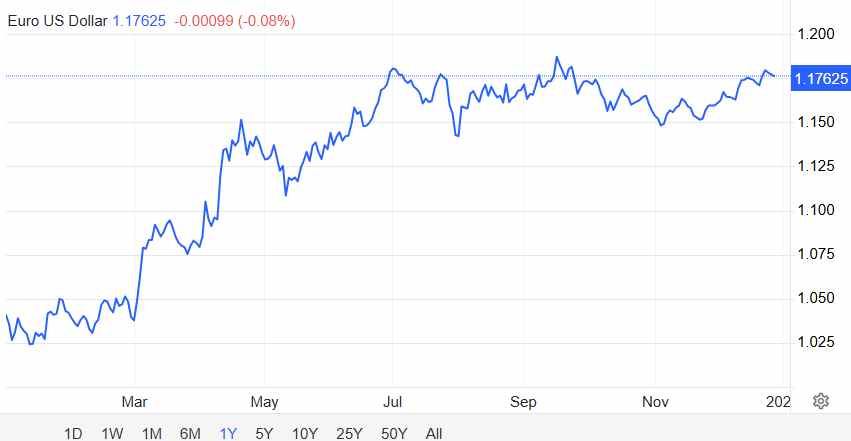
This year, the euro experienced a strong rebound throughout the year. From a 20-year low at the beginning of the year to a sharp rise in the middle of the year, driven by factors such as the weakening US dollar and the return of capital. As of press time, the euro is up 13.5% for the whole year.
At the beginning of 2025, the exchange rate of the euro against the US dollar fell below 1.0177, a new low in 20 years. The loss of this critical support level has caused an uproar in global financial markets. At the time, the Eurozone was under multiple pressures, such as the siphon effect of a strong dollar cycle, structural weakness in the Eurozone economy, and a crisis of trust in governance caused by political turmoil. These pressures are intertwined to push the euro downward.
In March, the situation changed dramatically, and the euro exchange rate began a strong rebound. This reversal is also the result of a combination of factors. Among them, poor monetary policy expectations, strong fiscal stimulus measures, and the rebuilding of the dollar's credit became key forces driving the euro's rebound. The EUR/USD exchange rate continued to strengthen in the second half of the year and remained high.
An important factor affecting the trend of the euro exchange rate is a change in the Federal Reserve's policy. The “comprehensive tariff plan” introduced by the Trump administration has led to a sharp rise in the price of imported goods from the US, changes in market expectations, and a sharp increase in investors' bets on the Federal Reserve's interest rate cut. Interest spreads between the US and Europe have gradually narrowed, driving the reallocation of global capital, and large amounts of capital flowing from the US treasury bond market to Eurozone bonds, driving the recovery of the euro exchange rate.
Eurozone economic data also provided support. In June 2025, the Eurozone inflation rate fell to 2.0%, which is just in line with the ECB's target. The fall in energy prices and the appreciation of the euro led to lower the price of imported goods. The combination of the two contributed to a decline in the inflation rate.
Looking at the US, on the other hand, due to the tariff policy, the core PCE inflation rate is still at a high level. The commodity inflation rate is much higher than the service inflation rate. Imported inflation makes the Federal Reserve more cautious in deciding to cut interest rates. However, the market's expectations for the Fed to cut interest rates have been formed, and this difference in expectations has become a key factor in the strengthening of the euro.
The Eurozone manufacturing industry continues to be sluggish, yet the recovery in the service sector has provided some support to the economy. Differences in manufacturing and consumption between Europe and the US also tilt the exchange rate balance towards the euro.
GBP:
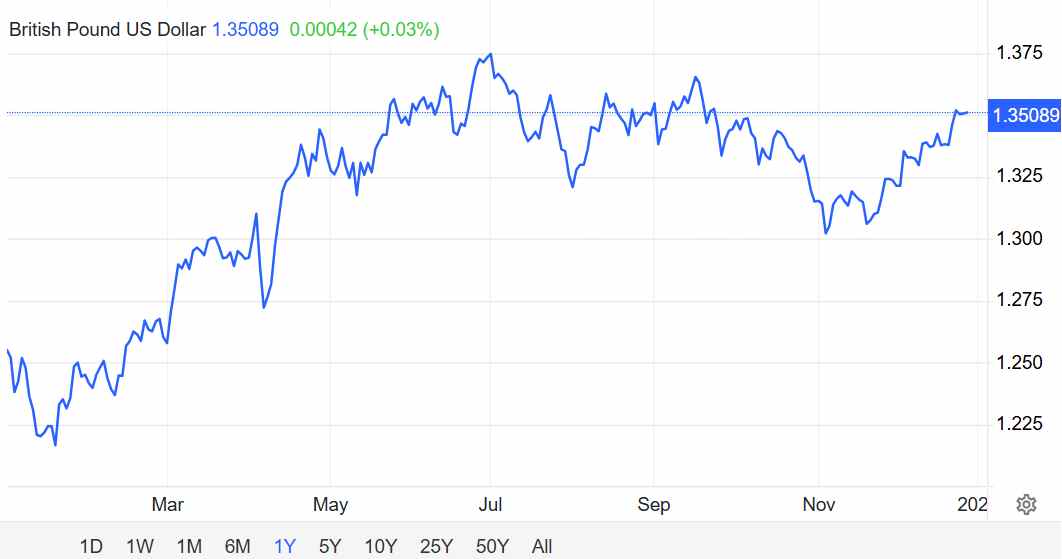
In 2025, the basic trend of the GBP/USD exchange rate can be described as “opening low and going high”.
In January, the GBP/USD exchange rate hit the lowest level of the year: $1.2168 to £1. However, by July, it was the highest level of the whole year: $1.3743 to £1. In the second half of the year, with the upward rebound of the US dollar, the exchange rate of the pound against the US dollar recovered, but remained strong above 1.30 US dollars per pound. By the end of the year, it had basically stabilized at around 1.35 US dollars to 1 pound. Compared to 2023 and 2024, the strength of the GBP/USD exchange rate in 2025 is even more prominent.
The British pound's continued strength is mainly determined by several factors. On the one hand, the fundamentals of the British economy remained strong. In the first half of this year, the growth level of the British economy basically stabilized at the top of the G7, exceeding market expectations, and caused many institutions and industry organizations to continuously raise their economic growth expectations at the end of the year.
Second, the Bank of England is hawkish among all developed countries and organizations. In November, UK inflation fell sharply beyond expectations. Market institutions anticipated that the Bank of England might be one-sided in supporting interest rate cuts.
However, the minutes of the Bank of England's meeting show that out of 9 members of the Bank of England Monetary Committee, 5 members voted to cut interest rates by 25 basis points, while the other 4 members voted to stay on hold, which basically showed an evenly balanced trend. This hawkish vote instead supports the exchange rate of the British pound against the US dollar.
Furthermore, the continued decline in the US dollar index also supported the trend of the British pound.
The yen: ups and downs
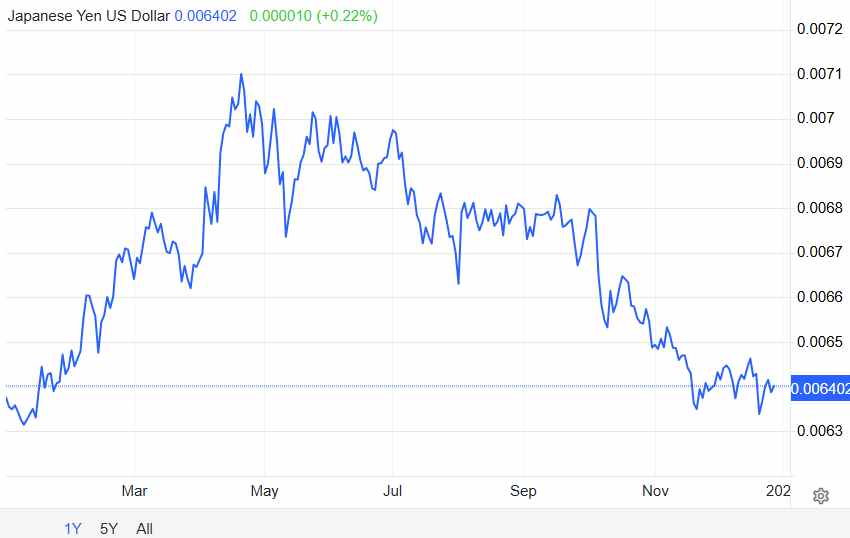
The yen experienced significant fluctuations in 2025. Since this year, after four consecutive years of decline, the exchange rate of the yen against the US dollar has barely risen by about 0.5%, and fell into another storm of depreciation at the end of the year. Previously, the market expected that the Bank of Japan's interest rate hike and the Federal Reserve's interest rate cut would jointly push the yen to reverse, but the actual results were disappointing.
From the beginning of the year to April, under the influence of uncertainty in US fiscal and trade policies, risk aversion in the market once strengthened the yen. The exchange rate of the US dollar against the yen briefly fell below the 140 mark in April. But then, against the backdrop of uncertainty about US President Trump's tariff policy and rising fiscal risks caused by domestic political changes in Japan, the decline lost momentum.
In the middle of the year, the yen experienced turbulence. As Japan's domestic political situation changed and fiscal expansion policies raised concerns, the yen's upward trend was reversed and it returned to the depreciation channel.
At the end of the year, the yen experienced a “storm of depreciation”. Although the Bank of Japan raised interest rates in December, the yen did not rise but fell. At one point, the dollar was close to 158 against the yen, causing a cumulative decline of more than 8% in the second half of the year. The market generally believes that interest rate hikes have been digested ahead of schedule, and there is a “factual sale” market.
As of press time, the dollar is trading around 156.30 against the yen, not far from this year's low of 158.87 — and this level is almost the same as in January at the beginning of the year.
After the Bank of Japan's latest interest rate hike failed to provide a continuous boost to the yen, the voices that are bearish on the yen are getting louder and louder. This further strengthens market views. The structural weakness of the yen cannot be brought to a quick end in the short term.
The market believes that the weak yen is the result of a combination of factors. On the one hand, the market has long anticipated the Bank of Japan's interest rate hike. Analysts wrote in the research report that the Bank of Japan carried out thorough market communication before the current rate hike, traded in advance in the financial market, and stepped out of the “selling facts” market after the interest rate hike was implemented.
Furthermore, the Bank of Japan has not given a clear path for subsequent interest rate hikes, the market has not accumulated strong expectations of the Bank of Japan's interest rate hike, and the momentum for yen appreciation is weakening.
At the same time, the expansionary fiscal policy of the Japanese government has also become an important factor dragging down the yen exchange rate. According to an institutional research report, Japan's real interest rate has been negative for 4 consecutive years, and the government has promoted fiscal expansion, concerns about fiscal sustainability, or raised the risk premium for the yen, which have all led to a weakening of the yen.
Australian Dollar and Brazilian Real: Resource Currencies Benefit
Australian dollar:
BRL:
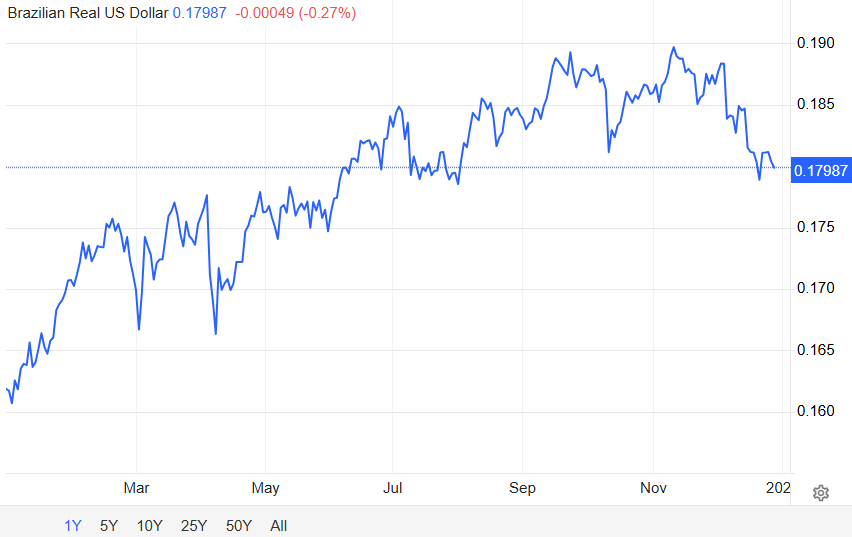
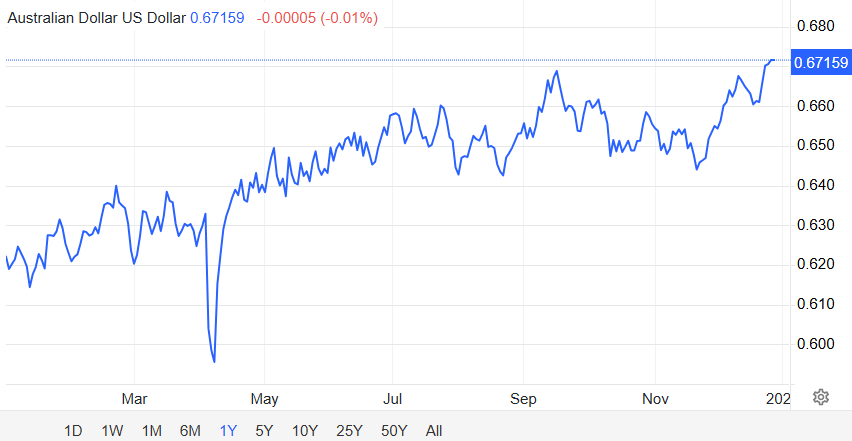
“One whale falls and everything is born”. The weakening of the US dollar has also led to the strengthening of commodities to a certain extent. Some resource-based currencies, such as the Australian dollar and the Brazilian real, have also been boosted as a result.
Since the world's major commodities (such as iron ore, crude oil, agricultural products) are mainly denominated in US dollars, when the US dollar index weakens, it means that it is cheaper to buy these products in other currencies, which will stimulate global demand and thus drive up commodity prices. As a major exporter (Australia exports iron ore and coal; Brazil exports soybeans, iron ore, and oil), its terms of trade have improved, and export revenue has increased dramatically, directly supporting its currency exchange rate.
Apart from being a typical commodity currency, the Brazilian real is also representative of capital flows in emerging markets. A weaker dollar will reduce financing pressure on emerging markets, encourage international capital to flow out of the US, and seek higher yielding assets. Brazil, where fundamentals improve (commodity prices rise), will naturally attract large inflows of capital, thereby boosting the local currency.
However, it is worth mentioning that monetary performance is also diverging. Even if they are also resource currencies, their performance depends on their respective domestic factors. For example, the Australian dollar will also be affected by the Reserve Bank of Australia's monetary policy and major trade partnerships. The Brazilian real, on the other hand, is extremely sensitive to domestic fiscal discipline, political stability, and the level of inflation. Poor domestic policies could completely offset the benefits of commodities.
Furthermore, the MSCI Emerging Markets Currency Index rose more than 6% during the year, making the best annual performance since 2017. The Brazilian real has also risen by more than 10%.
The impact of the dollar trend: one whale falls and everything comes to life
The trend of the US dollar also had a significant impact on other assets. As a non-sovereign physical asset with no credit risk, gold has become the mainstream choice for asset allocation under the “de-dollarization” narrative.
A weak dollar provides important support for the precious metals market. Since global commodities such as gold and silver are denominated in dollars, depreciation of the dollar usually increases their relative appeal. At the end of the year, the price of gold and silver repeatedly reached new highs, provoking significant market reactions. This traditional safe-haven asset is undergoing a historic revaluation.
According to the data, the price of gold surpassed 4,500 US dollars per ounce in an unprecedented manner, rising by more than 70% for the full year of 2025, and its total market value increased by nearly 13 trillion US dollars in just one year. This is not a simple money rotation, but a complete “re-rating” of safety, scarcity, and long-term value by global investors.
Silver's performance was even more astonishing. On December 29, spot silver and COMEX silver futures both broke through $80 per ounce for the first time, reaching new record highs. Among them, spot silver rose nearly 6% in the intraday period, approaching the $84 mark, and increased by more than 160% during the year.
In this round of sharp commodity metal surges at the end of the year, the weak dollar and strong safe-haven in the past failed in Bitcoin. In this macro-feast that was supposed to pave the way for cryptocurrencies, Bitcoin, one of the protagonists, unexpectedly fell silent, and its price hovered in a critical range.
Generally speaking, a weaker dollar will make bitcoins denominated in dollars relatively cheaper, thereby driving more buyers to pour into the market, and the “digital gold” narrative will also gain popularity as risk aversion heats up. However, at the end of this year, when the trend of the US dollar declined, unlike the sharp rise in gold and silver, Bitcoin was stuck in the 85,000-90,000 range, or faced the worst fourth quarter performance in seven years.
The reason for this is that market analysts believe that it may be due to a combination of several major factors. Liquidity became tight at the end of the year, trading volume was thin, and market fluctuations were amplified. At the same time, institutional investors retreated significantly, and there was a net outflow of US spot Bitcoin ETFs for five consecutive trading days. At the same time, external market uncertainties, such as the Bank of Japan's unexpected interest rate hike, may suppress the overall risk appetite of the market. Capital favors assets with high certainty, and flows more towards “clarity” and “certainty,” while Bitcoin offers relatively more “potential.”
At the same time, the trend of the US dollar also has an impact on the stock market. The weakening of the US dollar this year has improved the financing environment in emerging markets and driven capital inflows. The MSCI Emerging Markets Currency Index recorded its best performance since 2017.
Analysts said, “At the economic level, the decline in the US dollar index has eased currency depreciation pressure faced by emerging market countries in recent years, and created conditions for emerging markets to implement more autonomous monetary policies... Interest rate cuts have eased global dollar liquidity and reduced financing costs in emerging markets. This has driven international capital to pour into emerging markets in search of higher returns and allocate assets in emerging markets.”
It is worth noting that the weakening dollar provided a boost beyond expectations for developing countries' stock markets, yet the US stock market, which was already under pressure, is still making great strides. Overseas investors still have doubts about Trump's various policies, but in order to participate in market conditions driven by artificial intelligence themes, they still chose to increase their holdings of US stocks and simultaneously sell dollars through derivatives contracts to hedge against potential exchange rate risks. This characteristic of this year's market, that is, large-scale dollar hedging operations, has been regarded by analysts as a core element, but they also pointed out that it is unlikely that this model will be repeated in the future.
Furthermore, analysts mentioned that fluctuations in the US dollar as the global “anchor of currency” may also amplify the instability of the financial system. Fluctuations in the US dollar exchange rate can easily disrupt the price signals in the capital market and increase financial risks.
Temasek CEO Pillay believes that the weakening of the US dollar is a real problem for non-US dollar investors, forcing global investors to deal with exchange rate risks through increased hedging, thereby driving up market costs.
Monetary Policy: Global central banks move from collaboration to division
Federal Reserve: Three Preventive Interest Rate Cuts Balancing Inflation Control and Stabilizing Employment
The Federal Reserve held 8 meetings in 2025, cutting interest rates 3 times, remaining unchanged 5 times, and cutting interest rates by a total of 75 basis points. This year, the central focus of the Federal Reserve's monetary policy is to find a balance between inflationary pressure and a cooling job market, and to maintain policy independence under tremendous political pressure.
After cutting interest rates by a total of 100 basis points in 2024, the Federal Reserve announced a 25 basis point reduction in the federal funds rate target range on September 17, 2025, to 4.00%-4.25%. This is the first rate cut in 2025, marking a restart of the easing cycle after being suspended in December 2024.
At this time, the US job market was significantly weak, and the August non-farm payrolls data was far lower than expected, which was the main reason for this interest rate cut. At the same time, the Federal Reserve also needs to balance the risk of inflation. Although inflation is still high, the decision-making balance is beginning to lean towards protecting employment.
Since then, since the September meeting, the Federal Reserve has continued to cut interest rates at the October and December policy meetings. Until September, the central task of the Federal Reserve was to assess the uncertainty brought about by the “equal tariff” policy, and to wait and see between inflationary stickiness and signs of economic slowdown. After September, weak employment data became the dominant factor, driving it to start preventive interest rate cuts.
On October 30, the Federal Open Market Committee (FOMC), the decision-making body of the Federal Reserve, issued a statement saying that current indicators show that economic activity has been expanding at a moderate pace. Employment growth has slowed this year, the unemployment rate has risen slightly, and the inflation rate has risen since the beginning of the year, and is still at a high level. In view of changes in risk balance, the committee decided to lower the federal funds rate target range by 25 basis points. Meanwhile, the FOMC decided to end the reduction in the overall size of securities holdings on December 1, that is, “end the downsizing.”
At the December policy meeting, the Federal Reserve once again cut interest rates by 25 basis points as scheduled. In the short term, the risk of inflation is biased upward, and the risk of employment is biased downward. The situation is full of challenges. The move helped stabilize the labor market and return inflation to a 2% downward trend after the impact of tariffs subsided.
At the same time, however, internal differences intensified, and 3 out of 12 voting committee members voted against it, the most since 2019. The “bitmap” predicts that interest rates will be cut once next year (25 basis points), in line with the September forecast. However, 6 policymakers believe that interest rates should not be cut at this meeting, and 7 people expect not to cut interest rates next year. This is significantly lower than the current forecast of mainstream institutions in the market (interest rates are expected to be cut 3 times in 2026). Despite this, “table expansion” has boosted the market, and liquidity support will be provided to the market by restarting and expanding the balance sheet through reserve management debt purchase programs.
Powell said that since September, the adjustment of the Commission's policy position has kept it within neutral expectations, which enables them to better determine the extent and timing of further policy interest rate adjustments based on the latest data, changing economic prospects, and risk balance.
Bank of Japan: Going against the current and raising interest rates
While other central banks around the world were busy cutting interest rates, the Bank of Japan held 8 meetings, raised interest rates 2 times, remained unchanged 6 times, and raised interest rates by a total of 50 basis points. In January and December, the Bank of Japan raised interest rates twice, stayed on hold during the April-October meeting, and lowered economic growth expectations.
The interest rate hike at the beginning of the year was in line with market expectations. It was a continuation of the 2024 austerity path, and was digested ahead of schedule by the market. The market reaction was relatively calm, setting the tone for a slow contraction throughout the year.
From April to October, the Bank of Japan kept interest rates unchanged for six consecutive meetings and was cautious. The yen ended its strength at the beginning of the year and entered a long depreciation channel, falling more than 8% against the US dollar in the second half of the year.
Among them, on the one hand, expectations fell short, and expectations of an “early interest rate hike” expected by the market subsided, causing the yen to be sold off. On the other hand, there are external risks, concerns about US trade policy, etc., which make the central bank afraid to act easily.
At the end of the year, the Bank of Japan decided at the monetary policy meeting on December 19 to raise the policy interest rate from 0.5% to 0.75%. This move brought Japan's policy interest rate to the highest level in 30 years.
In terms of economic assessment, the Bank of Japan pointed out that the Japanese economy as a whole is currently showing a “moderate recovery trend,” but some parts are still weak. The labor market continues to be tight, and corporate profits remain high overall, even considering the impact of tariff policies.
Based on the progress of labor negotiations in spring and first-line information from the head office and various branches, the central bank believes that “enterprises will continue to raise wages steadily next year, and the risk of active wage setting being interrupted is expected to be low.”
Since the Bank of Japan decided to end the negative interest rate policy in March 2024 and raise the policy interest rate from negative 0.1% to the 0 to 0.1% range, the Bank of Japan has been working to explore the normalization of monetary policy under the leadership of Governor Kazuo Ueda. Against the backdrop of continued inflation and continued negative real interest rates in Japan, investors' expectations for the Bank of Japan's interest rate hike continued to rise.
Regarding the future policy path, the Bank of Japan said that since actual interest rates are still “significantly negative,” a relaxed financial environment will continue to support economic activity. If the economic and price prospects set out in the October 2025 outlook report are realized, the central bank “will continue to raise policy interest rates and adjust the degree of monetary easing as economic activity and prices improve.”
Bank of Japan Governor Kazuo Ueda said that if prices rise in line with expectations, “it is quite possible that interest rate hikes will occur at the right time” in the future.
Europe's two largest central banks: interest rate paths diverge
The monetary policy paths of the ECB and the Federal Reserve in 2025 are markedly divided. In this cycle of interest rate cuts, the ECB began cutting interest rates before the Federal Reserve, and after the Federal Reserve began cutting interest rates in September of this year, the ECB has already suspended interest rate cuts.
In the first half of 2025, the ECB cut interest rates 4 times, 25 basis points each time in January, March, April, and June, for a total of 100 basis points. However, after June of this year, the ECB switched from a “interest rate cut model” to a “suspended interest rate cut model,” and until the last monetary policy meeting in December, it chose to “stand still.”
Ultimately, at the end of the monetary policy meeting in December, the key deposit mechanism interest rate remained at 2%, and the main refinancing rate and marginal loan interest rate remained at 2.15% and 2.40%, respectively.
Successive interest rate cuts in the first half of the year were based on several major reasons. On the one hand, they were to continue to consolidate inflation and continue to advance towards the ECB's 2% target level. On the other hand, it is a response to the uncertainty that may be caused by the “equal tariff” policy proposed by the US Trump administration. Over time, however, the risks and uncertainties of Trump's tariff policy have decreased. Meanwhile, inflation in the Eurozone also remained at a relatively ideal level, providing the ECB with more flexibility and space for monetary policy adjustments.
In this year's monetary policy path, the ECB reflects the characteristic of “not setting a pre-determined interest rate path and making adjustments based on data.” The ECB said it will adopt a method based on data and decided on a meeting by meeting to determine an appropriate monetary policy position, and will not promise a specific interest rate path in advance.
In March, the ECB chose to cut interest rates by 25 basis points. At the time, ECB President Lagarde said that the ECB was unable to provide a clear path on interest rates. At the June monetary policy meeting, the ECB announced a 25 basis point cut in interest rates. Lagarde said that the ECB is in a good position. The policy (interest rate cut) cycle is nearing its end, and the ECB has performed quite well in dealing with inflation. This statement is thought to suggest that interest rate cuts will be suspended. Since July, the bank's subsequent monetary policy meetings have all been “on hold”, and this policy stance continued until December.
At this point, the ECB once again emphasized that interest rate decisions will be based on its assessment of inflation prospects and risks, while taking into account newly obtained economic and financial data as well as the dynamics of potential inflation and the strength of monetary policy transmission. In the current situation where inflation is falling back and the economy is improving, the market is even proposing the possibility of raising interest rates.
Unlike the European Central Bank, the Federal Reserve and the Bank of England have both switched to easing policies one after another this year. The Bank of England cut interest rates 4 times throughout the year, with a total of 100 basis points. It held 8 meetings, cut interest rates 4 times and remained unchanged 4 times. The cumulative interest rate cut was 100 basis points. The year-end benchmark interest rate was 3.75%.
The Bank of England and the European Central Bank showed differences in policy path. Interest rates were cut by 100 basis points throughout the year, but the pace was “fast first, then slow,” and there were major internal differences in every decision. For example, the decision to cut interest rates in December was passed by a narrow margin of 5 to 4.
Compared to America's dominant control rhythm, the UK's interest rate cut is more like a passive response. Currently, although the UK's 3.2% inflation rate is higher than the 2% target, it continues to decline. Service sector inflation and wage growth are slowing at the same time, compounded by economic weakness, and the central bank is forced to cut interest rates to ease the pressure on domestic demand.
There is also a reason for the Bank of England's prudence. The contradiction is Britain's stubborn inflation and weak economy. Although inflation fell from a high level, 3.2% at the end of the year was still well above the 2% target, limiting the room for the Bank of England to cut interest rates drastically and rapidly.
Future outlook: the US dollar's “unipolar” breaks the continuing polarization of interest rate paths in various countries
The Federal Reserve is expected to cut interest rates once next year, and the dollar bull market cycle may be nearing its end
Looking ahead to the dollar in the future, many institutions believe that the downward trend in the US dollar index will continue in 2026. According to the consensus forecast compiled a few days ago, more than 6 large investment banks generally expect that the US dollar will continue to weaken against major currencies such as the euro, yen, and the pound, and that the US dollar index may fall by another 3% by the end of 2026. According to J.P. Morgan's analysis, the risks facing the US dollar clearly outweigh the factors supporting its strengthening.
Deutsche Bank's foreign exchange research team further analyzed that as economic growth and asset returns in other regions pick up, the advantage of the US dollar may further weaken, which may mean “the long dollar bull market cycle of this century is nearing its end.”
Some researchers believe that the core factors currently affecting the US dollar come from two aspects. One is the fundamentals of the US economy, and the other is the Federal Reserve's monetary policy. The US labor market began to weaken marginally in 2025, which required the Federal Reserve to switch to a more relaxed monetary policy, but at the same time, the level of domestic inflation in the US is still relatively high, and excessive easing may trigger the risk of secondary inflation. Against the backdrop of a slowdown in employment coexisting with inflationary pressure, uncertainty about the direction of the Federal Reserve's policy has clearly increased. The extent of monetary policy easing will have a great impact on the trend of the US dollar index.
Furthermore, the market is concerned that the Federal Reserve leadership may change to a dovish candidate in 2026, which may weaken monetary policy independence and trigger more aggressive easing expectations, thereby weakening the dollar.
It is worth mentioning that some analysts said that the current US economy and monetary policy are fraught with many contradictions. On the one hand, the government tends to use a “weak dollar” to complement the tariff policy to enhance the competitiveness of the local industry and guide the return of the manufacturing industry; at the same time, it is also trying to dilute the actual debt burden through depreciation of the local currency.
On the other hand, maintaining the strong position of the US dollar is essential to attract international capital and guarantee its financial dominance. However, this conflicting state of demand from many parties may further exacerbate the fluctuation in the trend of the US dollar.
However, analysts also emphasized that currently it is impossible to simply conclude that the US dollar is definitely weakening.
Analysts said that after cutting interest rates by a cumulative total of 75 basis points in 2025, the market's expectations for a sharp interest rate cut in 2026 have clearly narrowed, and the Federal Reserve may enter the “slow interest rate cut” phase. At the same time, the inflationary effects of the tariff policy may gradually become apparent, increasing the cost of living or limiting further easing of monetary policy, forming some support for the US dollar. Furthermore, due to the US government shutdown in October, the release of some key economic data was delayed. The market remained on the sidelines for a short period of time, and the US dollar showed a consolidated pattern. If inflation picks up later or economic data improves, the Federal Reserve slows down the pace of interest rate cuts, and there is still a possibility that the US dollar will rebound in stages.
Analysts say that in the long run, against the backdrop of a disorderly global trade order and financial order, the credit of the US dollar weakens, and the world may gradually shift from a single dependency on the US dollar to a demand for multiple monetary systems and multiple asset allocations. In this process, other international currencies may usher in a window of development, and gold may also become a scarce asset that countries pursue. The fluctuating credit of the US dollar and whether other international currencies can play a greater role will become an important variable in the evolution of the global economic landscape.
In terms of future status, the US dollar will still be the main currency in the foreseeable future, but its absolute dominance will decline, and currencies such as the euro and renminbi will share international monetary functions, and this process will be slow and tortuous.
In terms of the Federal Reserve's policy, it is expected that this year's conflict between employment and inflation will continue until next year. In the past year, the Federal Reserve, while achieving the dual goals authorized by Congress, namely maximizing employment and price stability, fell into a situation of conflict rare since the period of stagnation in the 70s of the last century. This situation has triggered deep internal differences that have not been seen in the Federal Reserve for many years. The most direct reflection is the members' tit-for-tat opposition to interest rate policy. This trend of disagreement is expected to continue until 2026.
Looking ahead to 2026, Fed officials expect to cut interest rates only once more next year. Although the job market continues to cool down, officials believe that this weakness has not reached the point where an urgent response is needed. Meanwhile, the inflation rate is still above the policy target of 2%. Officials expect US economic growth to pick up in 2026, driven by both the fiscal stimulus brought about by the tax bill and the economic rebound effect after the government shutdown ended.
Furthermore, in 2026, the Federal Reserve will host its first change of chairman in eight years. Outsiders generally expect that the president will nominate someone who favors a low interest rate policy as the new chairman. Even so, if the inflation rate continues to be high, the new chairman will still face quite a few challenges if he wants to push for a consensus on interest rate cuts.
Wilmer Sith, bond portfolio manager at Wilmington Trust, said that differences within the Federal Reserve will continue in 2026. If the new chairman tries to force interest rate cuts and other members of the committee clearly oppose it, then the probability of opposition at the meeting may rise further.
The Bank of England “goes slower and slower” and the ECB does not rule out interest rate hikes
This month, the Bank of England and the European Central Bank announced their last interest rate resolution for 2025, both in line with previous expectations. At the same time, the differences in the policy paths of the two major European monetary policy institutions are becoming more and more pronounced.
The Bank of England cut interest rates for the fourth time this year, pointing out that although inflation is still above target, “it is expected to fall back more quickly to near target in the near future.” Although the next move may still be to cut interest rates, the next move will be more difficult to judge.
Faced with the Bank of England's guidelines, economists gave an interpretation and forecast for next year. It is generally expected that the Bank of England will slow down the path of cutting interest rates.
KPMG currently anticipates that the Bank of England will only cut interest rates twice next year. Yael Selfin, KPMG's chief economist in the UK, pointed out that after the last rate cut in August, Governor Bailey had to cast another decisive vote. “The Monetary Policy Committee is clearly divided over the risk balance of the inflation outlook, which will make it more difficult to reach agreement on further interest rate cuts next year,” she said.
Ruth Gregory, Britain's Deputy Chief Economist at KITU Macro, also believes that there are “clear signs” that the Commission believes there is no need for further drastic cuts in interest rates. Gregory stated, “This shows that once interest rates fall to 3.50%, further interest rate cuts by the Monetary Policy Committee will require more convincing evidence.”
On the ECB's side, even after the recent central bank decision announced that the three key interest rates remain unchanged, the bank is optimistic about the future economic outlook. The Eurozone economy is expected to grow at 1.4% in 2025, higher than the 1.2% forecast in September. At the same time, the economic growth forecast for 2026 was raised to 1.2%, exceeding the previous forecast of 1.0%, and the 2027 and 2028 forecasts were kept at 1.4%.
In terms of inflation, the ECB predicts that the overall inflation rate for 2025-2028 will generally fluctuate in a narrow range around the 2% policy target. There are also no clear guidelines on the policy path, reaffirming “reliance on data, decision by meeting”, and “no prior commitment to adopt a specific interest rate path.”
ECB President Lagarde said, “We don't have an established interest rate path. I know everyone would like some forward-looking guidance. But in the current situation, in the face of the level of uncertainty we are facing, we are simply unable to provide forward-looking guidance.”
Looking ahead to 2026, it is unlikely that the euro will continue to rise. It is expected that the euro will rise and then fall against the US dollar, maintaining an overall fluctuating trend. The agency forecast center is 1.2, and the fluctuation range is 1.1-1.2.
Analysts say the euro will still benefit from factors such as narrowing interest spreads, concerns about the independence of the Federal Reserve, and fiscal spending expectations. The pattern of monetary policy differentiation continues, and the convergence logic between Europe and the US still favors the euro. Eurozone inflation has now basically stabilized at 2%, and the ECB's interest rate cut cycle has almost come to an end. Meanwhile, under downward pressure from employment, the Federal Reserve's interest rate cut cycle continues.
Meanwhile, Germany is expected to continue to expand fiscal spending to boost domestic demand and hedge against structural problems such as the continued decline in industrial competitiveness. Positive expectations for economic growth may benefit the euro.
The pound, on the other hand, may face multiple challenges. The pound may have benefited passively from the decline in the US dollar in the early days, but given that the UK is still facing many challenges, the pound is expected to return to weakness in the end.
In the medium term, the pound faces challenges such as fiscal difficulties, central bank interest rate cuts, and political turmoil. In terms of financial difficulties, low growth, high interest rates, and high benefits have made debt problems more and more prominent. Meanwhile, political uncertainty still exists. The Stammer administration is facing multiple crises such as financial difficulties, differences within the party, and sluggish public opinion. Market expectations for the Prime Minister's resignation and political change are heating up again, which may put pressure on the British pound again.
The Bank of Japan is cautious in its path, and the structural weakness of the yen may be difficult to reverse
Currently, major financial institutions are generally pessimistic about the future of Japan, believing that their structural weakness may be difficult to reverse in 2026. Institutions such as J.P. Morgan Chase, BNP Paribas, and Fukuoka Financial Group predict that the dollar may reach the 160-165 range against the yen by the end of 2026. Factors driving this judgment include the still huge spread between the US and Japan, negative real interest rates, and continued capital outflows. These institutions believe that as long as the Bank of Japan continues to adopt progressive austerity and the risk of fiscally driven inflation persists, this trend will be difficult to reverse.
Junya Tanase, Japan's chief foreign exchange strategist at J.P. Morgan Chase, said, “The fundamentals of the yen are quite weak, and there won't be much change next year.” He gave one of Wall Street's most pessimistic predictions. It is expected that the USD/JPY exchange rate will reach 164 by the end of 2026. He pointed out that cyclical forces may further harm the yen next year, and the impact of the Bank of Japan's tightening policy will be weakened as the market takes higher interest rate expectations into other regions.
At the same time, the resurgence of arbitrage trading has once again become a factor suppressing the yen. Japan will also face pressure from capital outflows. Net purchases of retail investors investing in overseas stocks through investment trusts have been hovering around a ten-year high. Analysts believe this trend may continue until 2026 and continue to suppress the yen. Furthermore, capital outflows at the corporate level may be the driving force behind the depreciation of the yen for a longer period of time.
The Federal Reserve will also put on outward pressure. Tohru Sasaki, chief strategist at Fukuoka Financial Group, believes that the Federal Reserve has basically completed the cycle of cutting interest rates. If the market starts to fully take this into account, it will also be another factor driving up the USD/JPY exchange rate.
However, there are still some yen observers who are convinced that as the Bank of Japan continues to promote policy normalization, the yen will strengthen in the longer term. Goldman Sachs Group anticipates that within the next ten years, the yen may eventually rise to the level of 1 US dollar to 100 yen, but it also admits that there are multiple negative factors in the short term.
At the same time, Japan is also struggling to cope with a new round of depreciation of the yen, but government intervention may make it difficult to change the long-term trend. Analysts said, “The sharp depreciation of the yen is a 'double-edged sword' for the Japanese economy, but the rapid depreciation of the exchange rate will have more negative effects.” Judging from the current trend of the yen exchange rate, the yen has not yet reached the point at the time of the last intervention by the Japanese authorities against the US dollar. Currently, the Japanese authorities mainly intervene orally. If the yen exchange rate is extremely one-sided and rapidly fluctuates, there is also a possibility that the Japanese authorities will directly intervene.
Markets don't know what the Bank of Japan thinks next. Overnight index swaps show that the market has yet to fully price the Bank of Japan's next rate hike, which is expected to be until September at the earliest. Meanwhile, inflation remains above the Bank of Japan's target level of 2%, which continues to put pressure on Japan's treasury bonds.
Unlike Europe and the US, although Japan's economy is currently weak, what binds its central bank more directly and more urgently is the country's high treasury debt problem. The agency believes that after the interest rate hike is implemented, the Bank of Japan may find itself in a dilemma and may not necessarily be as hawkish as expected.
Morgan Stanley said that if the Bank of Japan adopts more hawkish policies, such as raising interest rates faster to support the yen, it may cause the price of Japanese treasury bonds to fall and the yield to rise. Conversely, if the Japanese treasury bond market is to remain stable, it may not be as hawkish as needed to support the yen.
Institutional research reports indicate that the central bank is expected to raise interest rates once in early 2026, but it is expected that it will continue to be cautious in the future. Salary negotiations are expected to show positive developments in early 2026, and the Bank of Japan may still raise interest rates by 25 basis points. At the same time, considering the growing issue of the independence of the Federal Reserve, the dollar may be expected to decline in stages against the yen.
However, given that Japan's neutral interest rate level is low and uncertainty is high, and the new Japanese government's policy proposition has brought new variables, the Bank of Japan may intend to protect the continuity of the “wage-price” positive cycle and avoid raising interest rates too early and too fast to hinder companies' wage increases and residents' willingness to spend. It is expected that the Bank of Japan's subsequent policy actions will remain slow, and arbitrage trading is expected to return again. The weak situation of the yen is still difficult to change.
Goldman Sachs believes that with the normalization of the Bank of Japan's policies, the yen will eventually rise to around 100 in the next ten years, but it also admits that there are many negative factors recently. Against the backdrop of structural weakness that is difficult to repair in the short term, the yen's downward path does not seem to have come to an end.