
 Nasdaq
 華爾街日報
華爾街日報Daiki Axis (TSE:4245) Is Paying Out A Dividend Of ¥12.00
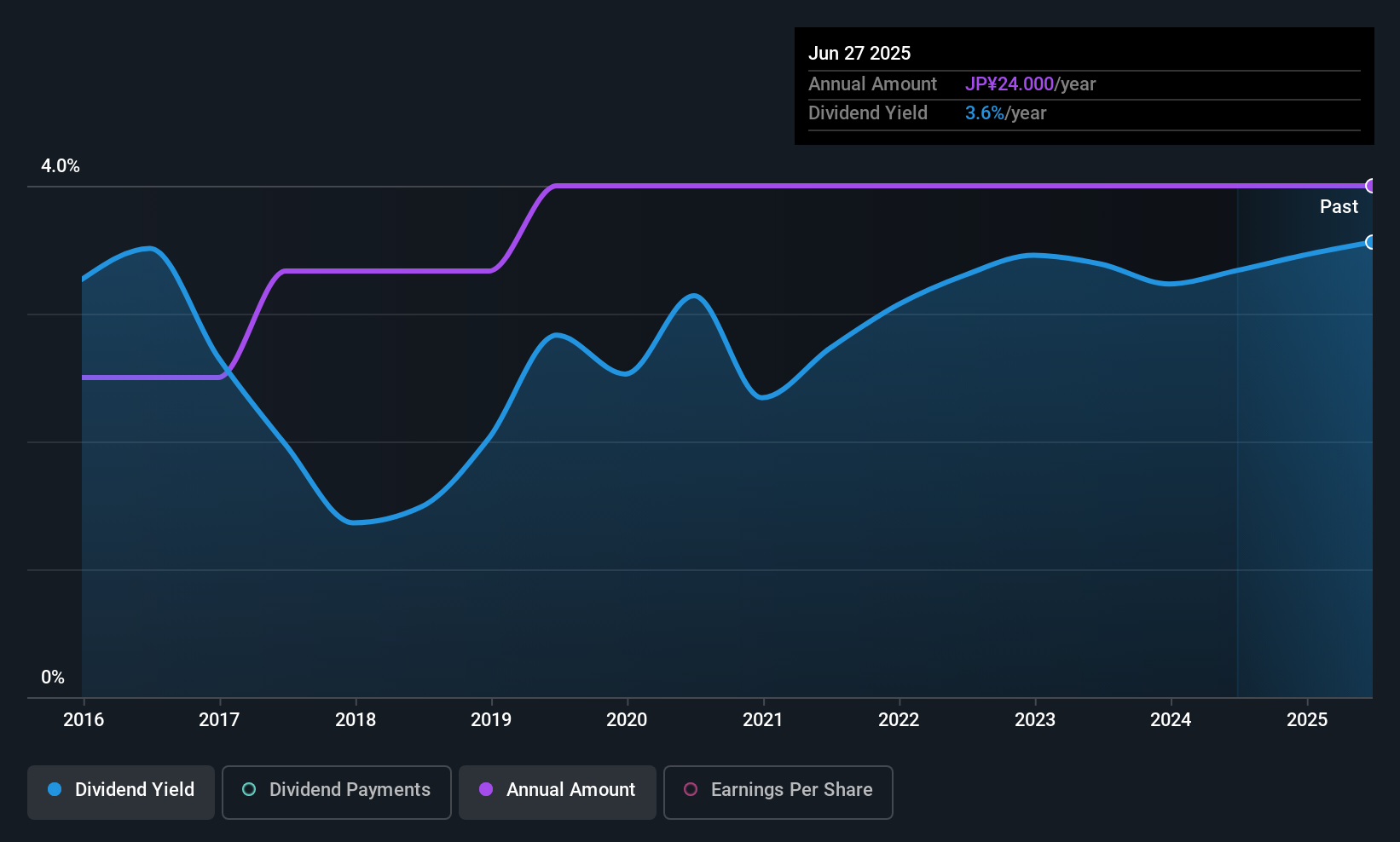
Daiki Axis Co., Ltd.'s (TSE:4245) investors are due to receive a payment of ¥12.00 per share on 31st of March. This makes the dividend yield 3.4%, which will augment investor returns quite nicely.
Daiki Axis' Projections Indicate Future Payments May Be Unsustainable
If the payments aren't sustainable, a high yield for a few years won't matter that much. Based on the last payment, the dividend made up 94% of cash flows, but a higher proportion of net income. This indicates that the company could be more focused on returning cash to shareholders than reinvesting to grow the business.
EPS is set to fall by 20.8% over the next 12 months if recent trends continue. Assuming the dividend continues along recent trends, we believe the payout ratio could reach 174%, which could put the dividend under pressure if earnings don't start to improve.
See our latest analysis for Daiki Axis
Dividend Volatility
The company has a long dividend track record, but it doesn't look great with cuts in the past. Since 2015, the dividend has gone from ¥15.00 total annually to ¥24.00. This implies that the company grew its distributions at a yearly rate of about 4.8% over that duration. It's encouraging to see some dividend growth, but the dividend has been cut at least once, and the size of the cut would eliminate most of the growth anyway, which makes this less attractive as an income investment.
Dividend Growth Potential Is Shaky
With a relatively unstable dividend, it's even more important to evaluate if earnings per share is growing, which could point to a growing dividend in the future. Daiki Axis' earnings per share has shrunk at 21% a year over the past five years. Such rapid declines definitely have the potential to constrain dividend payments if the trend continues into the future.
The Dividend Could Prove To Be Unreliable
In summary, while it's good to see that the dividend hasn't been cut, we are a bit cautious about Daiki Axis' payments, as there could be some issues with sustaining them into the future. The payments are bit high to be considered sustainable, and the track record isn't the best. This company is not in the top tier of income providing stocks.
Companies possessing a stable dividend policy will likely enjoy greater investor interest than those suffering from a more inconsistent approach. Still, investors need to consider a host of other factors, apart from dividend payments, when analysing a company. To that end, Daiki Axis has 5 warning signs (and 3 which are a bit unpleasant) we think you should know about. Looking for more high-yielding dividend ideas? Try our collection of strong dividend payers.
Have feedback on this article? Concerned about the content? Get in touch with us directly. Alternatively, email editorial-team (at) simplywallst.com.
This article by Simply Wall St is general in nature. We provide commentary based on historical data and analyst forecasts only using an unbiased methodology and our articles are not intended to be financial advice. It does not constitute a recommendation to buy or sell any stock, and does not take account of your objectives, or your financial situation. We aim to bring you long-term focused analysis driven by fundamental data. Note that our analysis may not factor in the latest price-sensitive company announcements or qualitative material. Simply Wall St has no position in any stocks mentioned.