
 Nasdaq
 華爾街日報
華爾街日報Counterpoint Research: Despite Persistent Tariff Issues, US Smartphone Shipments Increased Slightly YoY in Q3 2025
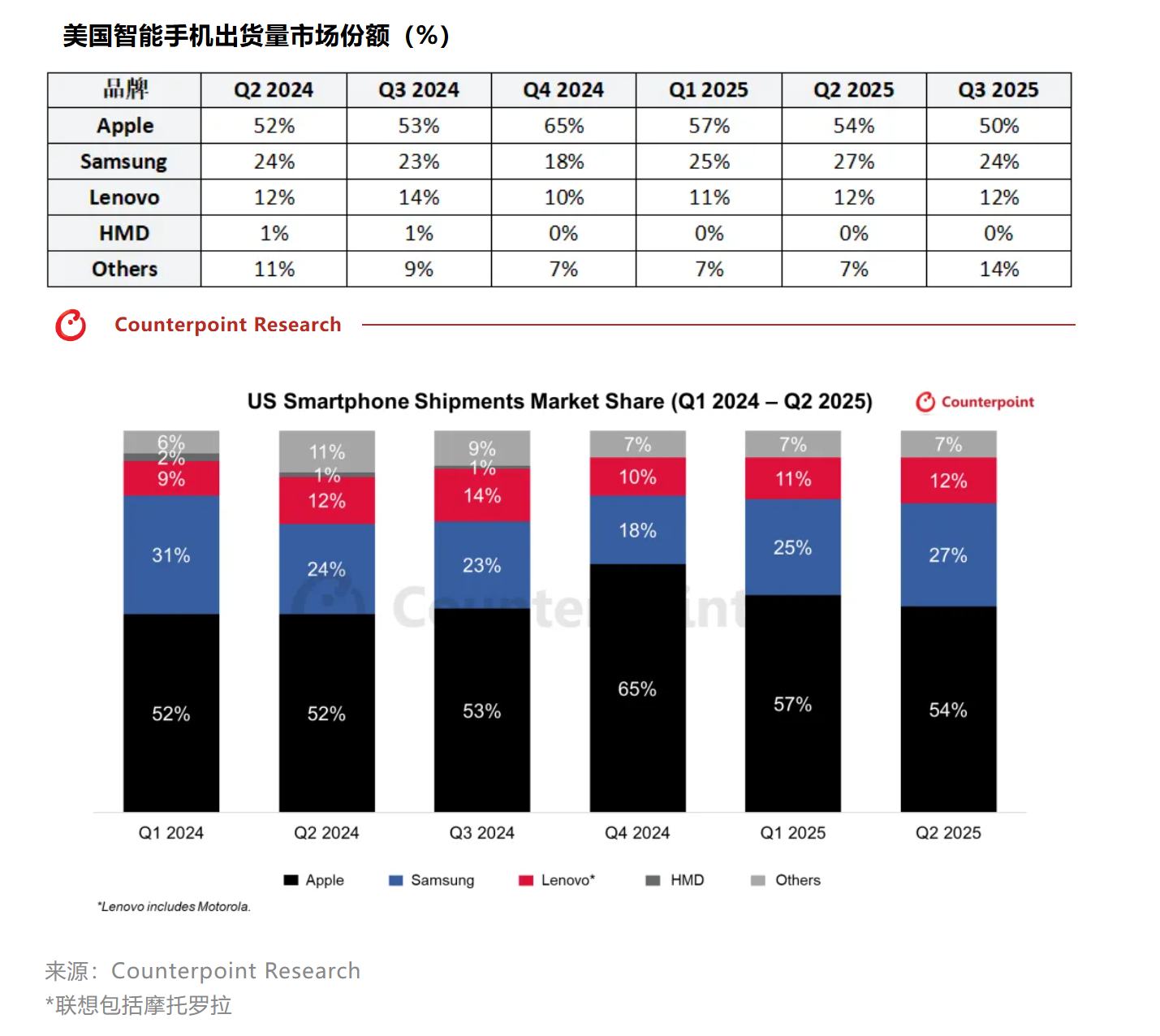
The Zhitong Finance App learned that Counterpoint Research published an article stating that despite continuing tariff issues, US smartphone shipments in Q3 2025 still increased slightly year-on-year. Although imports from China have declined, imports from regions such as Vietnam and India have increased, leading to an increase in overall shipments this quarter. Apple's share of shipments declined year over year and month over month, but due to the strong performance of the iPhone 16e at the beginning of the year, the smartphone brand's annual shipments continued to grow. Shipments of the iPhone 17 series have remained stable, but they are also being challenged by strong demand. Samsung increased slightly by 1 basis point year over year, but fell 3 basis points from month to month, mainly due to Google's strong year-over-year and month-on-month growth. Due to weak demand for prepayments due to macroeconomic and political factors, Motorola's performance weakened in Q3, and its share declined year over year.

Market highlights
Despite US tariffs announced in April, US smartphone shipments increased 2% year over year in Q2 2025. Although imports from China have declined, imports from other regions such as Vietnam and India have increased, leading to an increase in overall shipments.
As the increase in Android shipments this quarter was higher than that of iOS systems, Apple's share of shipments declined year-on-year and month-on-month.
Samsung achieved double-digit year-on-year growth, increasing its share by 3 basis points to 27% thanks to increased shipments of high-end models.
Motorola achieved double-digit market share for the fifth consecutive quarter, driving shipment growth by putting pressure on rivals in the prepaid market and launching the RAZR 2025 series early in May (July last year).
HMD announced its exit from the US market, creating new share opportunities for other smartphone brands.

Market highlights
Smartphone shipments increased 9% year over year in Q1 2025, mainly due to early preparation to avoid potential tariffs, particularly in March.
Driven by the launch of the iPhone 16e and early delivery before April, Apple's Q1's share of shipments reached a record high of 57%.
Samsung's share fell to 25% from 31% in Q1 2024, partly due to an increase in Apple shipments while S25 shipments weakened year over year.
Motorola's Q1's share of shipments also reached an all-time high of 11%, mainly due to the early launch of the G Series in 2025 and improved positioning in the prepaid market, particularly HMD's continued sluggish performance in this field.

Market highlights
In Q4 2024, US smartphone shipments fell 9% year over year, and demand continued to be affected by low upgrade rates and long upgrade cycles.
Apple's year-on-year decline was 5%. The iPhone 16's performance was weaker than expected, and the delayed release of Apple Intelligence also affected shipments.
Samsung declined 4% year over year, mainly due to a slowdown in demand for prepayment in Q4, while demand for high-end devices declined slightly year over year.
Motorola's shipments increased 4% year over year, mainly due to its prepaid market positioning over other smartphone brands such as HMD — the latter's declining market share.
Google grew 1%, as the Pixel 9 series had 4 models, more than the 2 models in the Pixel 8 series, driving up total device shipments.

Market highlights
In Q3 2024, US smartphone shipments fell 6% year over year, mainly due to weak demand for prepaid and postpaid channels.
Apple fell 5% year over year, and sluggish sales affected its quarterly performance.
Samsung dropped 13% year over year, as its Z series was released in July of this year, and the first products arrived in June.
Motorola surged 21% year over year, driven by the improved performance of the Moto G Play 2024 model in the prepaid market, which triggered the largest change in market share among major smartphone brands.
Google grew 19% year over year because the Pixel 9 series was released earlier than the Pixel 8 series, which was released in October last year.
