


3 European Transport Stocks Investors Are Watching As Airfares Rise
Jet fuel is eating into airline budgets, ticket prices are under pressure to climb and some carriers are already failing, which pushes more travellers to think twice about flying. That shift in habit can open gaps for other listed transport operators that do not burn jet fuel and do not rely on airports at all. This piece walks through three European rail and coach stocks exposed to that trend and explains why they may warrant closer attention at this time.
The companies covered below are a sample set, and the full screen on Simply Wall St surfaced 3 more European long distance rail and coach operators with similarly credible investment stories that are not discussed here. To see the complete picture, identify potential gaps in your portfolio and analyze liquidity, quality and segment exposure in one place, head straight to the European Long-Distance Rail and Coach Transport Benefiting from Airfare Inflation screener.
Mobico Group (LSE:MCG)
Overview: Mobico Group runs large scale bus, coach, rail and shuttle services across the UK and continental Europe, giving travellers a non aviation option for long distance journeys as airfares climb.
Operations: Mobico generates most of its revenue from ALSA on £1.5 billion, with meaningful contributions from UK Coach on £304 million and WeDriveU on £424 million.
Market Cap: £270 million
Mobico Group matters for this screener because its long distance coach and rail routes sit in the path of travellers rethinking short haul flights. The analyst consensus Narrative on Simply Wall St states that the current focus is on how its international division may reshape profitability.
The continued repositioning of Mobico Group toward ALSA led international growth, together with double digit EBIT margins at ALSA and revenue growth of more than 10% in the latest 15 month period, highlights a larger mix of higher margin earnings supporting group profitability and return on capital.
The key factor for investors is how an unresolved pressure on Mobico Group's future cost base may develop.
That unresolved pressure is exactly what the full narrative for Mobico Group unpacks, showing how profit mix, capital needs and route economics could be quietly accelerating Mobico Group's next chapter.

Getlink (ENXTPA:GET)
Overview: Getlink operates the Channel Tunnel between France and the UK, running vehicle shuttles, rail freight and related cross‑Channel services that can substitute for short‑haul flights when airfares rise.
Operations: Getlink generates most of its revenue from Eurotunnel on €1.2b, with further income from ElecLink on €340 million and Europorte on €182 million.
Market Cap: €11.2b
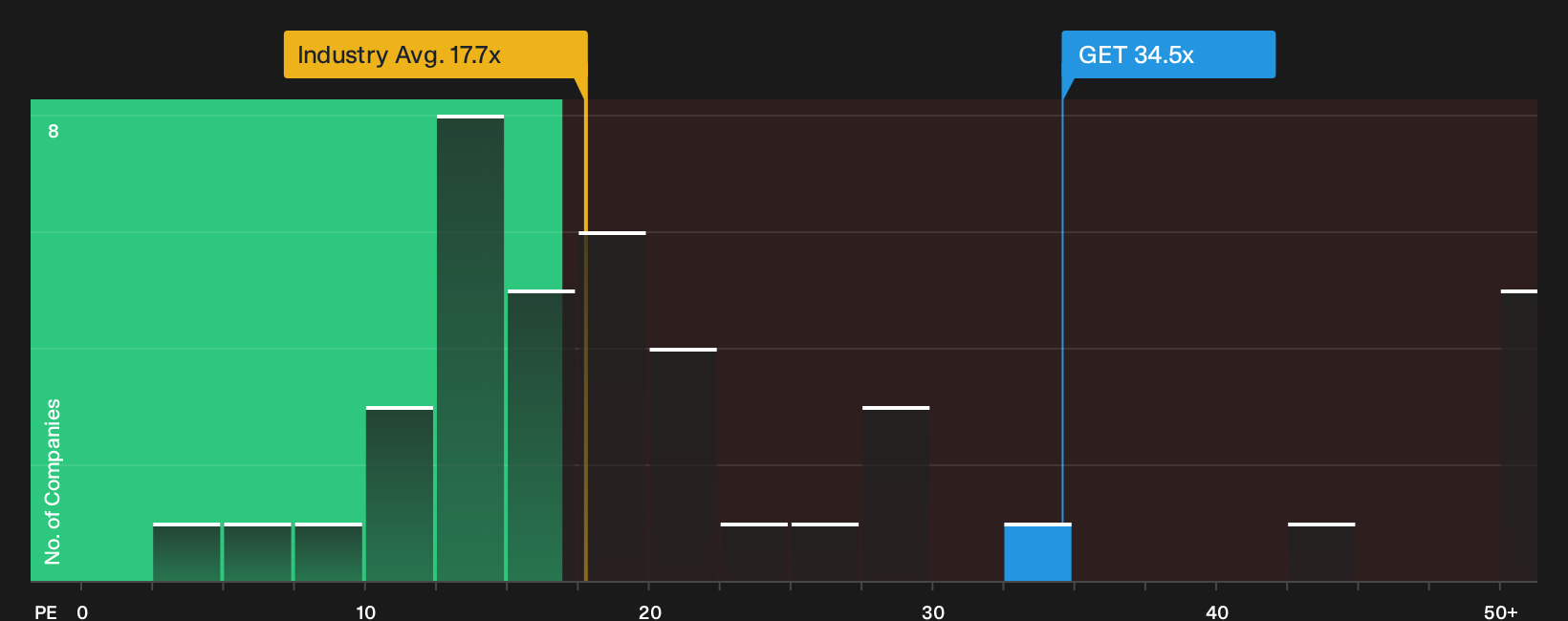
Getlink provides direct exposure to cross‑Channel rail and vehicle traffic at a time when jet fuel costs are pressuring airlines and nudging some travellers toward train and shuttle options instead. However, the stock already trades on a P/E of 34.5x and relies heavily on debt funding, so a significant amount depends on how this pressure ultimately affects pricing power and cash flow resilience.
With that kind of multiple and leverage on the table, review the 2 key rewards and 2 important warning signs (1 is major!) to see what might be driving Getlink’s valuation gap.
FNM (BIT:FNM)
Overview: FNM is an Italian transport and infrastructure group providing rail, motorway and mobility services that give travellers alternatives to short European flights.
Operations: FNM earns almost all of its €863.77 million revenue in Italy, led by Highways on €354 million and Railway Infrastructure on €323 million.
Market Cap: €188 million
FNM matters for this airfare inflation screen because its mix of rail, local mobility and motorway assets in Northern Italy can attract travellers and freight that shift away from higher cost short haul flying. In addition, the analyst consensus Narrative on Simply Wall St highlights one project stream that could reshape how that opportunity feeds into long term earnings quality.
Hydrogen distribution projects along the motorway network position FNM to benefit from the gradual decarbonization of heavy and light transport. These projects open new high value fueling and service revenue streams that can enhance long term EBITDA growth.
The real swing factor is how one evolving demand pattern interacts with that infrastructure build out and feeds through to future margins.
That margin question is exactly what the full narrative for FNM unpacks, showing where hydrogen projects, capital intensity, and passenger demand could be quietly accelerating FNM’s long term earnings story.

Seeking Alternatives Before The Crowd?
Fresh ideas move first. Breakout themes gain momentum while investors hesitate, and under the radar stories get caught once prices start flying. Screen what matters now and get in early.
- Spot early trend leaders before headlines catch up by scanning the 5 high quality undiscovered gems. If you skip this, you may simply observe other investors benefiting from the move.
- Focus on resilient cash generators while weaker balance sheets face pressure through the curated list of solid balance sheet and fundamentals (9 results). Without this, you may end up concentrating on later-stage momentum instead.
- Position around growing AI demand by zeroing in on the hand picked 53 AI infrastructure stocks. Without using this, you might overlook potential infrastructure opportunities.
Have feedback on this article? Concerned about the content? Get in touch with us directly. Alternatively, email editorial-team@simplywallst.com