


What UBS Group Doubters Got Wrong
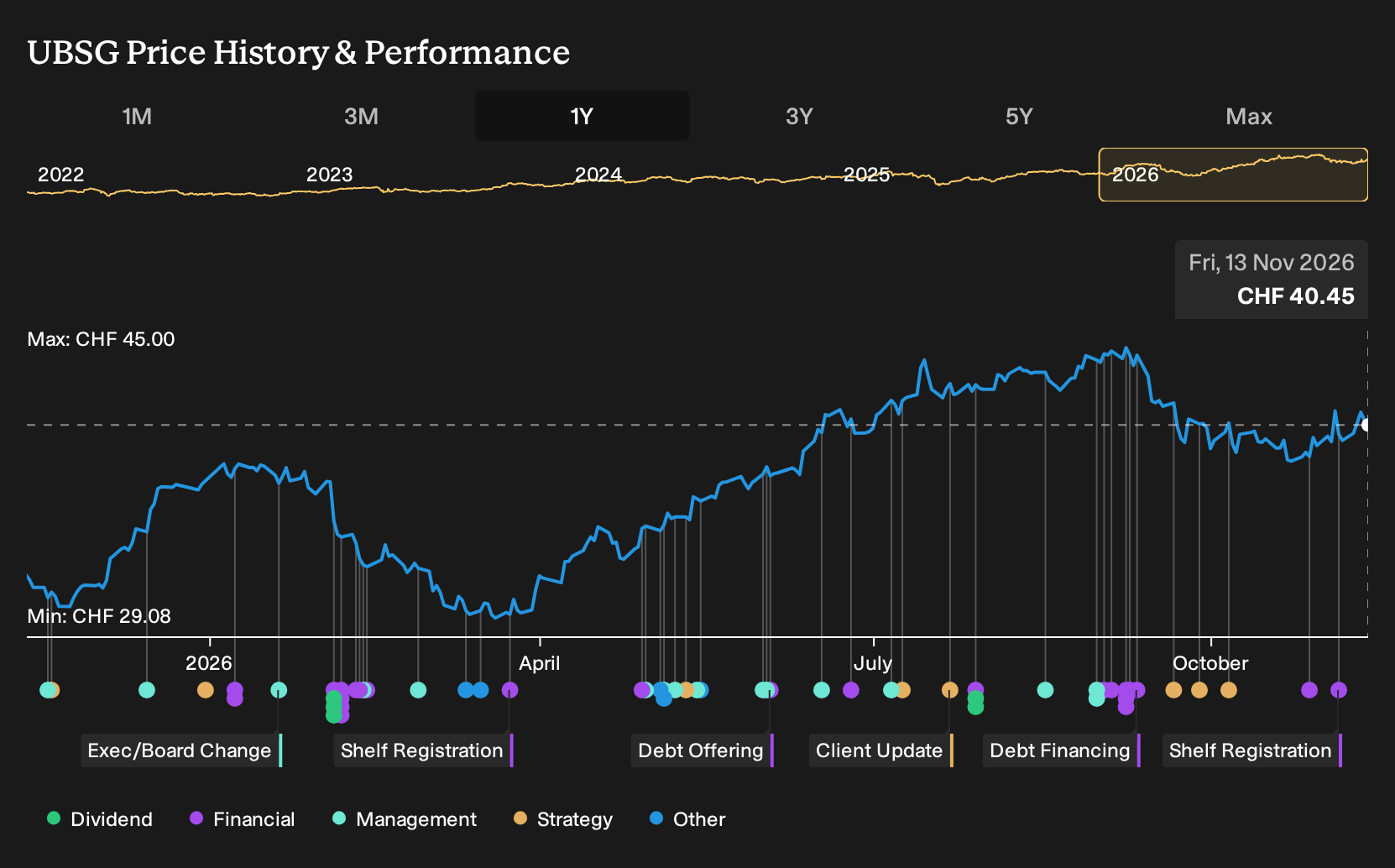
If UBS Group sat on your watchlist rather than in your portfolio over the last year, the outcome may feel expensive. Holding UBS Group over the past year would have returned 34.4%, including dividends. That kind of payoff invites a harder question. Back on 13 November 2025, could an investor reasonably lean on the assumption that rapid Credit Suisse integration and aggressive digital banking investment would outweigh looming Swiss capital rule changes?
A Narrative on Simply Wall St is one investor's written case for a company, with its growth, margin and multiple assumptions spelled out. Those assumptions imply an estimated Fair Value.
UBS Group has already moved. See which of 196 high quality undervalued stocks still trade below our estimates.
The Argument UBS Investors Were Weighing Up
The shares cost CHF31.34 at the start of the period, and anyone looking at UBS Group then had to pick between two very different stories about what came next.
The bullish narrative put Fair Value at CHF37, which sat 18% above the start price, and was based on UBS using rapid Credit Suisse integration and heavy technology investment to lift margins while capturing more wealth in APAC and the Americas.
The bearish view set Fair Value at CHF21, 33% below the start price, and focused on Swiss capital proposals that might require up to $42 billion of extra capital and ongoing Credit Suisse legal and integration risks that could affect future earnings power.
What The UBS Evidence Actually Tested
UBS Group delivered Q3 2026 revenue of US$14,277m and net income of US$2,690m, both above Q3 2025 levels, which backed the optimistic story about Credit Suisse integration and earnings power. Net margin slipped from 19.5% to 18.8%, and Swiss capital proposals for up to about US$37b of extra buffers plus a US$125m AML fine kept the cautious thesis alive. The evidence cut both ways.
The decision in 2025 really hinged on two claims that can be checked in any bank. One is whether net income and net margin move together. The other is how quantified capital requirements compare with profits, to see if growth assumptions survive a heavier equity load.
What UBS Group's Price Now Assumes
With UBS Group at CHF40.45, this Narrative views Fair Value as below that level, which implies the bearish analyst Narrative on Simply Wall St sees more expectations baked into the quote than its own framework supports.
That Narrative concentrates on whether Credit Suisse integration gains and fee income can outrun heavier Swiss capital needs and residual legal costs. For today’s price to hold up, a buyer would need to believe UBS can keep converting integration progress into strong returns while absorbing any future capital reform.
"The main factor that has to go right is that UBS Group converts Credit Suisse integration progress, wealth and alternatives growth, and technology investments into sustainably high returns despite rising regulatory capital pressure. The numbers imply the UBS Group share price already reflects continued strong earnings power, successful Credit Suisse integration and resilient fee growth, leaving limited room for disappointment if capital rules or legacy risks prove more challenging than expected."
That disagreement has a full argument behind it. → Uncover the lower Fair Value this Narrative argues for
Looking Past UBS To Payments
Thinking about UBS, you are really thinking about trust in money. Banks package that trust one way. Card networks package it another.
Where UBS leans on deposits and advice, another business sells confidence at the point of sale. It runs a closed payments loop handling both customer and merchant relationships.
That model turns reputation into a product. Shoppers pay with status as much as credit. Merchants accept that trade because the intermediary pledges to back each transaction.
Regulators are now questioning parts of its compliance engine. The unresolved issue is whether penalties just raise costs or eventually change how this trust factory operates.
That argument has a Narrative and a number behind it. → See the company one Narrative values 39% above its price
Have feedback on this article? Concerned about the content? Get in touch with us directly. Alternatively, email editorial-team@simplywallst.com