


Computer Age Management Services Limited (NSE:CAMS) Is About To Go Ex-Dividend, And It Pays A 1.7% Yield
It looks like Computer Age Management Services Limited (NSE:CAMS) is about to go ex-dividend in the next 3 days. The ex-dividend date is usually set to be two business days before the record date, which is the cut-off date on which you must be present on the company's books as a shareholder in order to receive the dividend. The ex-dividend date is important as the process of settlement involves at least two full business days. So if you miss that date, you would not show up on the company's books on the record date. Meaning, you will need to purchase Computer Age Management Services' shares before the 13th of November to receive the dividend, which will be paid on the 28th of November.
The company's upcoming dividend is ₹3.25 a share, following on from the last 12 months, when the company distributed a total of ₹12.50 per share to shareholders. Based on the last year's worth of payments, Computer Age Management Services stock has a trailing yield of around 1.7% on the current share price of ₹716.00. Dividends are a major contributor to investment returns for long term holders, but only if the dividend continues to be paid. So we need to investigate whether Computer Age Management Services can afford its dividend, and if the dividend could grow.
If a company pays out more in dividends than it earned, then the dividend might become unsustainable - hardly an ideal situation. Computer Age Management Services paid out 64% of its earnings to investors last year, a normal payout level for most businesses. A useful secondary check can be to evaluate whether Computer Age Management Services generated enough free cash flow to afford its dividend. It paid out 90% of its free cash flow in the form of dividends last year, which is outside the comfort zone for most businesses. Cash flows are usually much more volatile than earnings, so this could be a temporary effect - but we'd generally want to look more closely here.
Computer Age Management Services paid out less in dividends than it reported in profits, but unfortunately it didn't generate enough cash to cover the dividend. Were this to happen repeatedly, this would be a risk to Computer Age Management Services's ability to maintain its dividend.
Check out our latest analysis for Computer Age Management Services
Click here to see the company's payout ratio, plus analyst estimates of its future dividends.
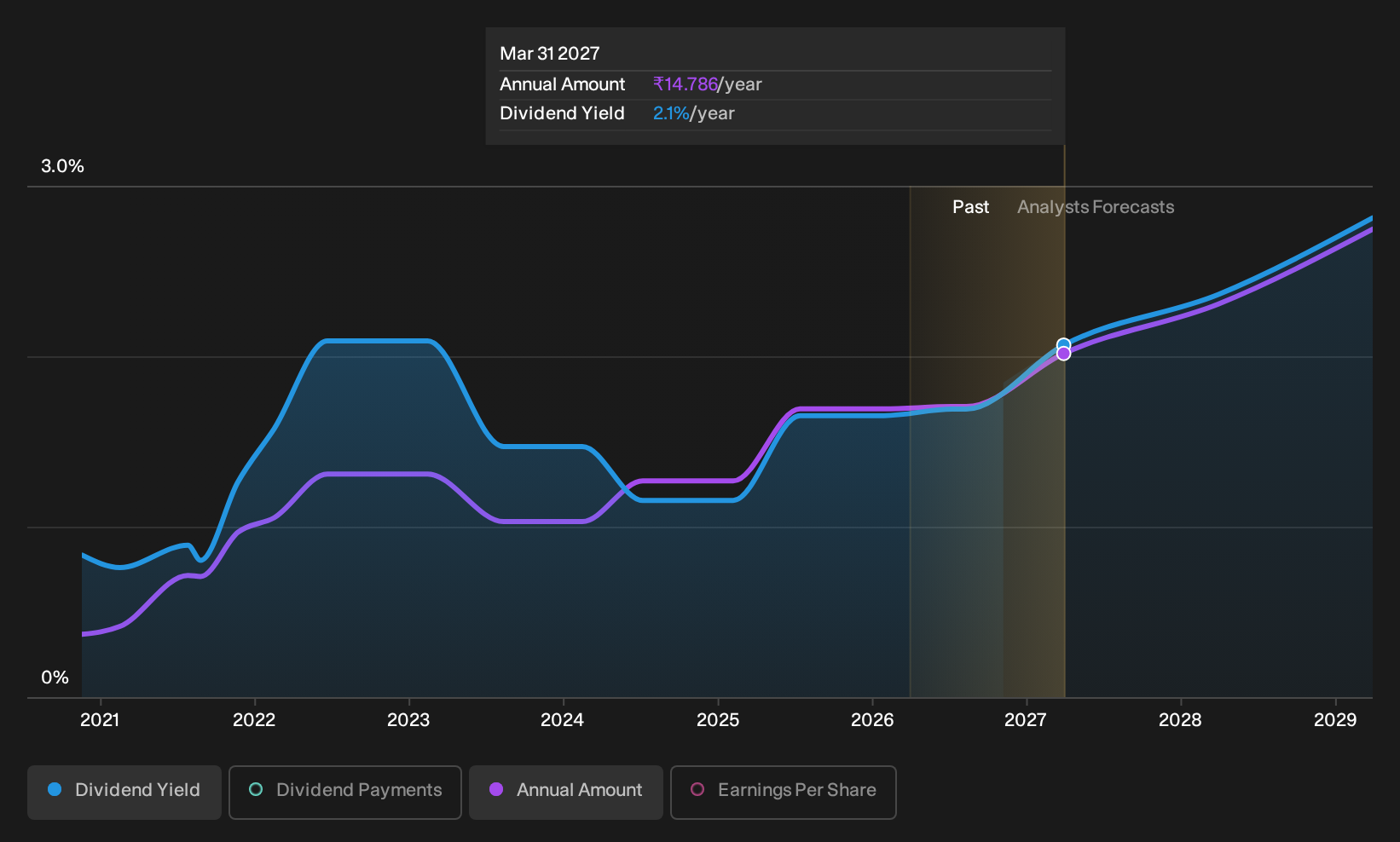
Have Earnings And Dividends Been Growing?
Companies with consistently growing earnings per share generally make the best dividend stocks, as they usually find it easier to grow dividends per share. If earnings decline and the company is forced to cut its dividend, investors could watch the value of their investment go up in smoke. Fortunately for readers, Computer Age Management Services's earnings per share have been growing at 20% a year for the past five years. Earnings have been growing at a decent rate, but we're concerned dividend payments consumed most of the company's cash flow over the past year.
The main way most investors will assess a company's dividend prospects is by checking the historical rate of dividend growth. In the past six years, Computer Age Management Services has increased its dividend at approximately 29% a year on average. It's exciting to see that both earnings and dividends per share have grown rapidly over the past few years.
Final Takeaway
Has Computer Age Management Services got what it takes to maintain its dividend payments? Earnings per share growth is a positive, and the company's payout ratio looks normal. However, we note Computer Age Management Services paid out a much higher percentage of its free cash flow, which makes us uncomfortable. In summary, it's hard to get excited about Computer Age Management Services from a dividend perspective.
However if you're still interested in Computer Age Management Services as a potential investment, you should definitely consider some of the risks involved with Computer Age Management Services. Our analysis shows 2 warning signs for Computer Age Management Services that we strongly recommend you have a look at before investing in the company.
A common investing mistake is buying the first interesting stock you see. Here you can find a full list of high-yield dividend stocks.
Have feedback on this article? Concerned about the content? Get in touch with us directly. Alternatively, email editorial-team (at) simplywallst.com.