


3 Financial Stocks to Watch as AI Volatility Tests Margin Finance
AI euphoria is colliding with fresh warnings about regulation, volatility, and a possible pullback in spending, and that mix is shaking everything from high-growth tech to the lenders that fund them. When leverage gets tested, prime-brokerage and margin-financing providers often feel it first. This article walks through three stocks exposed to the latest AI shockwave, and why their role in this story may matter for your portfolio.
The three stocks below are just a starting sample from the prime-brokerage and margin-financing space. The full screen surfaced 10 more large institutions with equally compelling narratives that are not covered here.
If you want to identify which of these lenders best fits your risk tolerance and AI thesis, go straight to the Global Prime-Brokerage and Margin-Financing Providers screener to filter, analyze, and focus on the highest conviction candidates.
Swissquote Group Holding (SWX:SQN)
Swissquote Group Holding sits right in the middle of this screener’s theme, since its online platform leans heavily on trading, margin financing, and securities services that tend to feel any spike in volatility or forced deleveraging very quickly.
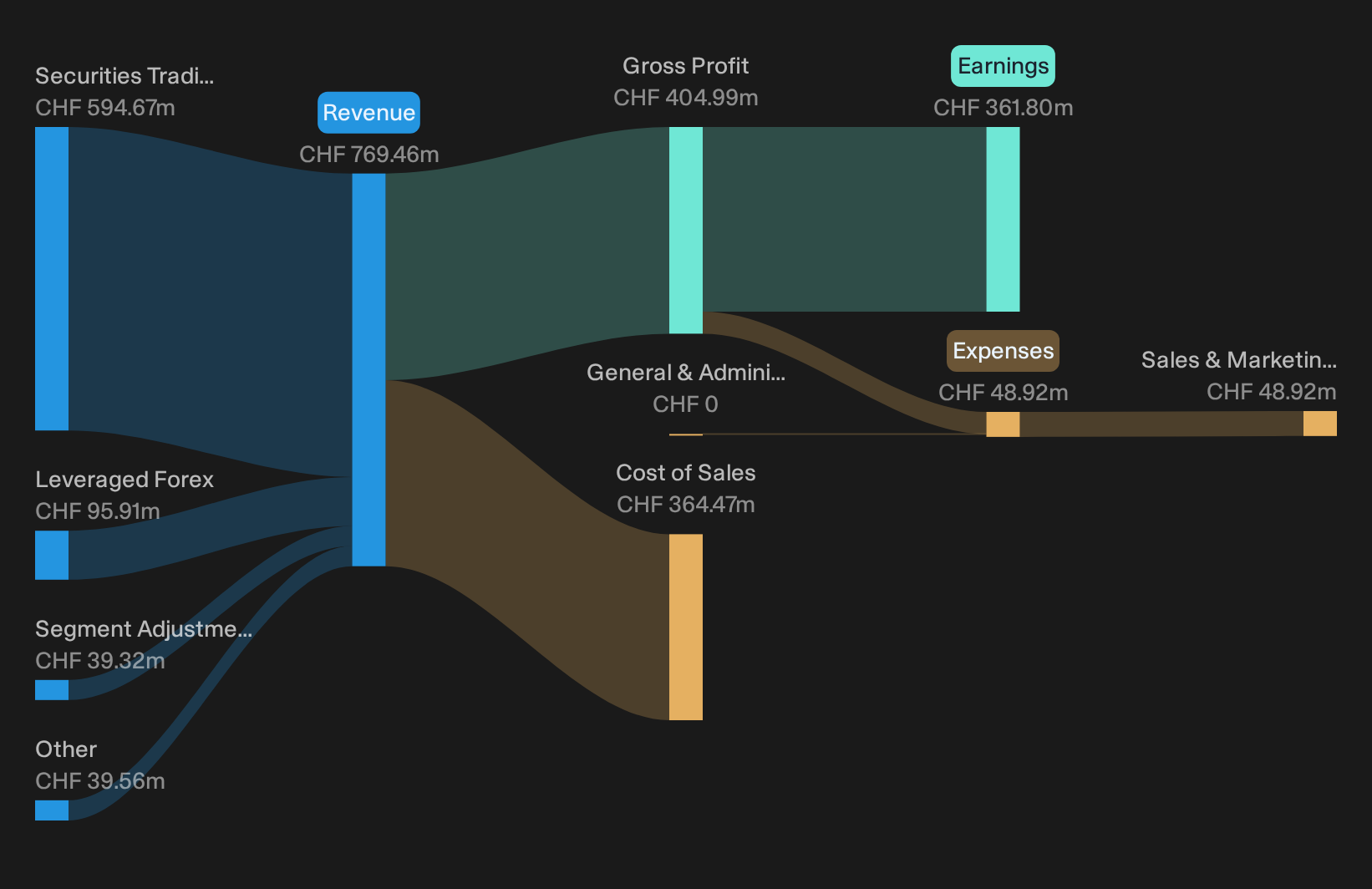
Swissquote Group Holding runs a Swiss based online bank offering multi asset trading, margin lending, and leveraged forex services that fit squarely within the prime brokerage and financing theme. Securities Trading brings in about CHF595 million, Leveraged Forex adds roughly CHF96 million, with a segment adjustment of around CHF39 million, and the business carries a market value near CHF5.1b.
Acceleration of AI assisted software development, where Swissquote reports early productivity benefits from tools such as GitHub Copilot and Claude and targets a 2 to 3 times improvement in developer output by 2027 to 2028, can expand the product pipeline without a comparable rise in headcount and so widen the gap between revenue growth and operating cost growth, supporting operating margin and earnings.
What happens if a single assumption in that efficiency story shifts, and the cost base does not follow the tidy script investors are pencilling in?
If that efficiency gap matters to your thesis, read the full narrative for Swissquote Group Holding to see how Swissquote balances AI productivity gains with funding, leverage and client risk concentration.
Moody's (MCO)
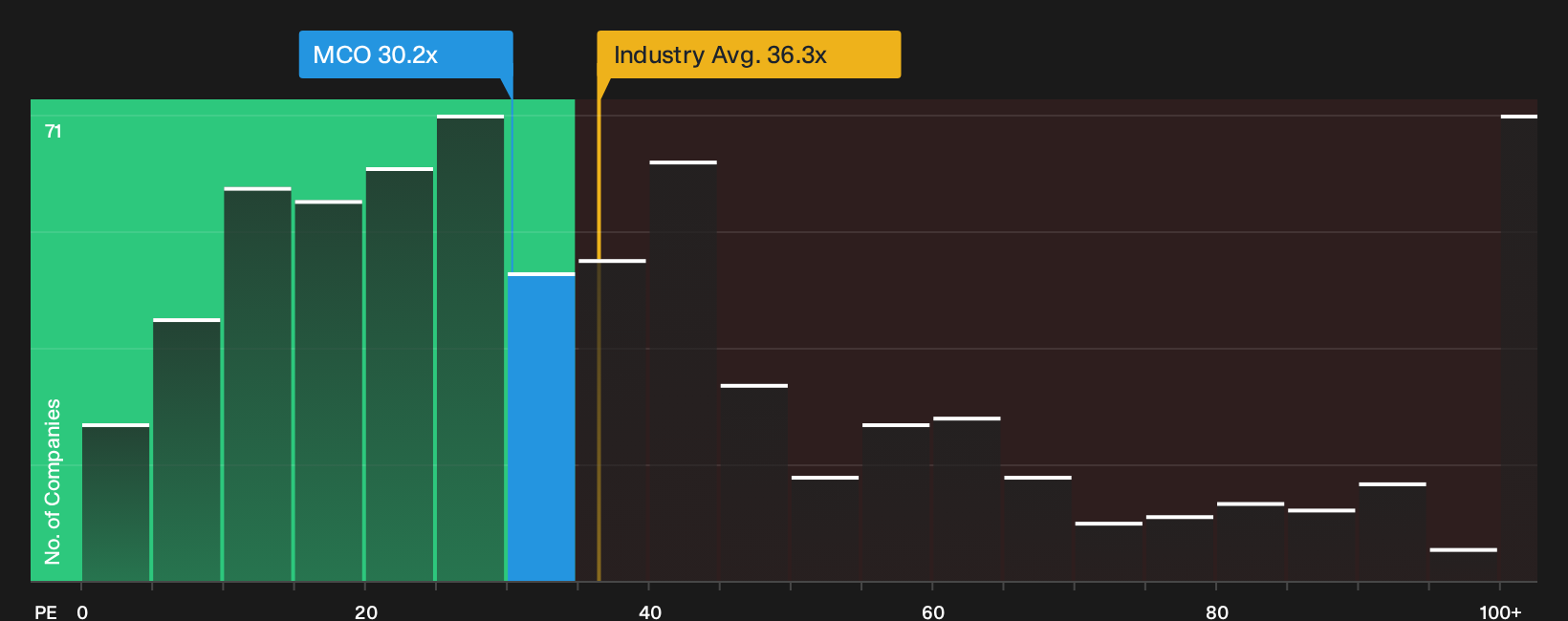
Moody’s matters to this screen less as a lender and more as the risk plumber behind leverage, with its ratings and analytics used across the very debt, margin and structured products that move when AI related volatility hits.
One of the most attractive aspects of Moody’s is how efficiently it converts profits into shareholder returns. The business requires very little reinvestment capital, allowing management to return almost all free cash flow through buybacks and dividends.
What that pay-out rhythm means for future returns depends heavily on how one quiet shift in risk appetite and issuance volumes plays out.
That hinge point on risk appetite is exactly where the full story gets interesting, so read the full narrative for Moody's to see how Moody’s capital return flywheel could keep accelerating.
IG Group Holdings (LSE:IGG)
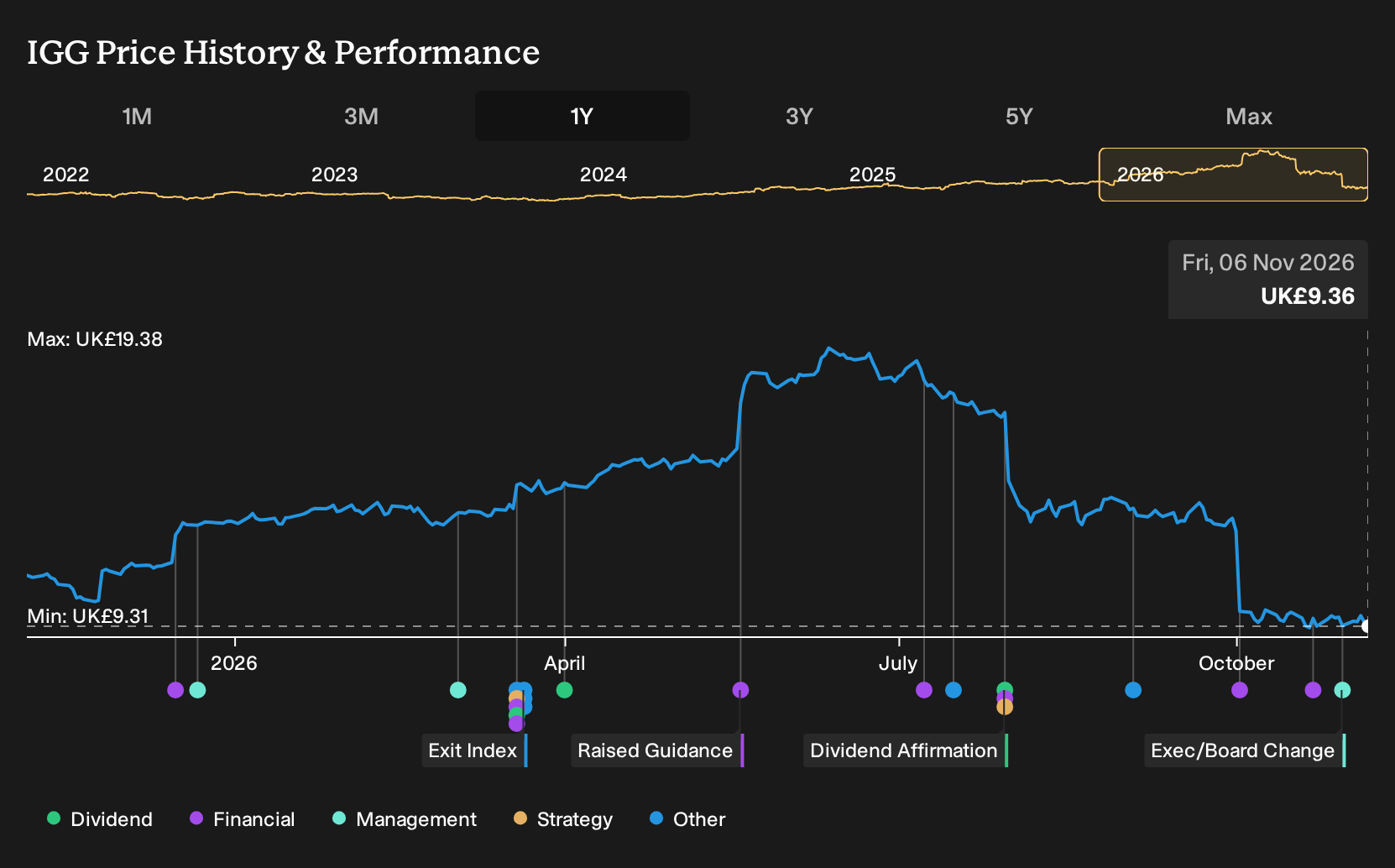
IG Group Holdings plugs directly into this screener’s theme, since its derivatives and leveraged trading platforms tend to feel any jump in client activity, margin use and funding conditions quickly when markets get rough.
IG Group Holdings runs online trading and investing platforms across derivatives, forex, stocks, crypto and risk-management services, with a market value of about £3.1b.
The planned acquisition of Underdog and entry into U.S. daily fantasy sports and prediction markets, where Underdog net revenue rose from US$9m in 2021 to US$466m in the 12 months to June 2026 and sector notional volumes are expected to nearly triple in 2026 versus 2025, could expand IG Group Holdings’ addressable market and support higher group revenue over time.
What happens to IG Group’s margins and funding costs if one key regulator decision tilts the balance between growth opportunity and leverage risk?
That decision point is exactly where the story for IG Group Holdings starts to get interesting. Read the full narrative for IG Group Holdings to see how regulation, leverage and new markets could be quietly decoupling.
Seeking Fresh Alternatives Before They Fly
Some of the best breakout opportunities stay under the radar for now, then move fast once momentum hits. Scan these fresh ideas before the crowd catches up and consider them ahead of time.
- Spot rising income plays early and review the 232 dividend fortresses while yields still look appealing and prices have not fully caught up.
- Track the next wave of automation leaders and use the 89 robotics and automation stocks to find businesses quietly building real revenue around robotics and process efficiency.
- Target strong balance sheets before momentum screens catch them by running through the list of solid balance sheet and fundamentals (193 results) and focusing on resilient fundamentals.
Have feedback on this article? Concerned about the content? Get in touch with us directly. Alternatively, email editorial-team@simplywallst.com