


3 Bank Stocks Facing Higher Funding Costs as AI and Debt Markets Reset
Bond markets are flexing their muscles again, AI hype is colliding with the reality of higher funding costs, and election headlines are shaking assumptions about future money flows. That mix is rewriting how capital is priced and who benefits when corporate debt gets more expensive to issue. This article walks through 3 stocks from our Global Systemic Banks and Capital‑Markets Firms Financing AI and Corporate Debt screener that appear especially exposed to these shifting cross‑currents.
The three stocks highlighted next are only a sample from this theme. The full screen surfaced 8 more global banks and capital markets groups with equally compelling narratives that are not covered below. To see the full picture, head straight into the Global Systemic Banks and Capital-Markets Firms Financing AI and Corporate Debt screener to identify, filter and analyze the highest conviction plays in this space.
Credicorp (BAP)
Overview: Credicorp is Peru’s largest diversified financial group, offering universal banking, insurance, pensions, microfinance, and capital-markets services across Latin America.
Operations: The group generates roughly PEN 15.4b from Peru’s Banco de Crédito universal banking unit, with microfinance and insurance adding about PEN 4.8b.
Market Cap: US$27.7b
Credicorp matters for this screener because it combines a dominant corporate banking franchise in Peru with fee-based services that plug directly into regional debt markets and the growing demand for higher-yielding financial products.
"Expansion of Credicorp’s digital financial services like Yape is now tied to a much larger base of more than 16 million monthly active users who transact frequently and already contribute close to 10% of risk adjusted revenues, so further product roll out and higher revenue per user could continue to lift fee income and earnings."
The real hinge for Credicorp in a world of higher funding costs is what happens if a single key assumption about digital monetisation shifts.
If that assumption really is the swing factor, the full narrative for Credicorp explains how digital monetisation could either accelerate or stall as funding costs continue to reset.

Halyk Bank of Kazakhstan (LSE:HSBK)
Overview: Halyk Bank of Kazakhstan is a large Central Asian banking group providing corporate, SME, retail and investment banking across Kazakhstan and neighboring markets.
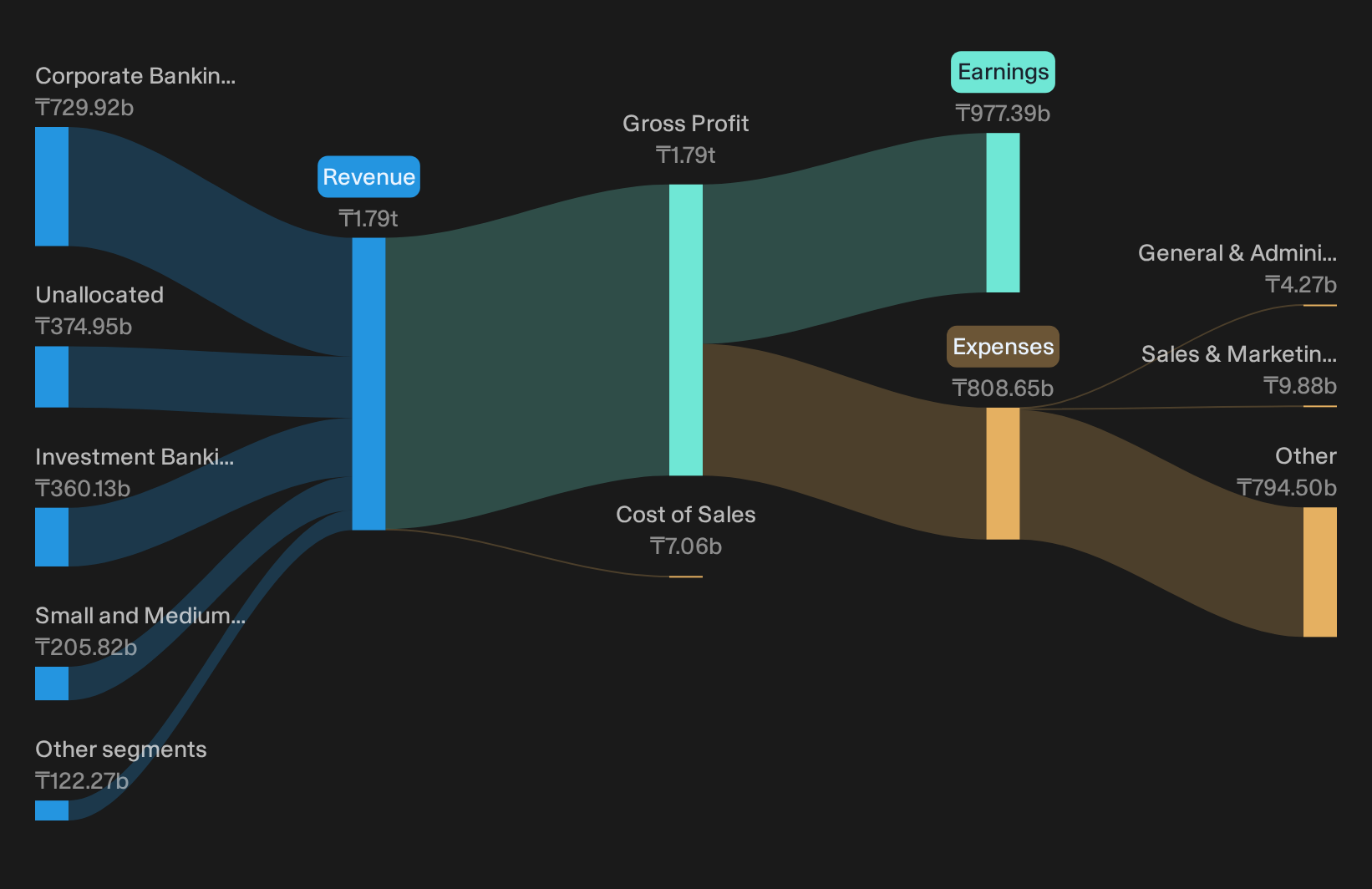
Operations: The bank generates about KZT 730b from Corporate Banking and KZT 360b from Investment Banking, with most revenue concentrated in Kazakhstan.
Market Cap: US$9.0b
Halyk Bank of Kazakhstan matters for this screener because its corporate and investment banking arms give it a front row seat to regional refinancing, lending and debt products as higher yields reshape funding decisions across Central Asia.
"Higher regulatory burdens, including increases in minimum reserve requirements (scheduled to rise further through 2026) and new corporate tax rates, are set to directly erode net interest margins and reduce future earnings, as more capital will be tied up and effective tax rates will rise."
The real swing factor for Halyk Bank of Kazakhstan is how one yet unresolved pressure filters through to funding costs, lending appetite and profitability.
That unresolved pressure is exactly where things get interesting, and the full narrative for Halyk Bank of Kazakhstan shows how Halyk Bank of Kazakhstan could still turn regulation into accelerating competitive advantage.
Lion Finance Group (LSE:BGEO)
Overview: Lion Finance Group is a London headquartered banking group providing retail, corporate and investment banking across Georgia, Armenia and adjacent markets.
Operations: Lion Finance Group reports GEL 3.1b from segment adjustments, GEL 1.2b from Armenian Financial Services and GEL 182 million from Other Businesses.
Market Cap: £5.1b
Lion Finance Group matters for this screener because its Georgian and Armenian banking hubs connect local corporate borrowers to regional capital and debt markets, at a time when higher funding costs are testing which lenders can underwrite that demand efficiently.
"Accelerating digital adoption and continued success in digital transformation at Lion Finance Group, with 1.92 million retail digital monthly active users, over 1 million daily active users and 88% of loans issued through digital channels in Georgia, is reinforcing a low cost, high engagement model that can support revenue growth and operating leverage in net margins."
What happens if a single assumption about how far that digital model can stretch before pricing pressure bites decides where margins settle?
If that margin pivot is what matters most, the full narrative for Lion Finance Group shows how Lion Finance Group’s digital engine could keep earnings momentum accelerating even as pricing pressure builds.

Seeking Fresh Alternatives Beyond Banks?
New themes are breaking out and momentum can shift fast as money chases what is still under the radar for now. Consider exploring opportunities that may fit your approach.
- Spot cash generative businesses before the crowd by scanning the 34 high quality undervalued stocks that couples balance sheet strength with cash flows while pricing still looks attractive.
- Explore the next wave of automation by using the 95 robotics and automation stocks curated for companies wiring factories, warehouses and supply chains for potential productivity improvements.
- Target resilient income while yields stay in focus through the 4 dividend fortresses that filters for high payout strength plus balance sheet resilience.
Have feedback on this article? Concerned about the content? Get in touch with us directly. Alternatively, email editorial-team@simplywallst.com