


Intel Stock Had Its Worst Day Since 1974 Despite 8th Straight Guidance Beat. Here’s What Investors Missed.
On October 29, Intel (INTC) reported its third-quarter results. The company beat its own guidance on revenue, margins, and EPS. Revenue rose 21% to $16.5 billion, and adjusted EPS of $0.52 came in well above the roughly $0.40 analysts expected. The data center business grew 78%, its best growth in 15 years. CEO Lip-Bu Tan said the biggest priority is increasing supply capacity to meet "extraordinary demand" for its Xeon chips.
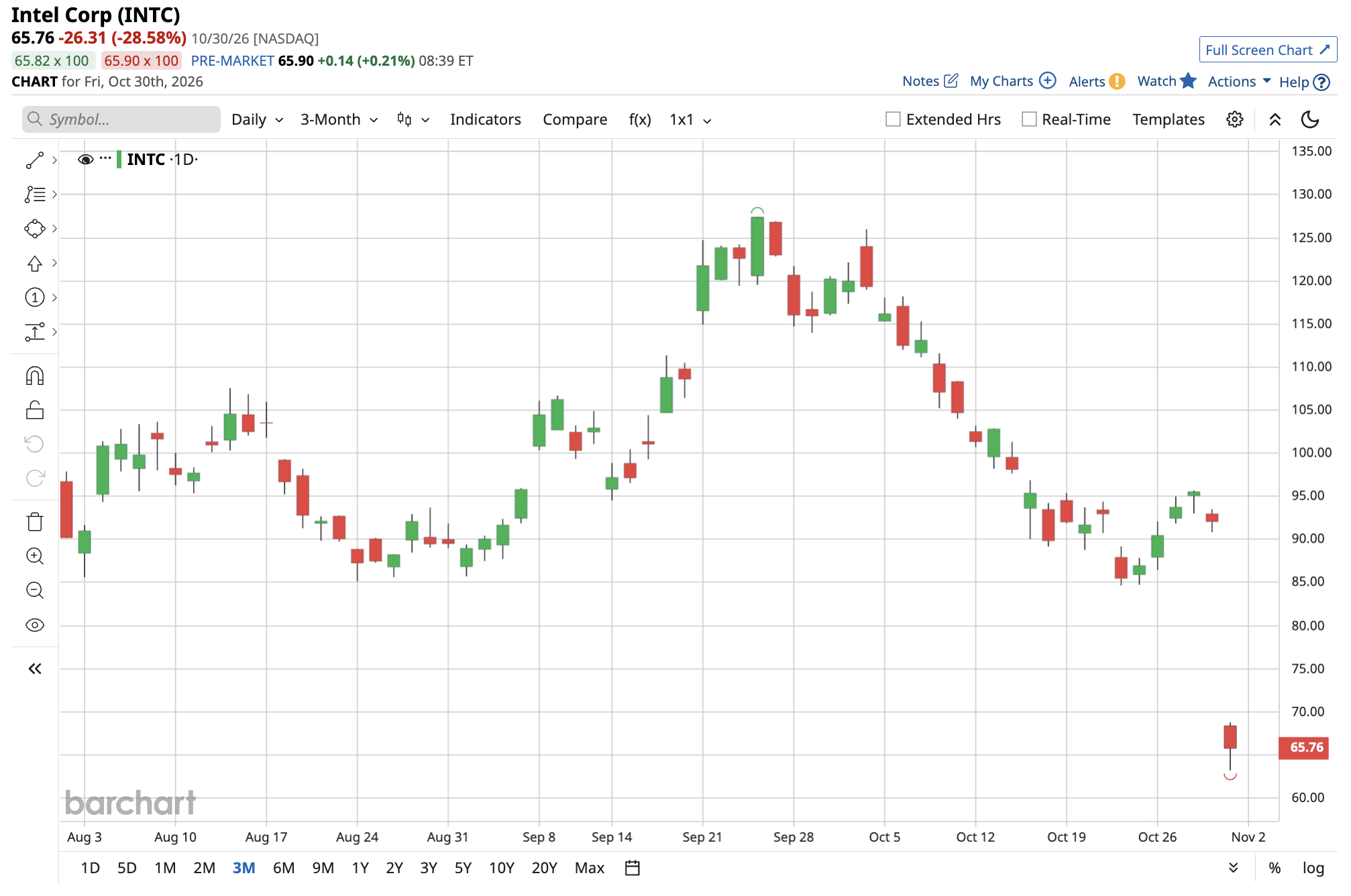
But here's the interesting part. Despite all this, Intel's stock fell about 29% in a single trading session, its worst day since 1974.
Why the Stock Crashed
Before earnings, I said a Q3 beat was more or less expected, so what would move the stock was Q4 guidance. That's pretty much how things played out. For the fourth quarter, Intel guided revenue of $15 billion to $16 billion, below the $17.1 billion expected. Management also said that the gross margin is expected to fall sharply, from 44.1% to 38%. The weak outlook is mainly due to limited supply and a struggling PC business. On October 14, an explosion at an Intel factory in Israel killed two workers, and the plant shut down for two weeks. This will cut about $300 million from Q4's revenue. Intel also doesn't expect positive cash flow because of heavy factory spending.
Were Investors Right to Sell?
The question is whether these issues justify such a sharp drop, and in my opinion, the answer isn't a simple yes or no. The data center business, perhaps the most important part of the company, is still growing fast. And the company’s main issue in data centers is not being able to fulfil its high demand. That’s a very different and less concerning problem than customers not being willing to buy. On the other hand, I understand the selloff too. The stock was up about 150% this year going into earnings, so it was priced for perfection. In such a case, even a small weakness often ends up punishing the stock, and this was a little more than that.
Overall, I think the stock can still bounce back from this, but a lot will depend on whether the supply capacity improves in 2027.
About Intel Stock
Santa Clara, California-based Intel Corporation designs, develops, manufactures, markets, sells, and services computing and related end products and services in the United States and internationally. The company operates through three segments: CCG, DCAI, and Intel Foundry, and offers client computing group products, including client and commercial CPUs, discrete client GPUs, edge computing, and connectivity products.
After its post-earnings crash, Intel’s stock trades roughly 54% below its 52-week high of $142.34. INTC has declined 45% over the past month, significantly underperforming the State Street Technology Select Sector SPDR ETF’s (XLK) less than 1% decline during the same time frame. In the longer term, INTC has delivered a different performance. The stock has grown 66% over the past 52 weeks, which shows just how far the stock had run before the Q3 earnings.
Even after the crash, I don't think Intel's stock should be seen as cheap. Its forward P/E of 44.26x sits about 29% below its five-year average of 62.50x, but that average is inflated by years of weak earnings. The forward price-to-sales ratio of 5.61x is still 73% above its five-year average of 3.23x, a steep premium. Analysts expect EPS to jump 254% in 2026 from a low base, slow to 22% in 2027, then pick up again in 2028. The balance sheet is solid, with Intel holding net cash of around $4 billion. Still, I think the valuation only makes sense if supply improves.
What Do Analysts Expect for INTC Stock?
After Intel’s weak outlook during its latest earnings call, several analyst firms shared the market sentiment and considerably reduced their price targets for Intel. Jefferies went from $120 to $85, Bank of America Securities went from $145 to $100, and Wells Fargo went from $120 to $80. UBS, Citi, KeyBanc, Susquehanna, RBC Capital, and Morgan Stanley are a few others to cut price targets, too.
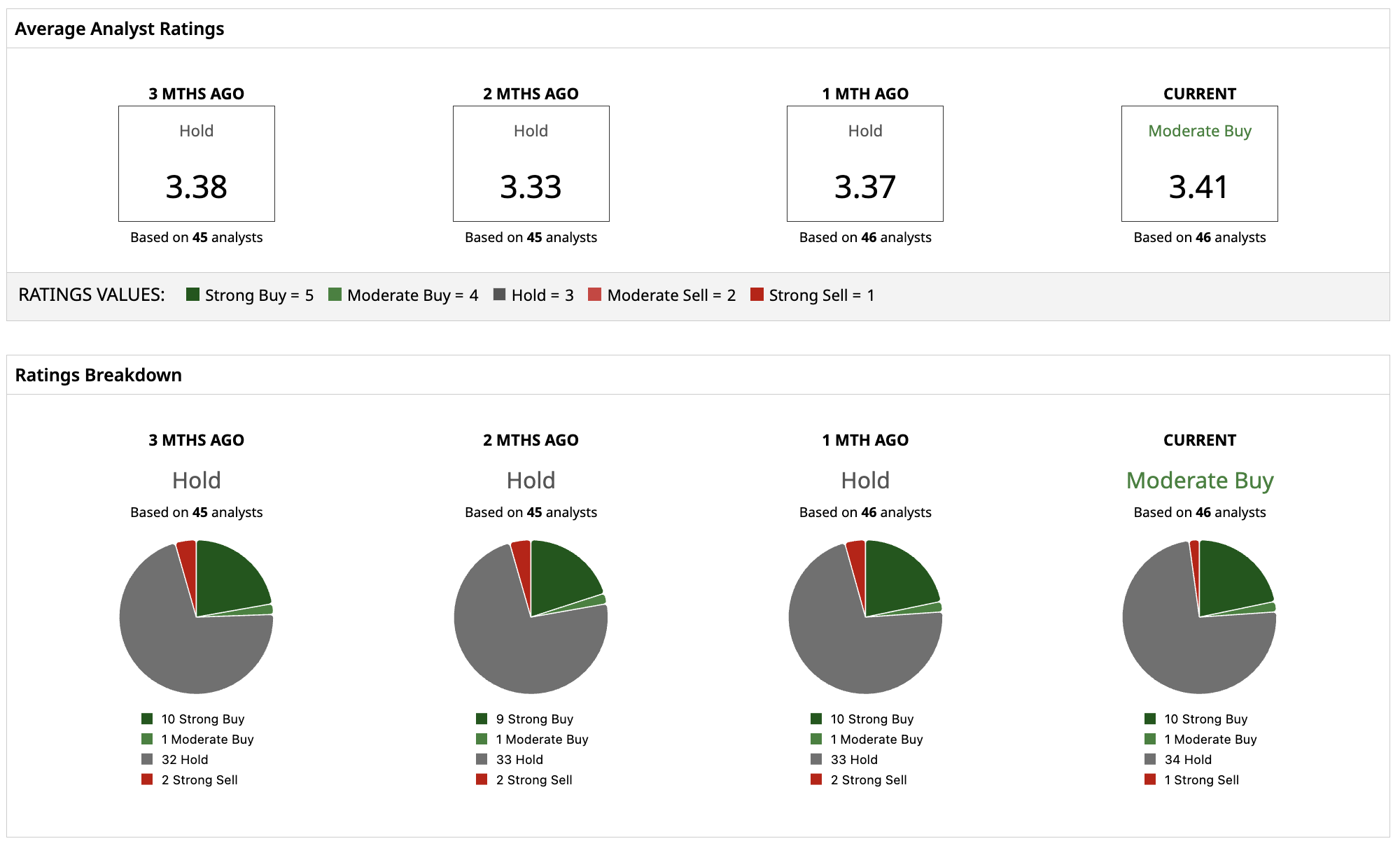
Intel has a consensus “Moderate Buy” rating overall. The stock’s mean price target of $96.92 reflects a 47% upside from current levels. Meanwhile, the Street-high price target of $160 implies a 143% jump from the current share price.
On the date of publication, Jabran Kundi did not directly have a position in any of the securities mentioned in this article. All information and data in this article is solely for informational purposes. For more information please view the Barchart Disclosure Policy here.