


Missed Bank Of China's Rally? Here's The Bull Case
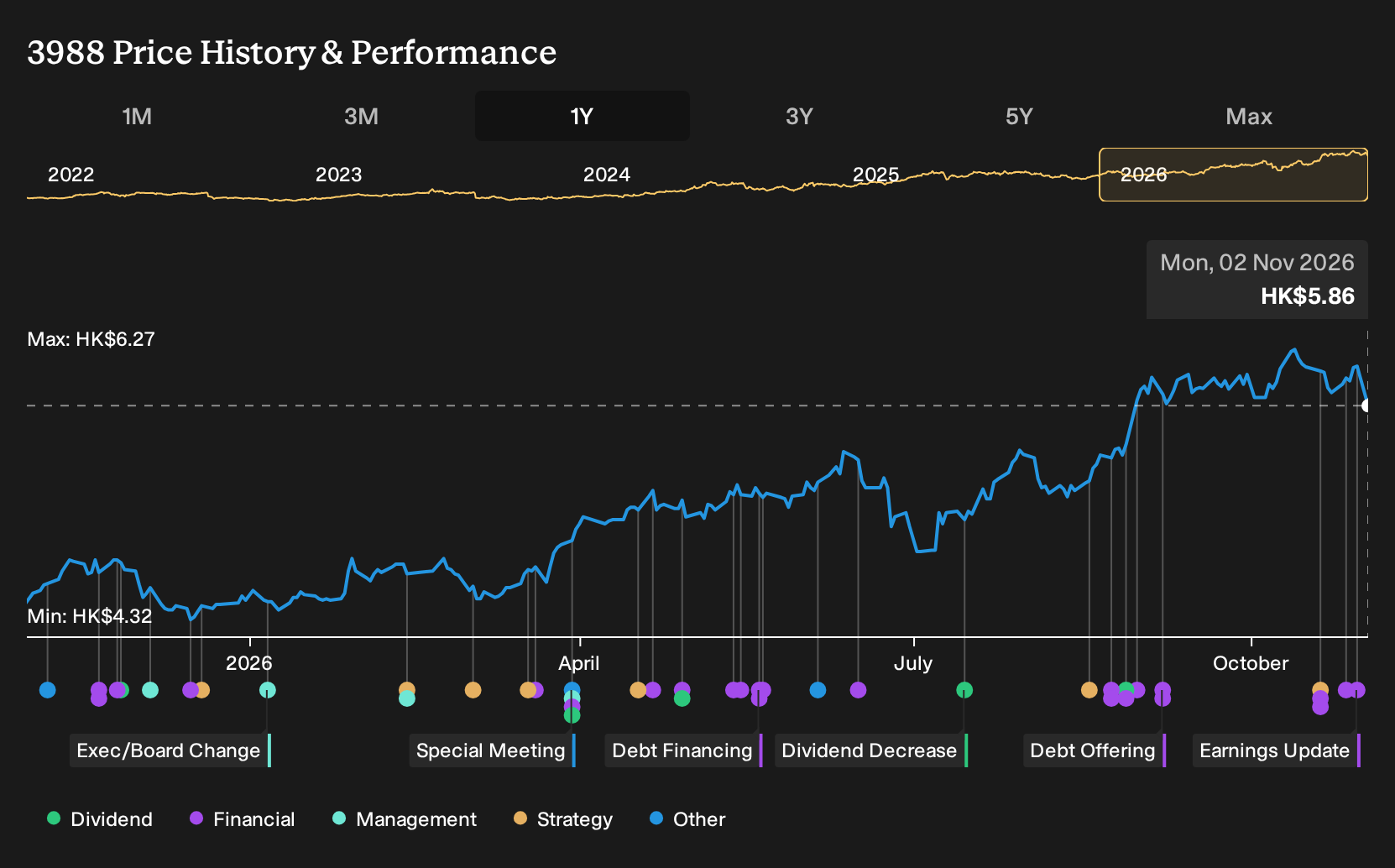
If Bank of China was on your watchlist rather than in your portfolio, the recent performance may feel like a missed chance. For Bank of China shareholders, the return over the past year was 37.1%, including dividends. That kind of outcome raises a sharp question. Back on 2 November 2025, what might have helped you judge whether China’s push into urbanization and digital payments would actually support the bank’s earnings power rather than just sound like another policy slogan?
A Narrative on Simply Wall St is one investor's written case for a company, with its growth, margin and multiple assumptions spelled out. Those assumptions imply an estimated Fair Value.
The easy part of this move is behind Bank of China. Zero in on 201 high quality undervalued stocks for companies trading below our estimates.
The Argument You Would Have Been Weighing Up On Bank of China
The shares cost HK$4.4 at the start of the period, and any investor looking at Bank of China then had to decide which story sounded more realistic.
On the optimistic side, the September 2025 bull Narrative put Fair Value at HK$5.19, or 18% above the start price, based on assumed revenue growth of 11.3% and a 34.5% profit margin in three years.
The June 2025 bear Narrative pointed to a Fair Value of HK$2.79, or 37% below the start price, emphasizing risks from aging demographics and higher credit costs that could pressure earnings and margins.
What The Evidence Did To The Bank of China Argument
Bank of China’s Q3 2026 report showed total revenue of C¥141,965m and net income of C¥63,888m, with net margin at 45.0% compared with 43.0% a year earlier. That profitability shift supported the optimistic story that earnings power might hold up. At the same time, reports of trillions of hidden bad debt in China’s banking system kept the cautious case alive. The evidence cut both ways.
The lesson is simple. When a story hinges on earnings resilience, you track revenue, absolute profit and the reported net margin for several periods, then test whether they actually move toward the thesis.
What Bank of China’s Price Already Assumes
Bank of China now trades at HK$5.86, with this cautious Narrative arguing that Fair Value sits below that level despite the one year gain. The argument leans on earnings quality risks tied to hidden sector bad debts that could affect future credit costs and profitability.
The same Narrative highlights the need for higher quality overseas, technology, green and fee based activities to carry more weight. A buyer today is effectively assuming those newer engines can offset any clean up of troubled loans. This raises the question of how the highlighted bad debt and supervision risks feed into that assumption.
"Although Bank of China highlights a low reported non performing loan ratio and high provision coverage, the sector wide build up of an estimated US$3 trillion in hidden bad debt suggests that any future recognition of these risks could lift credit costs and reduce net margins and earnings."
That disagreement has a full argument behind it. → Uncover the lower Fair Value this Narrative argues for
Looking Beyond Bank of China
After seeing what has played out at Bank of China, you might look one step sideways. Not every useful idea sits in the same market.
Large lenders elsewhere face a different puzzle, using big deposit bases to expand in wealth management, cards and workplace relationships.
One major institution is leaning on digital tools and AI to support that shift. It wants to turn routine banking contacts into higher margin fee activity.
Those same tools are also aimed at controlling costs and meeting tougher compliance demands. That blend of technology investment and regulatory pressure creates a distinct banking story to study next.
That argument has a Narrative and a number behind it. → See the company one Narrative values 26% above its price
Have feedback on this article? Concerned about the content? Get in touch with us directly. Alternatively, email editorial-team@simplywallst.com