


3 U.S. Utility Stocks With Predictable Dividends As Election Risk Builds
Election risks are piling up again, and this time the crossfire is aimed squarely at utilities and essential infrastructure. Policy talk around taxes, regulation and energy intervention is heating up, which can quickly reshuffle where steady income and resilience really sit in a portfolio. This article walks through three U.S. regulated utility stocks exposed to that political story, explaining how the latest headlines could matter for your next move.
The three stocks covered next are just a sample of what this regulated utilities and essential infrastructure theme can look like, and the full screen surfaced 42 more U.S. companies with similarly interesting policy stories and dividend profiles that are not covered here. If you want to identify and analyze the broader opportunity set before picking favourites, head straight to the U.S. Regulated Utilities and Essential Infrastructure screener.
Atmos Energy (ATO)
Atmos Energy fits this regulated utilities and essential infrastructure theme neatly, since it is a pure play on U.S. natural gas distribution and transmission backed by regulator-approved returns and a clear focus on long term system investment across its service regions.
Atmos Energy Corporation runs a large regulated natural gas network, serving about 3.4 million customers through 76,000 miles of pipes, with most of its roughly US$4.6b in revenue coming from the Distribution segment and about US$1.2b from Pipeline and Storage, and holds a market value near US$29.1b.
What really puts Atmos Energy on the radar for this election driven theme is how its essential gas infrastructure, rate frameworks and long running dividend habits can turn policy noise into a relatively predictable income story for investors.
"Strong customer and industrial load growth, including nearly 51,000 new customers over 12 months and 12 new industrial customers expected to use about 950,000 Mcf per year once fully operational, supports ongoing volume expansion that can lift Atmos Energy revenue and earnings power."
The real swing factor is what happens if a single unseen pressure changes how quickly future spending actually turns into allowed returns and margin strength.
That pressure point is exactly where the full narrative for Atmos Energy digs in, showing how election policy, capex timing and regulatory shifts could accelerate or stall Atmos Energy’s income story.

American Water Works Company (AWK)
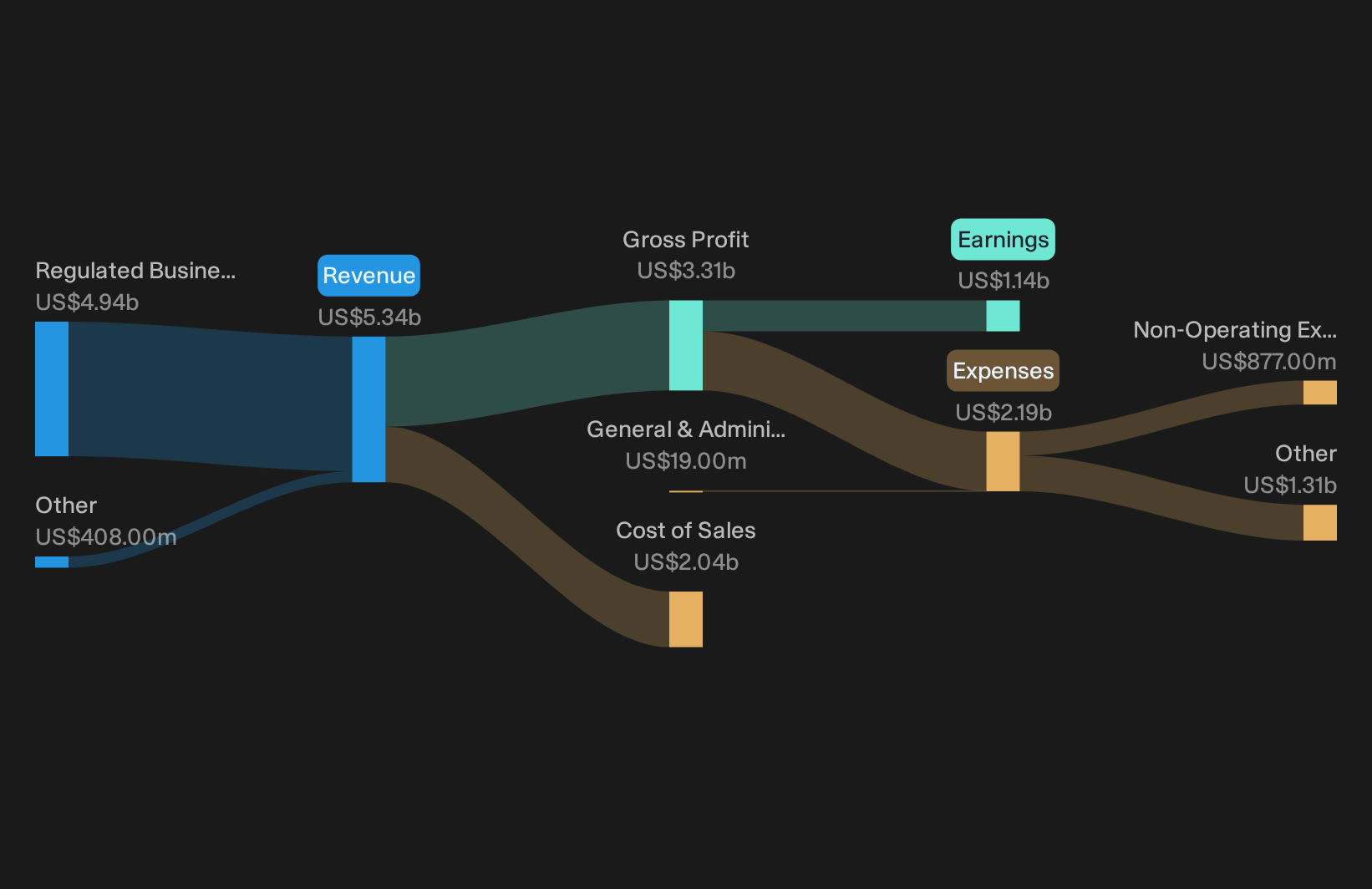
American Water Works Company is the largest U.S. regulated water and wastewater utility, earning about US$4.9b from its Regulated Businesses and US$408m from Other operations, all in the United States, and carries a market value close to US$28.7b.
In a world where election headlines are skewed toward power prices and fuel, American Water Works Company gives this utilities theme a quieter but just as critical backbone. Its pipes, plants and long term contracts underpin an essential service that regulators are highly motivated to keep running.
"Heightened regulatory and societal focus on water quality and infrastructure modernization now aligns with a roughly US$48b capital plan over 10 years and US$1.8b already deployed in the first half of 2026. If future projects do not translate into rate base growth that matches this spend, then returns on equity could be pressured and earnings growth could fall short of what the current share price implies."
The real story for investors is what happens if a single assumption about how quickly regulators convert that spending into billable returns starts to shift.
When that assumption gets tested, the full narrative for American Water Works Company shows how American Water Works Company could still turn heavy investment into accelerating rate base and steadier income potential.
Consolidated Edison (ED)
Consolidated Edison is almost a textbook fit for this regulated utilities and essential infrastructure theme, with its electric, gas and steam networks wrapped in state oversight and plugged directly into New York’s push for reliable power, electrification and resilient city services.
Consolidated Edison runs regulated electric, gas and steam networks in New York and New Jersey, generating almost all of its US$17.7b revenue in the U.S., led by CECONY Electric at about US$12.1b, CECONY Gas at US$3.4b and CECONY Steam at US$872m, and holds a market value near US$43.1b.
"Planned infrastructure investment of about US$38b over the next five years and US$72b over the next decade at CECONY is expected to expand Consolidated Edison’s regulated asset base, which can support future revenue and earnings tied to that growing rate base."
What really decides how useful that pipeline of projects becomes for investors is whether a single regulatory variable quietly shifts against today’s assumptions.
If that regulatory variable really is shifting, the full narrative for Consolidated Edison shows where Consolidated Edison’s grid spending could still translate into accelerating and more resilient cash generation.

Curious About Alternatives You Might Be Missing?
Market stories move fast and fresh ideas do not stay under the radar for long. Before the next breakout flies, tap into curated stock shortlists and get in early.
- Hunt for resilient income streams and use the 5 dividend fortresses to spot companies where high yields and balance sheet strength currently move in the same direction.
- Target future-building infrastructure themes by scanning the 42 power grid technology and infrastructure stocks before momentum catches up with grid hardware, software and equipment suppliers already building tomorrow’s networks.
- Spot potential future compounders early and lean on the 19 high quality undiscovered gems to surface under-followed businesses with fundamentals that still look overlooked by most investors.
Have feedback on this article? Concerned about the content? Get in touch with us directly. Alternatively, email editorial-team@simplywallst.com