


Why CVS Health Stock Is Back In Focus As Investors Seek Defensive Dividends
Markets are bracing for a noisy week as U.S. midterm elections, heavyweight tech earnings and a packed data calendar all collide, and attention is quietly shifting toward defensive dividend stocks that may offer steadier income when headlines swing. This creates a window in which investors who usually look away from utilities, healthcare and consumer staples might reconsider that choice. This article walks through three stocks exposed to these catalysts and explains how they may be relevant for portfolio decisions now.
The three stocks that follow are a sample. The full screen surfaced 12 more U.S. defensive dividend companies across consumer staples, utilities and healthcare that share similar income characteristics but different risk stories. To identify which ones might fit your watchlist and analyze them side by side, head straight to the U.S. defensive dividend stocks (consumer staples, utilities, healthcare) screener.
CVS Health (CVS)
CVS Health matters in this defensive dividend screen because it blends insurance, pharmacy services and retail health into one platform tied to everyday medical spending. This is exactly the kind of essential demand many investors look for when market narratives turn choppy.
CVS Health is a large U.S. healthcare group that runs insurance plans, pharmacy benefit management and retail pharmacies. Most revenue comes from Health Services at about US$201b, Health Care Benefits at roughly US$144b, and Pharmacy & Consumer Wellness at around US$140b, with a market value near US$115b.
"The decline is contributed largely to a $1.1 billion charge connected with its Medicare and Individual Exchange businesses and a whopping $1.2 billion restructuring charge for store closures."
What really matters for defensive income investors now is how one less visible pressure on CVS Health’s earnings path ultimately resolves.
That pressure point is exactly where the story turns, and the full narrative for CVS Health shows how earnings, restructuring and dividend priorities could be quietly decoupling from the headline noise.

Nomad Foods (NOMD)
Nomad Foods gives this defensive dividend screen direct exposure to everyday frozen meals and ingredients. This is the type of at home food spending that often proves steadier when investors rotate toward consumer staples and look for cash generative businesses with ongoing dividend support.
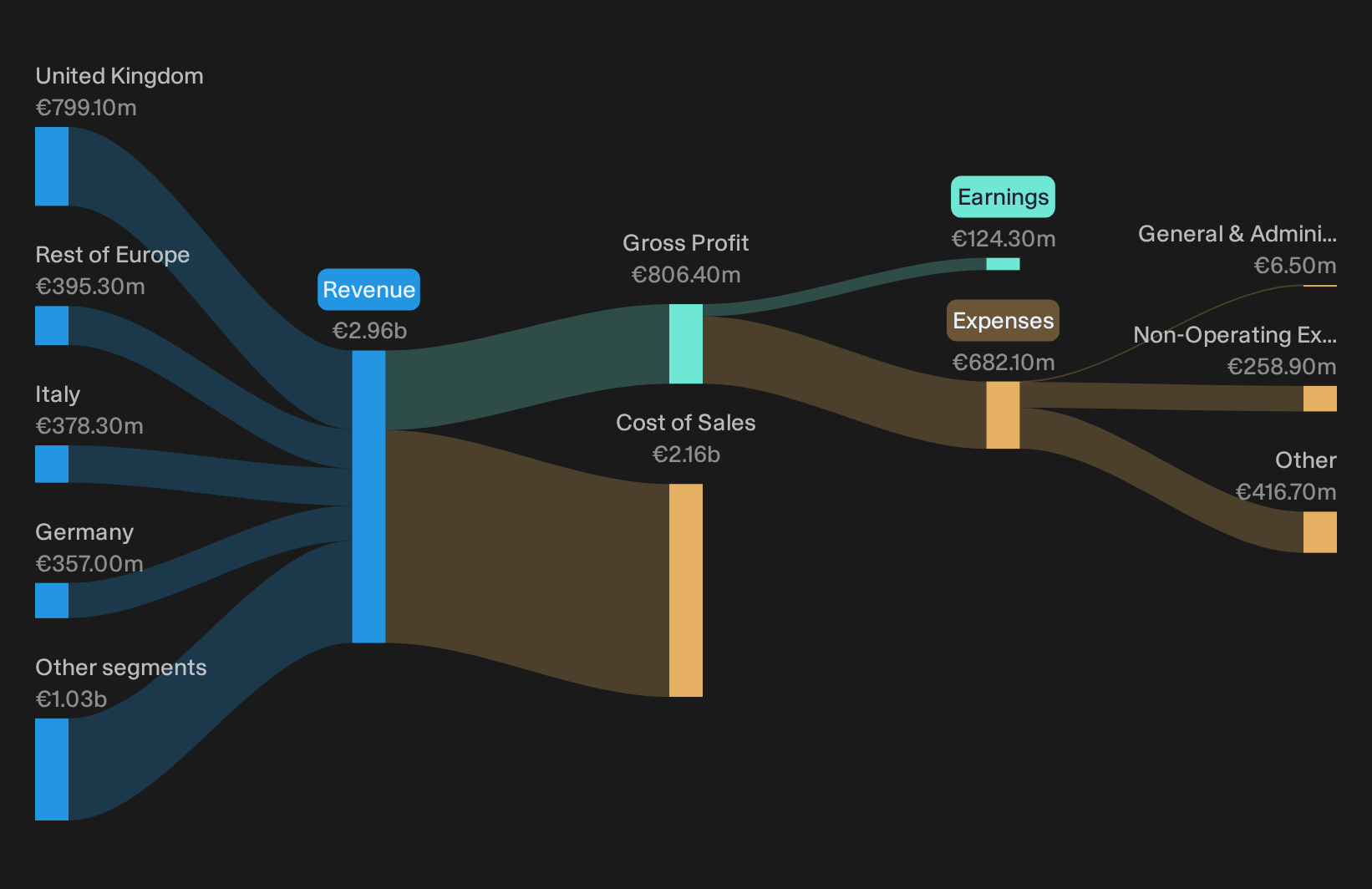
Nomad Foods manufactures branded frozen foods such as fish, vegetables, ready meals, ice cream and pizzas. The company generates about €2.96b of revenue from frozen products and has a market value of roughly US$1.7b.
"Broader frozen category expansion into Chicken, Meals, Potatoes, Pizza and Ice Cream, using existing brands and a pan European footprint, is expected to increase Nomad Foods’ addressable market roughly fourfold and supports a case for higher future revenue and EBITDA if the company converts current pilot successes into wider distribution."
What happens to margins and dividend strength from here depends on how one unresolved cost and cash flow pressure inside Nomad Foods ultimately plays out.
If that pressure point matters to you, read the full narrative for Nomad Foods to evaluate whether Nomad Foods’ frozen footprint is masking resilience or signalling a plateau.
Sysco (SYY)
Sysco sits right in the middle of the defensive dividend theme because it supplies everyday food and supplies to restaurants, hospitals and schools, giving income focused investors exposure to essential spending rather than consumer fads.
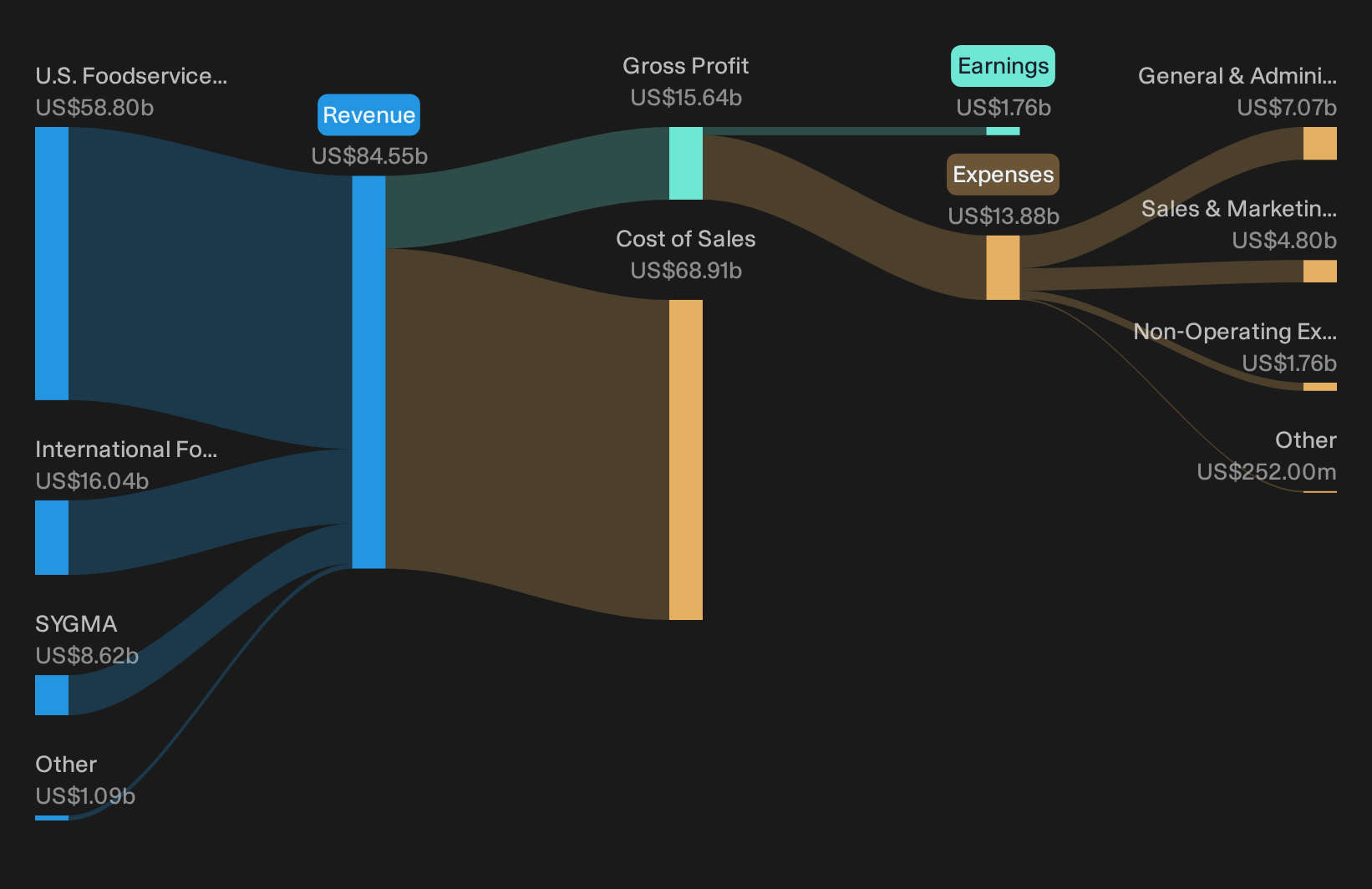
Sysco Corporation is a global foodservice distributor that sells and delivers frozen, fresh and packaged food plus restaurant supplies, with U.S. Foodservice Operations generating about US$58.8b of its revenue, International Foodservice US$16b, SYGMA US$8.6b and Other US$1.1b, and the stock valued at roughly US$40.8b.
"Sysco is rolling out more than 30 AI and technology projects across sales, supply chain, merchandising and back office. The company has about US$100 million of in-year savings built into fiscal 2027 guidance and a targeted US$500 million profit improvement by fiscal 2029 that is aimed at higher operating margins and earnings."
For dividend oriented readers, what happens to those margins if a single key execution assumption shifts will matter far more than any election headline.
If that hinge point worries you or looks like upside, read the full narrative for Sysco to see whether Sysco’s profit plan is accelerating or quietly stalling.
Seeking Alternatives Before The Crowd
Fresh ideas often move first. By the time momentum headlines hit, early entry can be gone and prices already elevated. Focus on under-the-radar breakout setups and consider acting while they remain less widely followed.
- Identify potential breakout payers with strong balance sheets before they are widely discussed by running the 5 dividend fortresses while yields and coverage still look appealing.
- Track where real earnings power intersects with AI-related opportunities by scanning the 41 profitable AI stocks that aren't just burning cash while market attention is still concentrated on the biggest tickers.
- Monitor capital flows into critical materials by reviewing the curated 33 best rare earth metal stocks before sentiment changes and pricing conditions evolve.
Have feedback on this article? Concerned about the content? Get in touch with us directly. Alternatively, email editorial-team@simplywallst.com