


3 Bank Stocks for Investors Seeking Safer Cash Management Options
When a respected researcher starts talking about a potential bubble in U.S. equities and a wave of new securities crowding the market, cash suddenly feels less boring and more like a shelter. Investors hunting for a steadier parking spot for dry powder, or a way to stay close to risk assets without being all in, are paying fresh attention to cash-management and money market fund providers. This article walks through 3 stocks exposed to that story and explains how they might benefit if the crowded trade in U.S. shares starts to thin out.
The three stocks below are a starter pack, not the whole picture, as the full screen turned up another 27 U.S.-listed cash-management and money market fund providers with equally compelling stories that do not fit into one article. If you want to move directly to the broader opportunity set instead of focusing on a short list, head into the U.S. Cash-Management and Money Market Fund Providers screener to identify, compare, and analyze the candidates that best match your own conviction level.
Fifth Third Bancorp (FITB)
Overview: Fifth Third Bancorp is a large U.S. regional bank that uses its deposit rich franchise to provide cash management, lending, and wealth services to consumers, businesses, and institutions. This gives it clear relevance to money market and cash-management themes.
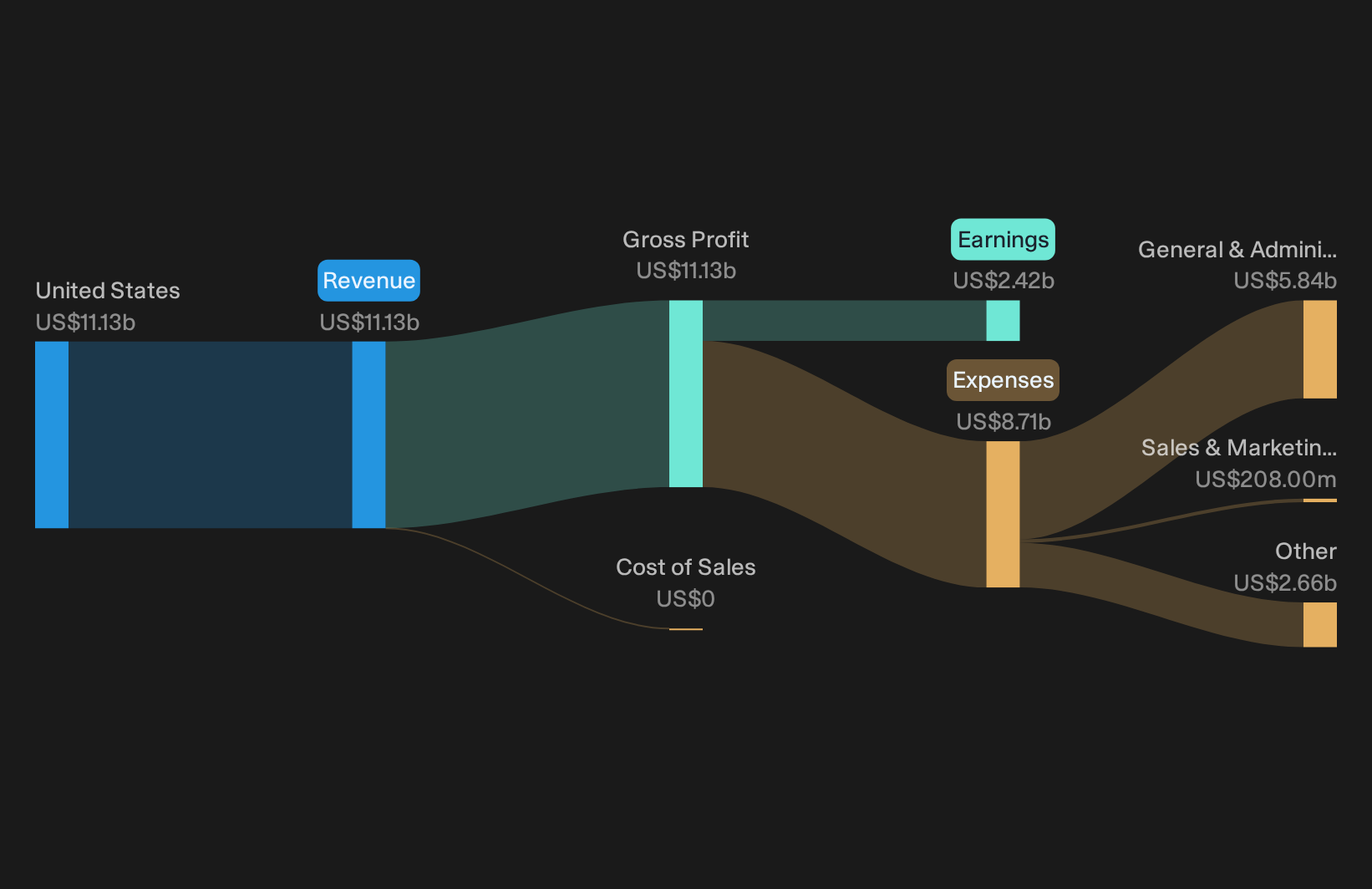
Operations: Fifth Third Bancorp generates around US$11.1b of revenue entirely in the United States, reflecting a domestically focused banking and cash-management footprint.
Market Cap: US$48.9b
Fifth Third Bancorp matters in this cash-management screen because a bigger and stickier deposit base can give investors more ways to park cash close to risk assets without fully committing to equities.
Expansion and densification in fast growing Southeast and Southwest markets is being extended through the Comerica footprint and an accelerated de novo program. The recent outperformance of de novo deposit goals and sizeable Southwest consumer deposit inflows support potential future revenue and market share growth.
What happens to Fifth Third Bancorp’s earnings power hinges on one unresolved pressure that could sharply shift future funding costs.
If that funding squeeze is the real swing factor, read the full narrative for Fifth Third Bancorp to see how deposit momentum, fee income, and credit trends could be decoupling beneath the surface.
United Community Banks (UCB)
Overview: United Community Banks runs a Greenville based regional bank that offers everyday deposits, lending, and cash-style accounts across multiple sectors.
Operations: United Community Banks generates about US$817 million of community banking revenue, entirely from customers in the United States.
Market Cap: US$4.4b
United Community Banks fits this cash-management screen because its deposit rich community banking model can act as a home base for customers rotating toward bank-based cash vehicles if equity markets start to look crowded.
Refocusing United Community Banks on core Southeastern relationship banking following the approximately US$2.0b Navitas sale, with capital and management time shifting toward community and commercial customers in its footprint, is expected to influence future loan growth and fee revenue.
What happens to United Community Banks’ earnings power depends on how one quiet shift in its funding mix affects future margins.
That quiet funding shift is the real tell, and the fastest way to see how it could reshape United Community Banks is in the full narrative for United Community Banks, which explains where deposit mix, capital deployment, and margin resilience may be heading.

Banc of California (BANC)
Overview: Banc of California provides commercial banking, lending, and treasury management services that help businesses and wealthy clients manage sizeable short term cash balances.
Operations: Banc of California generates about US$706 million of commercial banking revenue, all from customers in the United States.
Market Cap: US$2.9b
Banc of California matters in this cash-management screen because its treasury and payment services are built for clients parking large transactional cash piles.
Although Banc of California expects higher yielding reinvestment from securities repositioning and multifamily loan repricing to lift net interest margin over time, the recent net loss of $251.3 million tied to securities losses and elevated provision expense suggests that future balance sheet optimization could continue to require sizeable upfront charges that weigh on earnings and tangible book value accretion.
What happens when one quiet shift in how Banc of California funds and prices these cash balances finally shows through in reported margins?
When that funding shift finally bites, the full narrative for Banc of California shows whether Banc of California’s restructuring charges are masking improving earnings power or indicating a slower reset ahead.

Curious About The Next Alternatives
Fresh ideas move first. Breakout stories gain momentum while the best entry points quietly drop away. Scan these under the radar lists before the crowd and get in early.
- Spot steadier income plays as yields move around by scanning the 5 dividend fortresses built to highlight cash generators that aim to keep payouts flying while it matters.
- Hunt for quality at a discount with the 33 high quality undervalued stocks curated to surface businesses where momentum has not yet caught up with underlying fundamentals.
- Target future-facing infrastructure by using the 54 AI infrastructure stocks pointing you toward companies supplying the picks and shovels for AI while many investors remain focused elsewhere.
Have feedback on this article? Concerned about the content? Get in touch with us directly. Alternatively, email editorial-team@simplywallst.com