


McDonalds Stock And Resilient Spending Why Fast Food Demand Still Matters
Consumers are still buying concert tickets, sneakers and restaurant meals even as essentials stay expensive, which keeps the U.S. Consumer Discretionary and Restaurants Benefiting from Resilient Spending theme firmly in play in the run-up to the Nov. 3 elections. That mix of pressure and persistence can punish the wrong stocks and reward the right ones. This article breaks down three companies exposed to these trends so you can evaluate where the real opportunity may sit.
The stocks covered below are only a small sample of the opportunities that fit this resilient spending theme. The full screen surfaced 69 more U.S.-listed consumer discretionary and restaurant companies with similar stories that are not covered in this article. To go straight to the source and identify, filter, and analyze your own highest conviction ideas within the U.S. Consumer Discretionary and Restaurants Benefiting from Resilient Spending group, head directly to the U.S. Consumer Discretionary and Restaurants Benefiting from Resilient Spending screener.
McDonald's (MCD)
McDonald’s is a textbook fit for this resilient spending theme, offering quick, relatively low-ticket meals that can feel like an affordable treat when households trim bigger luxuries but keep eating out.
McDonald's runs and franchises its branded burger and breakfast outlets globally, with revenue anchored in the U.S. at about US$10.96b alongside roughly US$14.18b from international operated markets and US$2.56b from licensed markets, and the group carries a market value near US$182.7b.
However, the weakness of the economy and consumer spending will put pressure in revenue growth during the next couple of years, together with the fact that a more health aware customer (resulting, or not, from new obesity drugs) will probably opt for other choices.
Where margins and demand settle could hinge on how one unresolved pressure on everyday meal choices plays out for McDonald’s.
Those cross currents are exactly what the full narrative for McDonald's unpacks, separating short term headline risk from areas where long term brand and pricing power could still be accelerating.

Starbucks (SBUX)
Starbucks is a pure play on resilient small-ticket indulgence, with coffee, tea and food treats that often stay in the budget even when larger discretionary purchases are cut back.
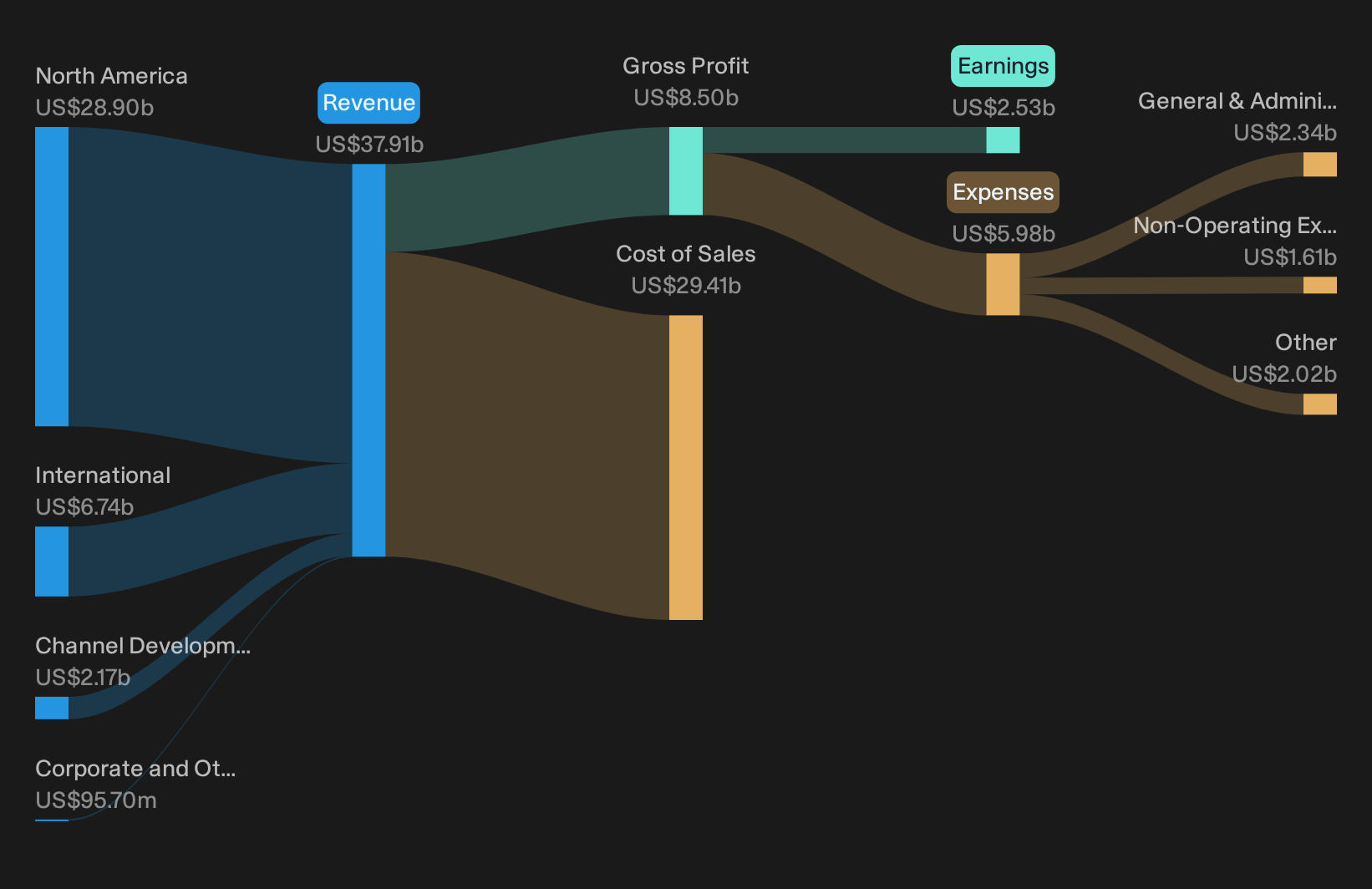
Starbucks runs company-operated and licensed coffee shops worldwide, anchored in North America, which generated about US$28.9b of revenue, alongside US$6.7b from International operations and US$2.2b from Channel Development, and the group carries a market value near US$118.2b.
Back to Starbucks started as a turnaround plan. Now Back to Starbucks is our growth plan.
What that shift means for future earnings power depends on how one pressure on store level profitability and customer traffic ultimately resolves.
That unresolved pressure point is exactly where the full narrative for Starbucks digs in, revealing how Starbucks could turn cost friction into accelerating brand strength and traffic resilience.
Chipotle Mexican Grill (CMG)
Chipotle Mexican Grill plugs directly into the resilient spending theme, as consumers still treat themselves to fast-casual meals even while trimming bigger luxuries, and the business keeps leaning on that habit through new stores and heavier digital engagement.
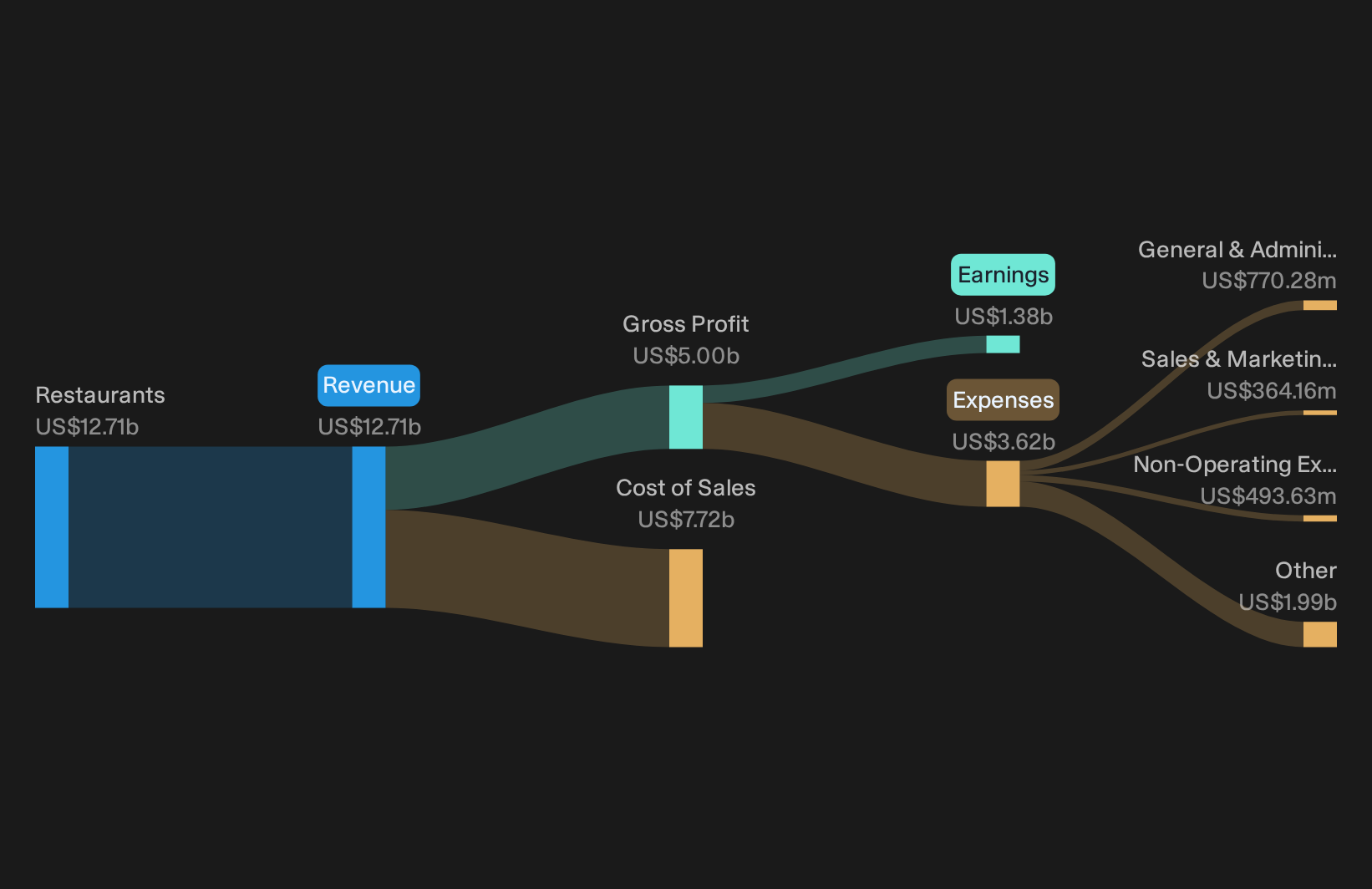
Chipotle Mexican Grill runs fast-casual restaurants serving Mexican-inspired meals like burritos and bowls, with essentially all of its US$12.7b in revenue coming from restaurant sales that fit the discretionary dining theme, and the stock carries a market value of about US$40.3b.
Opening more restaurants (350 to 370 new locations planned for 2026) and expanding Chipotlane drive-thru pickup locations, which improve convenience and sales per restaurant.
What really matters next is how one less visible cost pressure interacts with that expansion push to shape future restaurant level profitability.
That cost squeeze is exactly where the full narrative for Chipotle Mexican Grill shows whether Chipotle Mexican Grill's expansion is quietly accelerating pricing power or masking future pressure on returns.
Seeking Alternatives Before Everyone Else?
Fresh ideas move first. Breakout themes can gain momentum while they are still under the radar, and laggards can lose ground. Scan the next wave and consider your options.
- Target durable income by reviewing a curated group of high-yield payers in the 5 dividend fortresses before yields change and the crowd focuses on the same payouts.
- Explore the AI infrastructure buildout by checking companies powering data centers and chips through the 54 AI infrastructure stocks while spending trends are still being evaluated.
- Prepare for potential shifts in the resource cycle by reviewing producers in the 16 top copper producer stocks as demand trends continue to develop in broader market expectations.
Have feedback on this article? Concerned about the content? Get in touch with us directly. Alternatively, email editorial-team@simplywallst.com