


Here's Why We're Wary Of Buying Sanofi India's (NSE:SANOFI) For Its Upcoming Dividend
Regular readers will know that we love our dividends at Simply Wall St, which is why it's exciting to see Sanofi India Limited (NSE:SANOFI) is about to trade ex-dividend in the next three days. Typically, the ex-dividend date is two business days before the record date, which is the date on which a company determines the shareholders eligible to receive a dividend. The ex-dividend date is of consequence because whenever a stock is bought or sold, the trade can take two business days or more to settle. In other words, investors can purchase Sanofi India's shares before the 5th of November in order to be eligible for the dividend, which will be paid on the 28th of November.
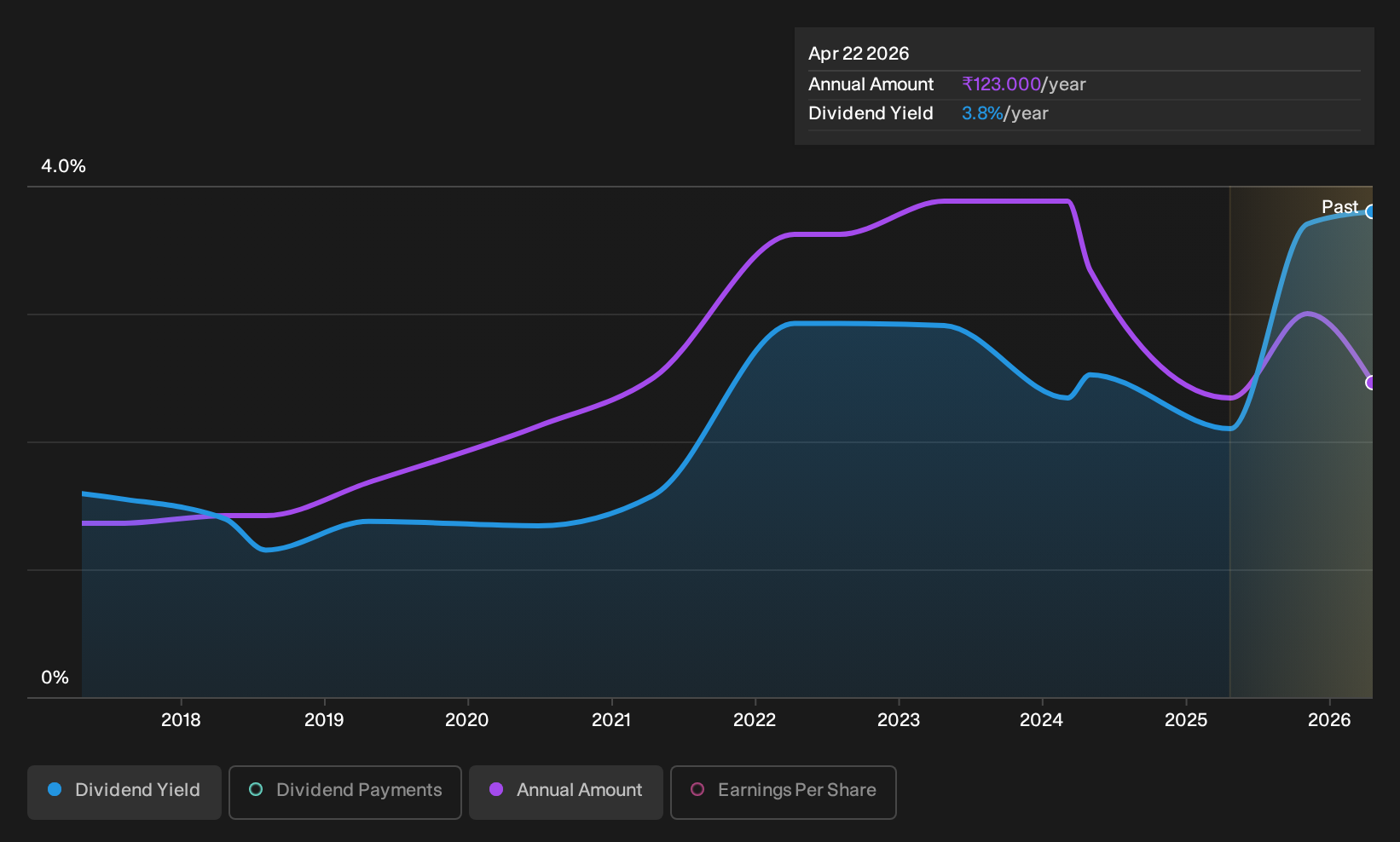
The company's next dividend payment will be ₹75.00 per share, and in the last 12 months, the company paid a total of ₹123 per share. Based on the last year's worth of payments, Sanofi India stock has a trailing yield of around 3.8% on the current share price of ₹3204.10. Dividends are a major contributor to investment returns for long term holders, but only if the dividend continues to be paid. We need to see whether the dividend is covered by earnings and if it's growing.
Dividends are typically paid out of company income, so if a company pays out more than it earned, its dividend is usually at a higher risk of being cut. That's why it's good to see Sanofi India paying out a modest 30% of its earnings. That said, even highly profitable companies sometimes might not generate enough cash to pay the dividend, which is why we should always check if the dividend is covered by cash flow. Over the past year it paid out 131% of its free cash flow as dividends, which is uncomfortably high. It's hard to consistently pay out more cash than you generate without either borrowing or using company cash, so we'd wonder how the company justifies this payout level.
While Sanofi India's dividends were covered by the company's reported profits, cash is somewhat more important, so it's not great to see that the company didn't generate enough cash to pay its dividend. Were this to happen repeatedly, this would be a risk to Sanofi India's ability to maintain its dividend.
See our latest analysis for Sanofi India
Click here to see the company's payout ratio, plus analyst estimates of its future dividends.
Have Earnings And Dividends Been Growing?
When earnings decline, dividend companies become much harder to analyse and own safely. If business enters a downturn and the dividend is cut, the company could see its value fall precipitously. Readers will understand then, why we're concerned to see Sanofi India's earnings per share have dropped 5.3% a year over the past five years. Ultimately, when earnings per share decline, the size of the pie from which dividends can be paid, shrinks.
Many investors will assess a company's dividend performance by evaluating how much the dividend payments have changed over time. Sanofi India has delivered an average of 11% per year annual increase in its dividend, based on the past 10 years of dividend payments.
To Sum It Up
Is Sanofi India an attractive dividend stock, or better left on the shelf? It's disappointing to see earnings per share declining, and this would ordinarily be enough to discourage us from most dividend stocks, even though Sanofi India is paying out less than half its income as dividends. However, it's also paying out an uncomfortably high percentage of its cash flow, which makes us wonder just how sustainable the dividend really is. Overall it doesn't look like the most suitable dividend stock for a long-term buy and hold investor.
So if you're still interested in Sanofi India despite it's poor dividend qualities, you should be well informed on some of the risks facing this stock. Every company has risks, and we've spotted 1 warning sign for Sanofi India you should know about.
Generally, we wouldn't recommend just buying the first dividend stock you see. Here's a curated list of interesting stocks that are strong dividend payers.
Have feedback on this article? Concerned about the content? Get in touch with us directly. Alternatively, email editorial-team (at) simplywallst.com.