


Did Q3 Earnings Forecasts Just Shift McDonald's (MCD) Investment Narrative?
- McDonald's is approaching its Q3 2026 report, with analysts forecasting quarterly earnings of $3.36 per share on revenue of $7.28b, supported by expectations for higher franchised revenue and more systemwide restaurants.
- The focus on a franchise first model that converts everyday traffic into recurring cash flow is being discussed alongside expectations for double digit Q3 earnings growth in the wider Consumer Discretionary sector. Together, these factors frame how resilient McDonald's underlying economics may look against consumer and cost pressures.
- The next focus will be on how this anticipated Q3 earnings strength may influence McDonald's broader investment narrative and risk balance.
Compare McDonald's income engine with a curated 5 dividend fortresses that also aims to convert steady cash generation into reliable shareholder payouts.
McDonald's Investment Narrative Recap
To stay invested in McDonald's, you need to be comfortable that its franchise-heavy model keeps turning everyday visits into resilient cash flow, even while low income traffic and U.S. comparable sales face pressure. The near term swing factor is whether value menus and digital offers can stabilise those guest counts without eroding restaurant level profitability.
The biggest risk right now sits in a mix of softer U.S. comps, higher beef and labour costs and the delayed 50,000 restaurant target, which together can squeeze margins. The latest Q3 expectations point to earnings and revenue growth, but this does not materially change those core execution and cost risks.
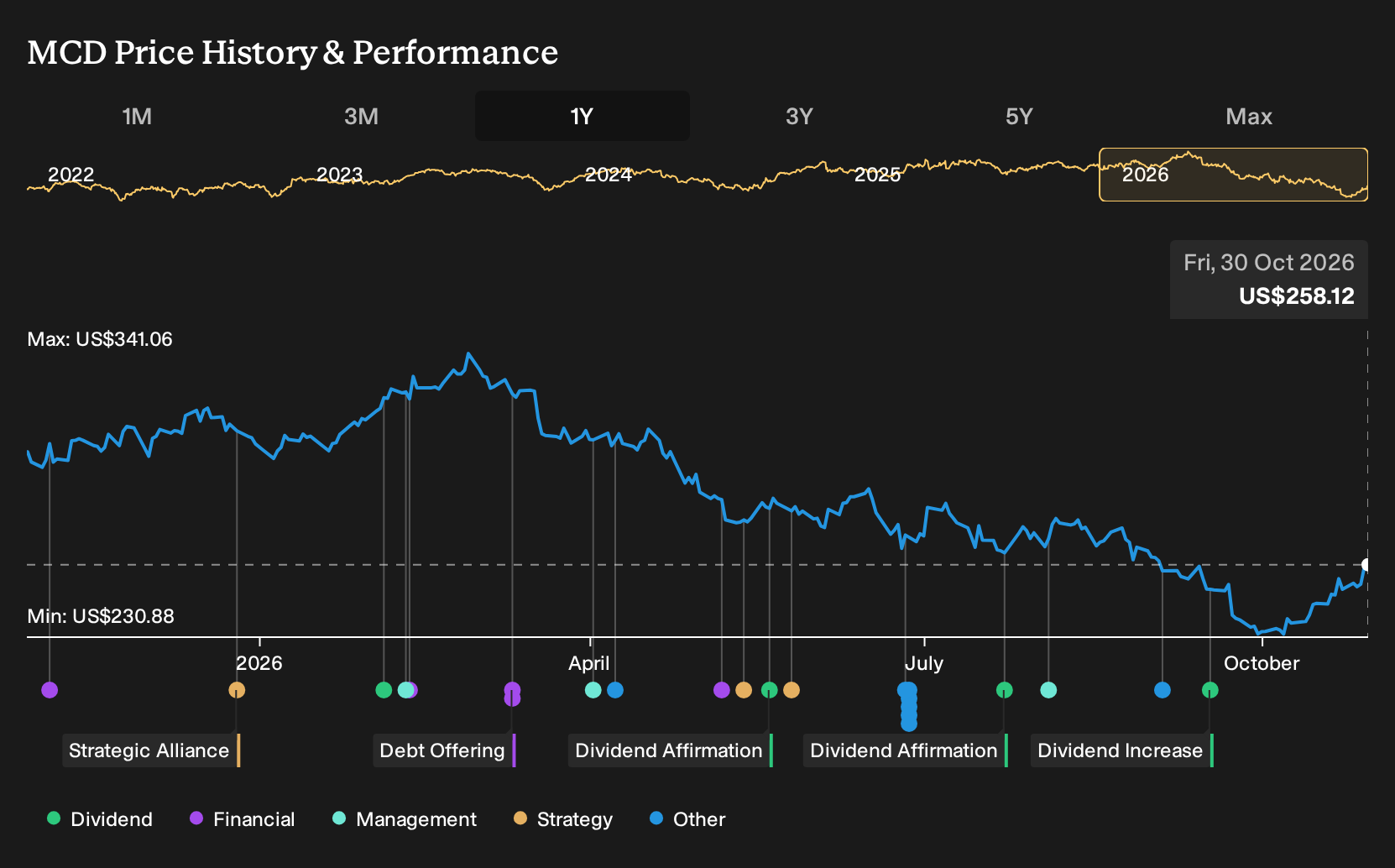
The most relevant data point linked to the current discussion is the view that McDonald's share price is trading above some discounted cash flow estimates of future value. That suggests the market is already factoring in steady execution on digital, value platforms and expansion, so disappointments on traffic or margins can matter more in the near term.
Analyst forecasts around $3.36 in Q3 earnings per share and US$7.28b of revenue frame a practical test of that optimism. If reported results and commentary on loyalty, specialty beverages and value menus line up with those expectations, it can reinforce the existing investment case. If not, the gap between price and cash flow assumptions becomes a more pressing issue for holders to weigh.
McDonald's narrative projects US$28.5b revenue and US$10.2b earnings by 2029. This rests on analysts assuming revenue remains broadly flat over the next few years and an earnings increase of about US$1.4b from US$8.8b today.
Uncover why McDonald's fair value indicates a 15% potential upside to its current price before that discount to expectations closes.
Exploring Other Perspectives
Seven fair value views from the Simply Wall St Community cluster between about US$225 and US$297, so you are seeing a wide band of outcomes from different retail investors. Set that against risks around weak low income traffic, higher beef and labour costs, and digital execution, and the range starts to look like a real-time scorecard on how uncertain McDonald's future cash generation feels. Use that spread to pressure test your own thesis and explore how other holders are thinking about upside and downside.
Explore 6 other McDonald's fair value estimates, including one that suggests up to 15% upside from the current price.
Form Your Own Verdict
Disagree with existing narratives? Extraordinary investment returns rarely come from following the herd, so consider doing your own research and analysis.
- A great starting point for your McDonald's research is our analysis highlighting 3 key rewards and 1 important warning sign that could impact your investment decision.
- See our latest analysis for McDonald's. The report includes a fundamental analysis summarized in a single visual, the Snowflake, making it easy to review McDonald's overall financial position at a glance.
Looking For More Ideas Beyond McDonald's?
If you want to stress test your McDonald's thesis against other opportunities, the Simply Wall St Screener can help you compare different types of businesses using the same consistent framework.
- For readers who care most about balance sheet strength and fundamental resilience, start with a list of solid balance sheet and fundamentals (24 results) that aims to spotlight companies built to handle tougher conditions.
- If you would rather focus on paying less for quality, scan a 30 high quality undervalued stocks that brings together businesses where cash flows and balance sheets may not be fully reflected in current prices.
- For investors who want income as well as potential capital gains, shortlist a 5 dividend fortresses designed to surface companies that prioritise consistent shareholder payouts.
Have feedback on this article? Concerned about the content? Get in touch with us directly. Alternatively, email editorial-team@simplywallst.com