


We Wouldn't Be Too Quick To Buy Symphony Limited (NSE:SYMPHONY) Before It Goes Ex-Dividend
It looks like Symphony Limited (NSE:SYMPHONY) is about to go ex-dividend in the next 2 days. The ex-dividend date generally occurs two days before the record date, which is the day on which shareholders need to be on the company's books in order to receive a dividend. The ex-dividend date is important as the process of settlement involves at least two full business days. So if you miss that date, you would not show up on the company's books on the record date. Accordingly, Symphony investors that purchase the stock on or after the 4th of November will not receive the dividend, which will be paid on the 28th of November.
The company's upcoming dividend is ₹2.00 a share, following on from the last 12 months, when the company distributed a total of ₹9.00 per share to shareholders. Based on the last year's worth of payments, Symphony stock has a trailing yield of around 1.8% on the current share price of ₹490.85. If you buy this business for its dividend, you should have an idea of whether Symphony's dividend is reliable and sustainable. So we need to investigate whether Symphony can afford its dividend, and if the dividend could grow.
Dividends are typically paid from company earnings. If a company pays more in dividends than it earned in profit, then the dividend could be unsustainable. Symphony reported a loss last year, so it's not great to see that it has continued paying a dividend. With the recent loss, it's important to check if the business generated enough cash to pay its dividend. If cash earnings don't cover the dividend, the company would have to pay dividends out of cash in the bank, or by borrowing money, neither of which is long-term sustainable. Thankfully its dividend payments took up just 48% of the free cash flow it generated, which is a comfortable payout ratio.
See our latest analysis for Symphony
Click here to see the company's payout ratio, plus analyst estimates of its future dividends.
Have Earnings And Dividends Been Growing?
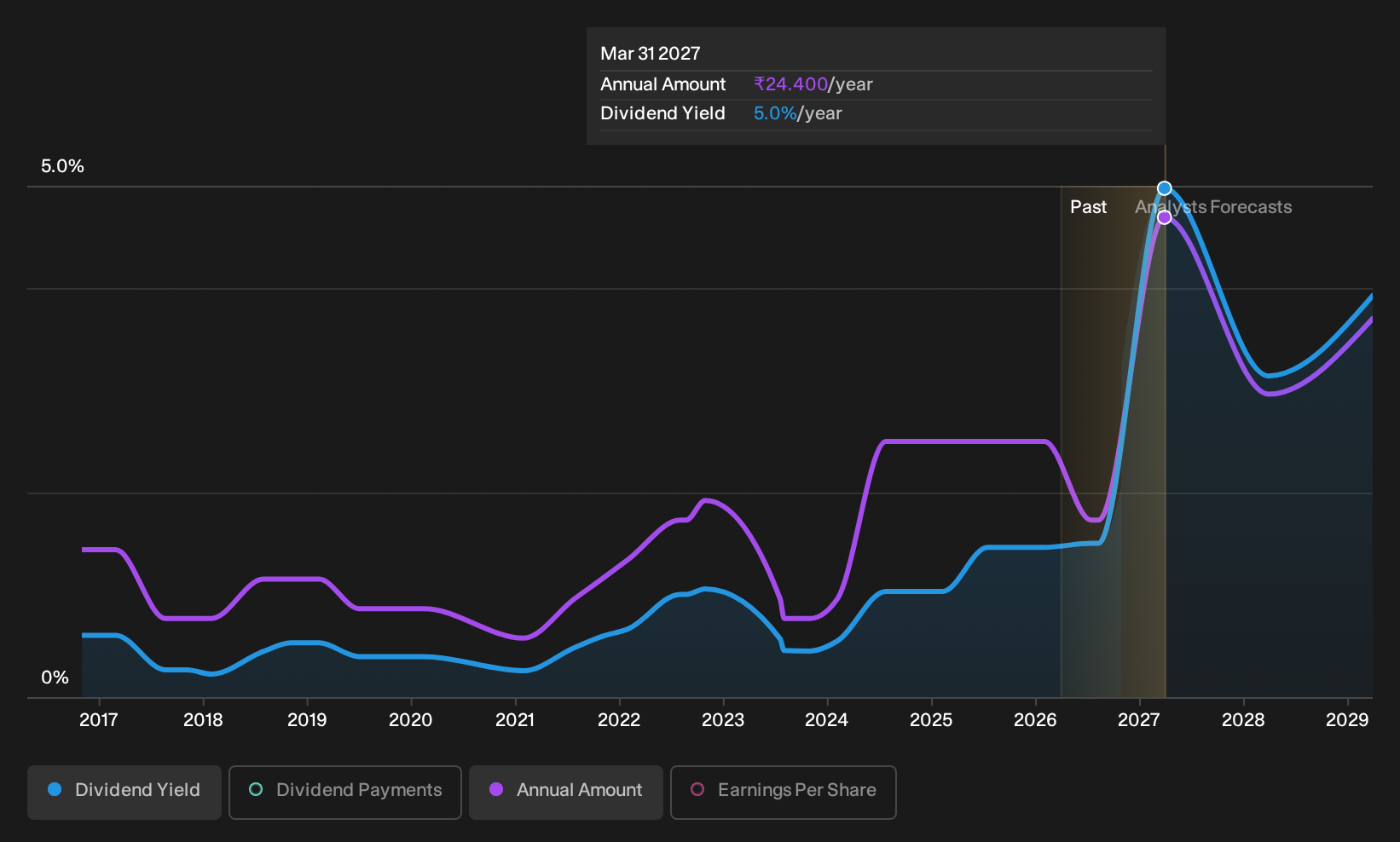
Companies with falling earnings are riskier for dividend shareholders. If earnings decline and the company is forced to cut its dividend, investors could watch the value of their investment go up in smoke. Symphony was unprofitable last year and, unfortunately, the general trend suggests its earnings have been in decline over the last five years, making us wonder if the dividend is sustainable at all.
Many investors will assess a company's dividend performance by evaluating how much the dividend payments have changed over time. Symphony has delivered an average of 1.8% per year annual increase in its dividend, based on the past 10 years of dividend payments.
Remember, you can always get a snapshot of Symphony's financial health, by checking our visualisation of its financial health, here.
Final Takeaway
Has Symphony got what it takes to maintain its dividend payments? First, it's not great to see the company paying a dividend despite being loss-making over the last year. On the plus side, the dividend was covered by free cash flow." Bottom line: Symphony has some unfortunate characteristics that we think could lead to sub-optimal outcomes for dividend investors.
So if you're still interested in Symphony despite it's poor dividend qualities, you should be well informed on some of the risks facing this stock. For example - Symphony has 1 warning sign we think you should be aware of.
A common investing mistake is buying the first interesting stock you see. Here you can find a full list of high-yield dividend stocks.
Have feedback on this article? Concerned about the content? Get in touch with us directly. Alternatively, email editorial-team (at) simplywallst.com.