


Will New Hotels In Uzbekistan And Thailand Change IHG's (LSE:IHG) Narrative
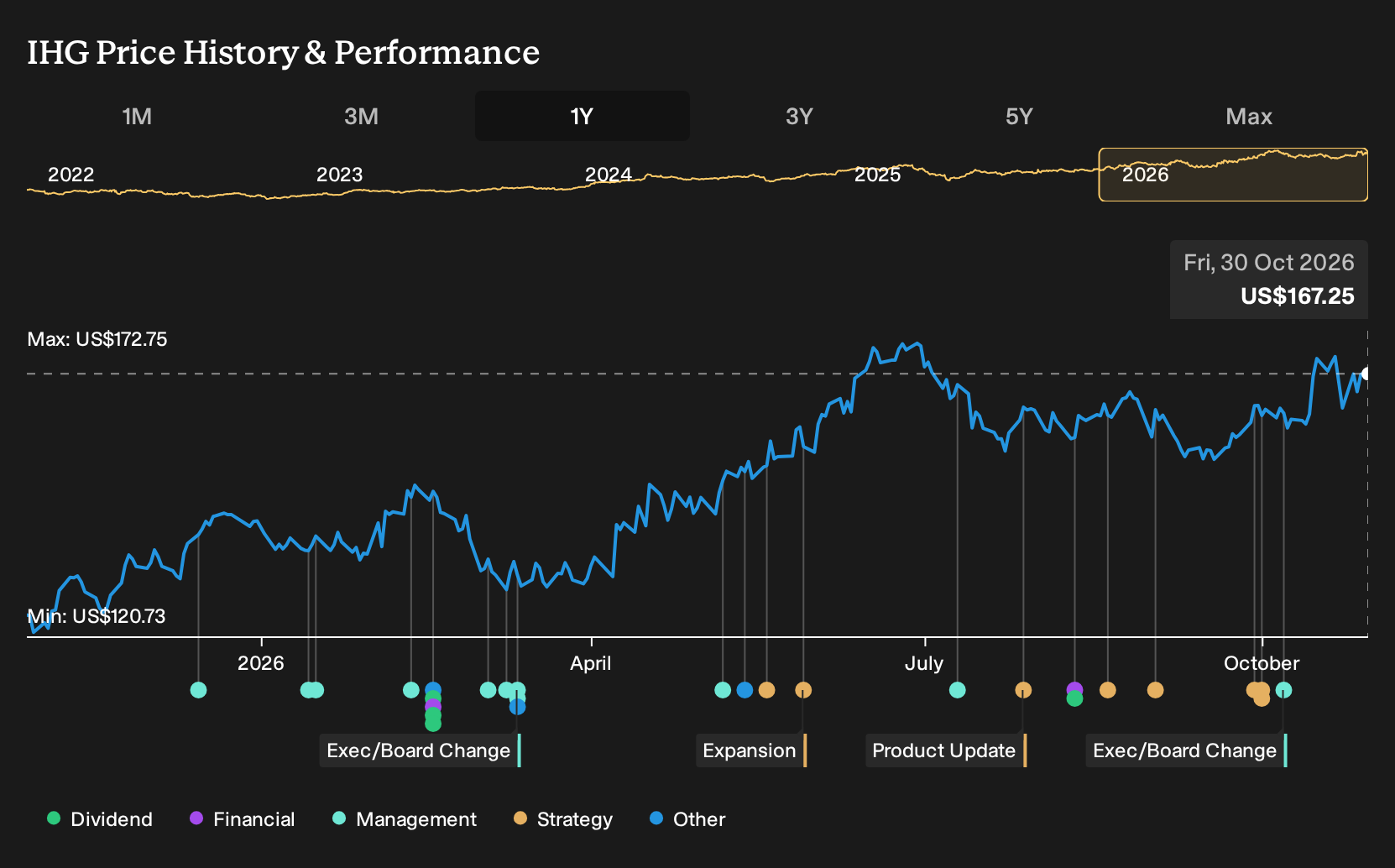
- InterContinental Hotels Group has recently agreed to introduce its Garner brand in Tashkent, Uzbekistan, and its Ruby premium lifestyle brand in Bangkok, Thailand, with both hotels scheduled to open in 2027.
- The twin moves add a midscale option in Central Asia and a lifestyle concept in a major Thai commercial hub, widening IHG's fee-based exposure across different guest segments in Asia.
- We will look at how InterContinental Hotels Group's investment narrative is shaped by this Ruby lifestyle push into Bangkok.
Scan beyond InterContinental Hotels Group and see how other established operators are positioning for the next travel cycle with our hand picked 12 high quality undervalued stocks.
InterContinental Hotels Group Investment Narrative Recap
To own InterContinental Hotels Group, you need to believe the asset light, fee heavy model can keep turning a bigger hotel pipeline into higher quality earnings despite patchy regional RevPAR and rising interest costs. The Ruby Bangkok and Garner Tashkent deals support that system growth story, but they are small next to the existing 33% pipeline.
The near term swing factor remains how broad based RevPAR trends and fee margins hold up while financing costs are guided higher into 2027. Weakness in Greater China and the Middle East is still the biggest operational risk. These signings do not change that balance, although they modestly thicken future fee pools.
The most immediately relevant development around this story is InterContinental Hotels Group buying back 5,000 shares on 28 October 2026 and another 5,000 on 29 October 2026, with the stated intention to cancel them. That reinforces a capital return approach where management shrinks the share count alongside dividends, in addition to the growth coming from new branded rooms.
For investors, the interest is how this interacts with higher debt levels, negative shareholders’ equity and guided increases in interest expense. Continued repurchases concentrate both potential upside and balance sheet risk on a smaller equity base. Execution on Ruby, Garner and other pipeline openings then feeds directly into fee income per share, making delivery against RevPAR and margin goals even more important.
InterContinental Hotels Group's analyst narrative points to revenues of US$3.1b and earnings of US$1.1b by 2029, built on an assumed yearly revenue decline of 16.5% and an earnings increase of about US$386m from current earnings of US$714.0m.
Uncover why InterContinental Hotels Group's fair value indicates that it is in line with its current price.
Exploring Other Perspectives
Some of the most optimistic analysts focus less on RevPAR risk and more on what InterContinental Hotels Group could earn if its Luxury and Lifestyle push really works. Before this Bangkok Ruby signing, the bullish camp was already sketching out about US$2.8b of revenue and US$1.4b of earnings by 2029. Those views were set without this news in mind, so you may want to compare them with your own expectations and decide whether Ruby Bangkok and Garner Tashkent might nudge that story higher or leave it broadly unchanged.
Explore 3 other InterContinental Hotels Group fair value estimates, including one that suggests there may be up to 17% potential upside from the current price.
Decide For Yourself
Don't just follow the ticker, dig into the data and build a conviction that's truly your own.
- A great starting point for your InterContinental Hotels Group research is our analysis highlighting 1 key reward and 2 important warning signs that could impact your investment decision.
- See our latest analysis for InterContinental Hotels Group. The report includes a comprehensive fundamental analysis summarized in a single visual, the Snowflake, making it easy to evaluate InterContinental Hotels Group's overall financial health at a glance.
Looking For More InterContinental Hotels Group Investment Ideas?
If you want to stress test your view on InterContinental Hotels Group, compare it with other opportunities that fit different return and risk profiles using the Simply Wall St screener.
- For investors hunting for mispriced quality, scan a curated pool of 5 high quality undiscovered gems that might not yet be widely followed by the market.
- If capital preservation is your priority, filter for 5 resilient stocks with low risk scores and see which businesses score well on stability and risk metrics.
- Income focused readers can hunt for reliable cash return potential through a targeted set of 5 dividend fortresses that already offer elevated yields.
Have feedback on this article? Concerned about the content? Get in touch with us directly. Alternatively, email editorial-team@simplywallst.com