


Should Strong Earnings Expectations Require Action From ConocoPhillips (COP) Investors?
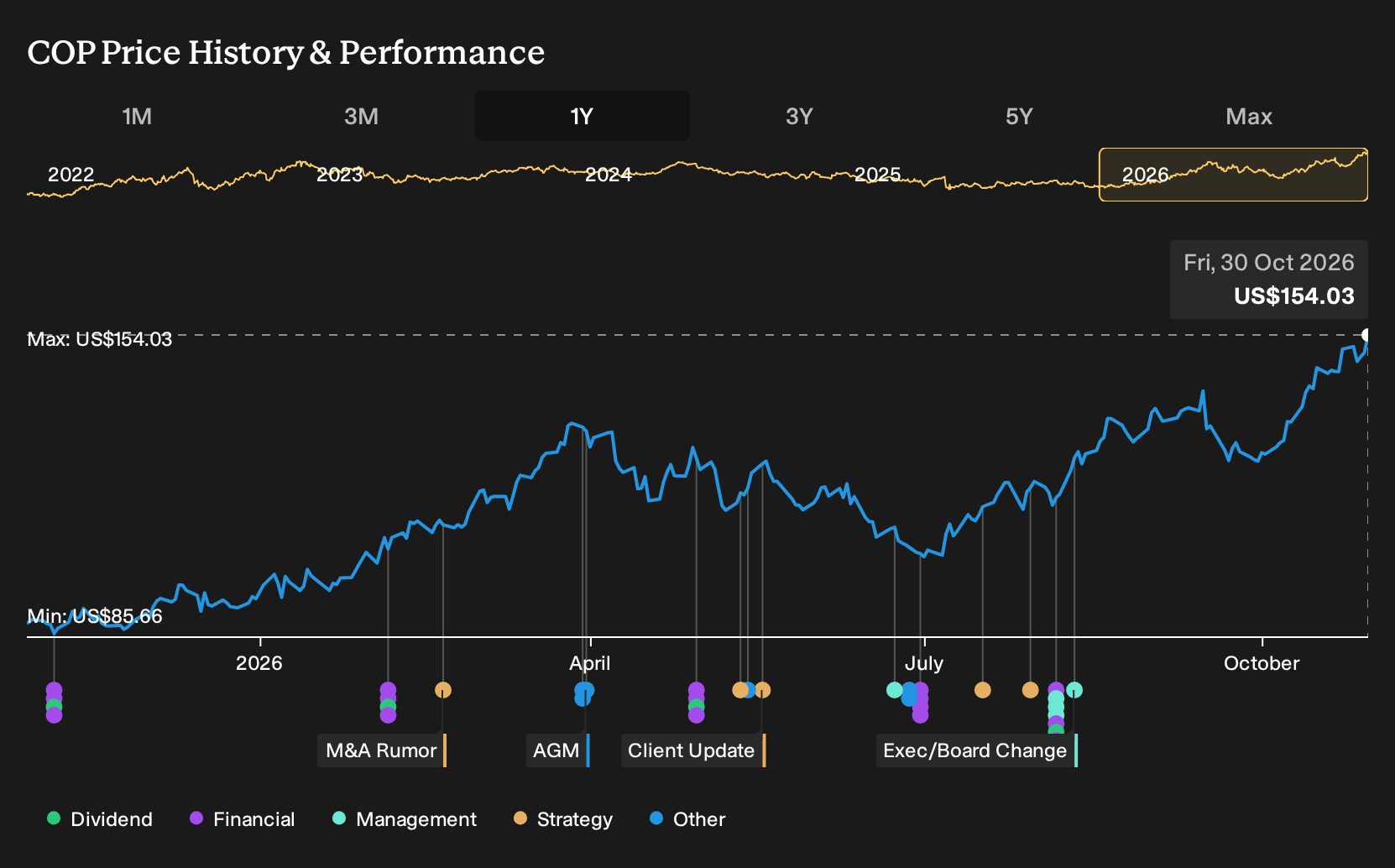
- ConocoPhillips is approaching its third quarter 2026 earnings release after past estimate beats, with analysts pointing to higher revenue and earnings expectations supported by firm oil and gas pricing.
- The business remains focused on long life oil and LNG developments such as Willow and Port Arthur. Execution, capital intensity and geopolitical risk could heavily influence how much of the expected cash generation actually materializes over time.
- We will now look at how this anticipated earnings strength in a firm oil market could affect ConocoPhillips' broader investment narrative.
ConocoPhillips Investment Narrative Recap
To own ConocoPhillips, you need to be comfortable with a business built around large, long life oil and LNG projects, backed by meaningful exposure to U.S. shale. The near term story hinges on execution at Willow, Port Arthur and other LNG ventures, while keeping capital spending in check so free cash flow does not get squeezed.
The upcoming third quarter 2026 earnings release is the key near term catalyst because it gives a read on how current oil pricing, Permian reinvestment and international operations are feeding into cash generation. Recent ETF outflows look modest against that backdrop and do not materially change the core risk or opportunity set.
One announcement that ties most clearly into the current setup is management’s decision to raise 2026 capital spending guidance to US$12b to US$12.5b to support higher Permian activity. That choice keeps the production opportunity alive in the Lower 48, yet it also means reinvestment may stay higher for longer than some investors once hoped.
For you as a shareholder, the question is whether that extra US$0.5b of spend helps protect volumes ahead of LNG contributions from projects like Port Arthur, or simply weighs on free cash flow. How the third quarter report frames returns on this incremental shale capital will feed directly into the near term ConocoPhillips catalyst and risk discussion.
ConocoPhillips' narrative projects US$69.1b revenue and US$11.5b earnings by 2029. This rests on analysts assuming 2.4% yearly revenue growth and an earnings increase of about US$2.2b from the current level of US$9.3b.
Uncover why ConocoPhillips' fair value indicates a 3% potential downside to its current price, which leaves little room for error.
Exploring Other Perspectives
One alternate view on ConocoPhillips leans hard into project risk. The most pessimistic analysts assume revenue drifts to about US$62.0b and earnings of roughly US$9.9b by 2029, before this ETF selling and earnings setup. That colder outlook shows how far opinions can spread, so explore several narratives before deciding where you sit.
Explore 3 other ConocoPhillips fair value estimates, including one that suggests it could be worth just $149.04.
Reach Your Own Conclusion
Disagree with existing narratives? Extraordinary investment returns rarely come from following the herd, so consider going with your instincts.
- A great starting point for your ConocoPhillips research is our analysis highlighting 1 key reward and 2 important warning signs that could impact your investment decision.
- See our latest analysis for ConocoPhillips. The report includes a comprehensive fundamental analysis summarized in a single visual, the Snowflake, making it easy to evaluate ConocoPhillips' overall financial health at a glance.
Looking for more ConocoPhillips style ideas?
If the ConocoPhillips story has you thinking about position sizing, risk and future income, it can help to line it up against other candidates with similar traits but different payoffs.
- For a focus on stability and capital preservation, review a 30 resilient stocks with low risk scores that have historically shown milder swings and more contained drawdowns.
- If you are hunting for mispriced quality, scan a 29 high quality undervalued stocks that combine solid fundamentals with more modest expectations baked into their valuations.
- Income driven investors can start with a 5 dividend fortresses that aim to balance higher yields with balance sheets that look built to support ongoing payouts.
Have feedback on this article? Concerned about the content? Get in touch with us directly. Alternatively, email editorial-team@simplywallst.com