


Special Dividend May Alter The Investment Case For First National Bank Alaska Stock
- First National Bank Alaska's board has declared both a regular quarterly cash dividend of $4.00 per share and a special $4.00 per share dividend, payable in December 2026 to shareholders of record on December 1, 2026.
- The combined $8.00 per share cash return reflects management's current decision to distribute capital to shareholders rather than retain all funds for future lending or investment opportunities.
- Attention will now turn to how this larger cash return package influences First National Bank Alaska's broader investment narrative and appeal.
What Is First National Bank Alaska's Investment Narrative?
To own First National Bank Alaska, you need to be comfortable with a fairly concentrated, locally focused lender that leans on traditional banking, fee income, and long relationships rather than big national scale. Earnings have grown 8% a year over the past 5 years and net profit margins sit at 37.1%, which supports the idea of a disciplined operation but not a hyper growth story. The recent regular and special dividends fit that profile, as management is choosing to return a chunk of capital instead of aggressively reserving every dollar for expansion.
In the short term, the dual payout is unlikely to change the core drivers, which still come down to how effectively the bank converts deposits and equity into interest and fee income. Higher cash distributions can tighten flexibility if credit conditions or funding costs move against the institution, especially with an already low 14.3% return on equity and a P/E of 12.7x that is above both US banks and peer averages. You also have an unstable dividend track record flagged in the data, so a richer dividend today does not automatically mean a smooth pattern tomorrow.
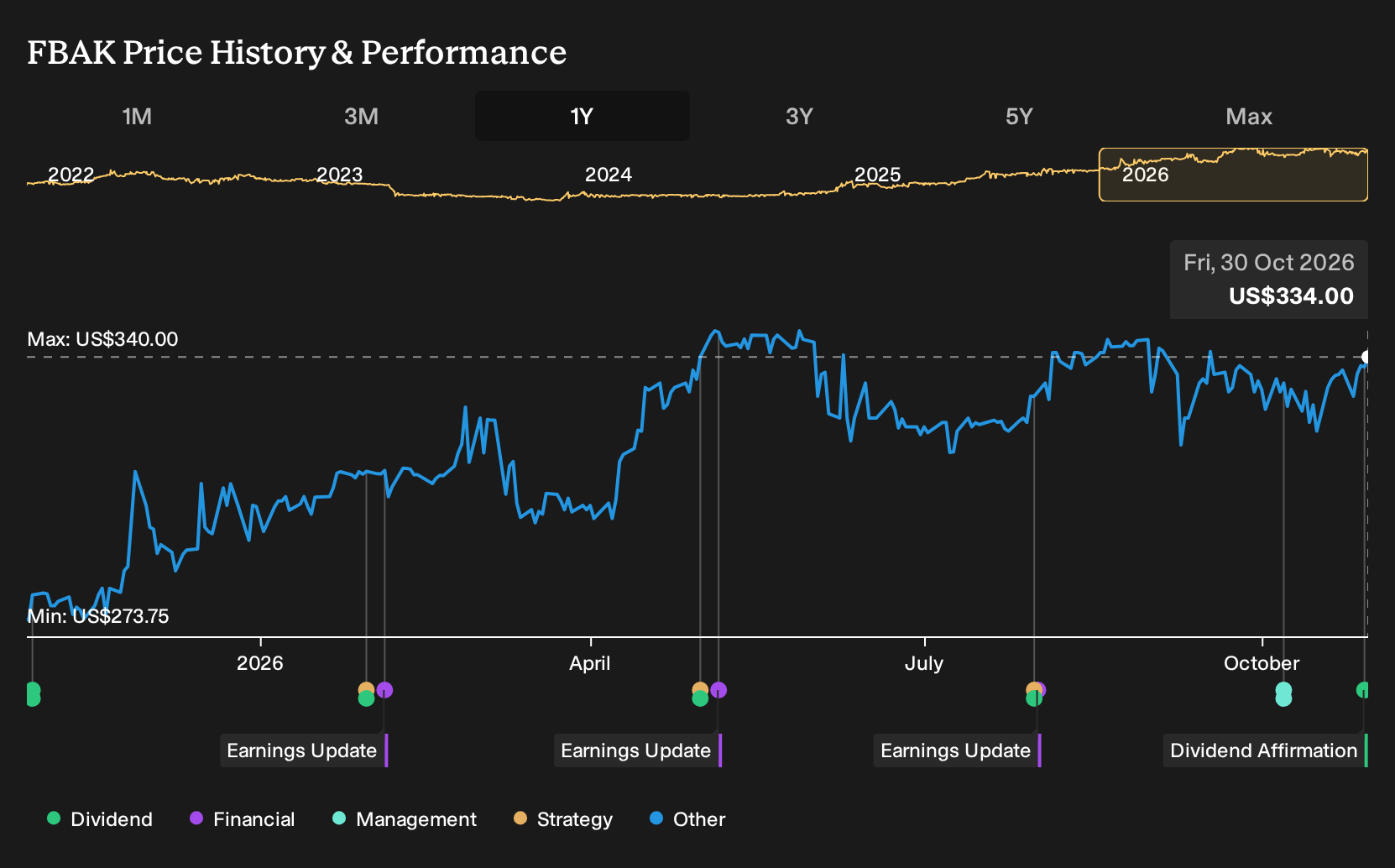
Even so, there is a quieter issue sitting behind the strong 3 year share return and perceived undervaluation that could start to matter if ...
There's only one way to know the right time to buy, sell or hold First National Bank Alaska. Head to Simply Wall St's company report for the latest analysis of First National Bank Alaska's Fair Value.
Decide For Yourself
Disagree with this assessment? Extraordinary investment returns rarely come from following the herd, so go with your instincts.
- A great starting point for your First National Bank Alaska research is our analysis highlighting 2 key rewards and 1 important warning sign that could impact your investment decision.
- See our latest analysis for First National Bank Alaska. The report includes a comprehensive fundamental analysis summarized in a single visual, the Snowflake, making it easy to evaluate First National Bank Alaska's overall financial health at a glance.
Looking For More Investment Ideas Beyond First National Bank Alaska?
If this dividend update has prompted you to reassess how First National Bank Alaska fits into your wider portfolio, it can help to line it up against other companies with different income, quality, and risk profiles using the Simply Wall St Screener.
- For investors who want potential value combined with quality fundamentals, scan a curated set of opportunities through 29 high quality undervalued stocks that may complement or contrast with First National Bank Alaska.
- If balance sheet strength is high on your checklist, review a targeted list of solid balance sheet and fundamentals (25 results) to compare financial resilience across other listed businesses.
- Those hunting for ideas that are not yet widely followed can check a focused pool of 18 high quality undiscovered gems that might offer a different risk and return mix to this bank.
Have feedback on this article? Concerned about the content? Get in touch with us directly. Alternatively, email editorial-team@simplywallst.com