


Rathbones Group And 2 Other British Dividend Stocks To Watch
Rising food costs are already forcing British restaurants to rip lobster and steak off menus, which shows how inflation still eats into everyday spending. Reliable income from established UK dividend payers can help offset that squeeze for investors looking for regular cash flow. This article looks at three high yielding British dividend stocks that currently offer more than 3% and explains what makes their payouts look relatively robust and consistent.
The three stocks highlighted here offer a compelling starting point if you want exposure to higher yielding dividend payers with an emphasis on coverage, growth and consistency. However, if you want the strongest names, these 5 dividend aristocrats stocks are the top of the list.
Rathbones Group (LSE:RAT)
Overview: Rathbones Group is a UK based wealth manager that primarily earns recurring fees for managing and advising high net worth client assets.
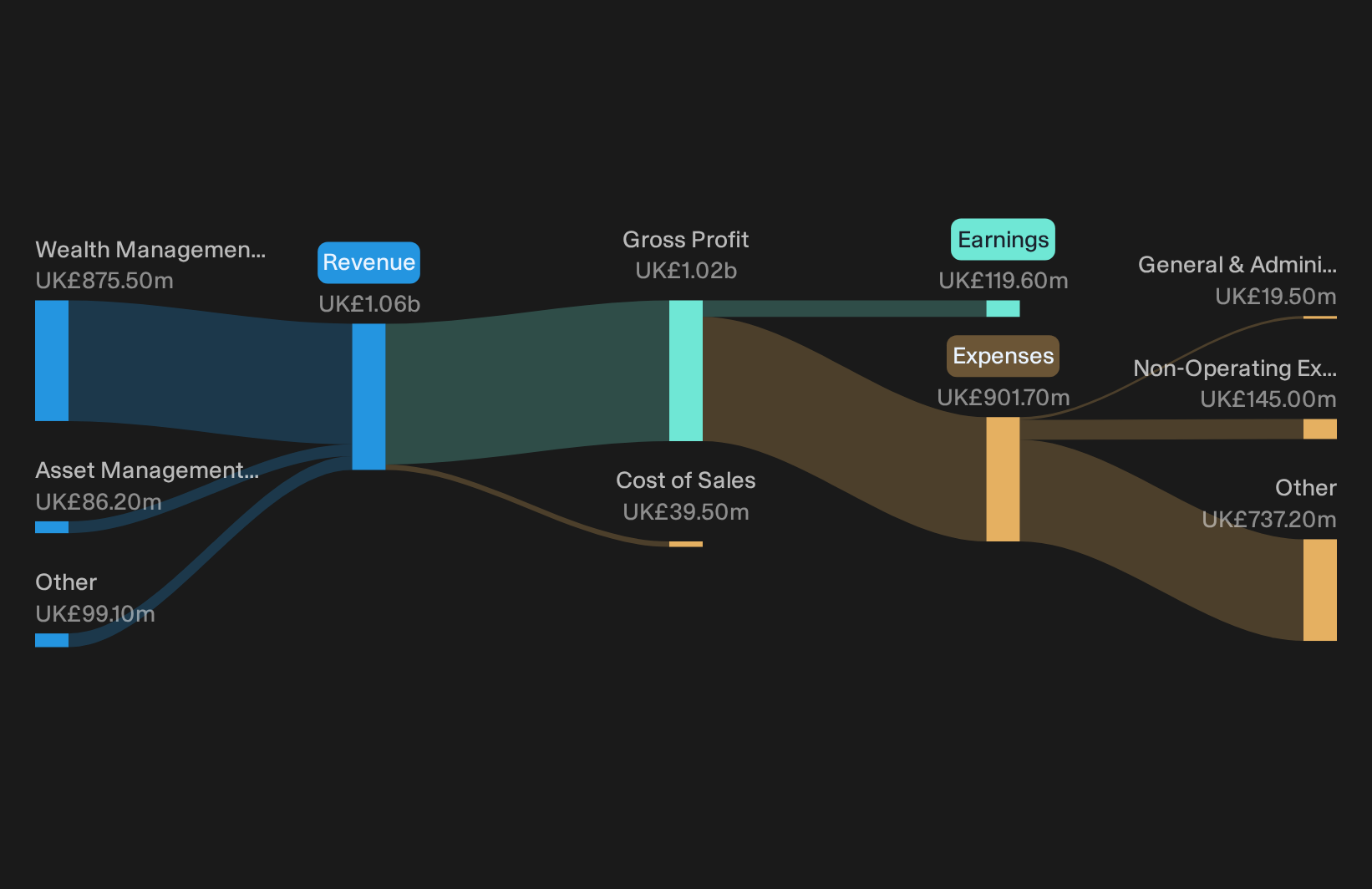
Operations: Rathbones generates most of its £961.7 million revenue from Wealth Management at £875.5 million, with Asset Management contributing £86.2 million.
Market Cap: £1.76 billion
Rathbones Group matters for a high yield screen because its wealth management engine is built around recurring fees that can underpin regular dividends.
"The completion of the Investec Wealth & Investment integration, with £76m of annualised run rate synergies already identified ahead of the original timetable, leaves Rathbones Group with further room to convert scale and streamlined systems into higher operating margins and earnings. The multi year regulatory remediation programme, expected to cost about £60m net of insurance recoveries through mid 2028, may absorb more cash flow and management attention than anticipated, which would reduce near term earnings and slow the improvement in net margins even if underlying revenues develop as expected."
What happens if one still unresolved pressure quietly reshapes how much of those future efficiency gains actually turn into shareholder income?
That unresolved pressure is exactly why investors are watching how much of Rathbones Group’s improving efficiency might eventually land in shareholder pockets through the full narrative for Rathbones Group, which maps where cash flow, capital demands and dividends could be decoupling or quietly accelerating.
Man Group (LSE:EMG)
Overview: Man Group is a global investment manager that runs income focused long only and alternative funds, earning fees from managing client assets.
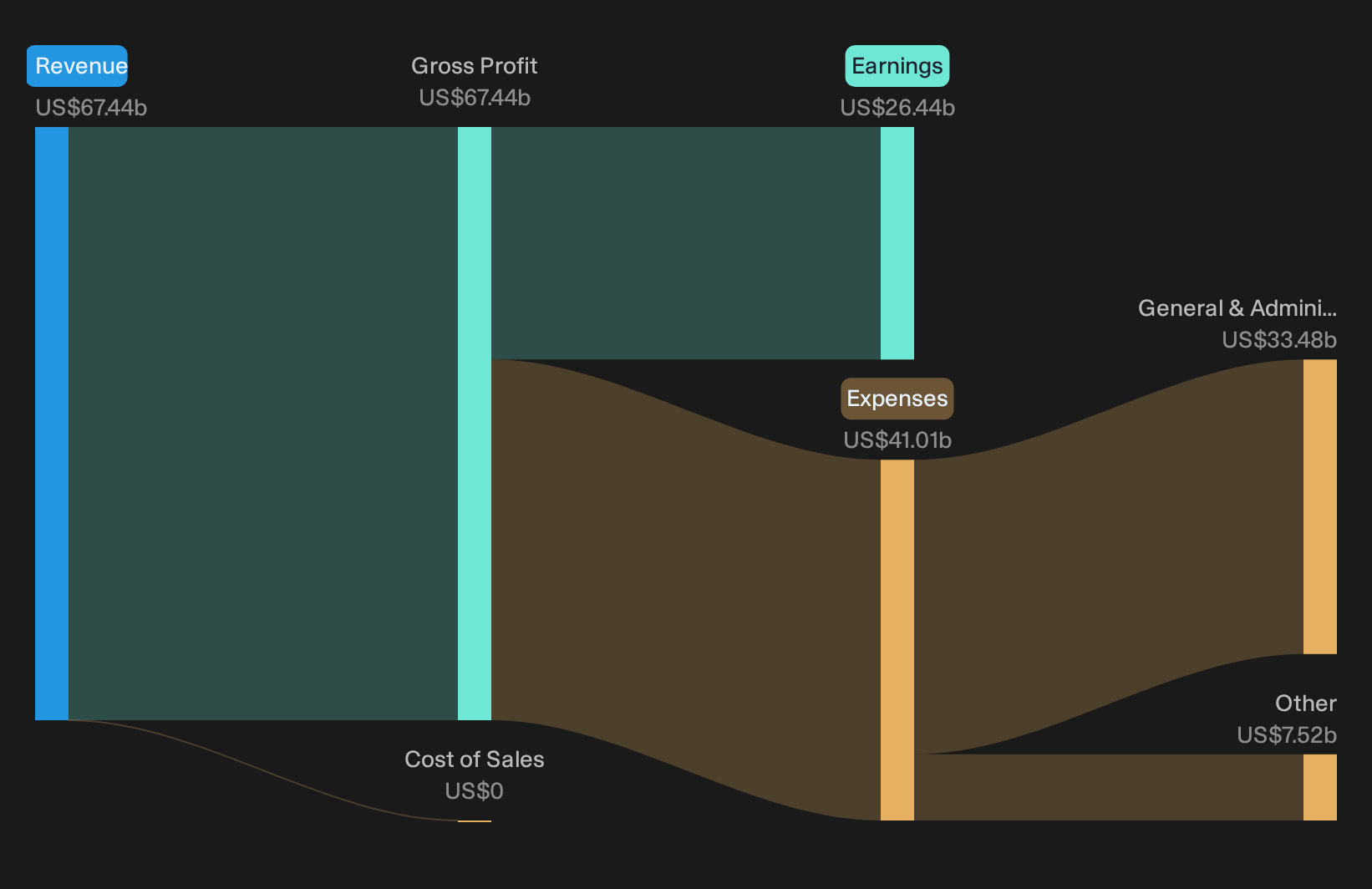
Operations: Man Group generates its $1.7 billion revenue entirely from its Investment Management Business, which spans long only and alternative strategies.
Market Cap: £3.7 billion
Man Group matters for a high yield screen because its income oriented funds and credit strategies help underpin fee streams that can support regular shareholder payouts.
"Continued build out of the credit and private credit platform, including over $60b of credit AUM and $17.6b in private credit by mid 2026 plus $4.9b of uncalled committed capital, gives scope for further deployment that can support fee revenue and diversify profit drivers."
The real swing factor is how one evolving source of fee income ultimately filters through to margins and the dividend trajectory that investors focus on.
That inflection point is exactly what you are weighing when you read the full narrative for Man Group, which pulls together how fee momentum, capital returns and risks might be quietly decoupling.

HSBC Holdings (LSE:HSBA)
Overview: HSBC Holdings is a global banking group that pays regular cash dividends on its UK listed shares, funded by diversified retail, commercial, corporate and wealth activities across major markets.
Market Cap: £218.6 billion
Income investors looking at HSBC Holdings are really weighing how a long running cash dividend policy, backed by a broad earnings base, might keep turning global banking profits into reliable cheques each year.
"Intensifying investment in Asian wealth management and private banking remains central, with over 1 trillion US dollars of Asian wealth balances and strong net new money in Hong Kong and India."
What happens if one unseen pressure on funding costs quietly shifts how much of those future earnings actually reaches HSBC Holdings shareholders?
If that trade off matters to you, read the full narrative for HSBC Holdings to see how HSBC Holdings’ capital returns, risks and dividend ambitions might be quietly decoupling or accelerating.
Seeking Alternatives Beyond These Dividend Ideas
Fresh opportunities move fast as quiet breakout stories gain momentum, get caught by early buyers, then start flying once the crowd notices. Scan what is still under the radar for now and act now.
- Target rising income potential by screening for 5 dividend fortresses that focus on resilient cash generation and payouts before yield hunters crowd in.
- Track the AI hardware boom by zeroing in on 54 AI infrastructure stocks supporting data center demand while these enablers are still priced for yesterday.
- Position for the next leg of electrification by focusing on 16 top copper producer stocks that could benefit if wiring, grids and vehicles keep drawing long term demand.
Have feedback on this article? Concerned about the content? Get in touch with us directly. Alternatively, email editorial-team@simplywallst.com