


Standard Chartered (LSE:STAN) Climbed, But What Is Behind The Move?
Leadership reshuffle links securities services and digital assets
Standard Chartered (LSE:STAN) is tying its securities services franchise more closely to its digital assets push after announcing a leadership reshuffle that places Ying Ying Tan in charge of both areas.
The move follows Margaret Harwood-Jones stepping into the CEO, UK & Europe role. Tan assumes responsibility for global securities services and the bank’s digital assets agenda from Singapore, reporting into Transaction Services & Digital Assets head Ole Matthiessen.
Against that leadership backdrop, Standard Chartered’s 1-day share price return of 2.63% lifted the stock to £20.10. However, the 30-day share price return is down 13.10%, and short-term momentum has been fading, even as the 1-year total shareholder return of 40.76% and the very large 5-year total shareholder return point to a much stronger long-run story.
Spot opportunities around Standard Chartered’s shift into digital assets by scanning a curated group of banks and financials with strong balance sheets and fundamentals using our list of solid balance sheet and fundamentals (10 results).After a 40.76% 1-year total return and a sharp 30-day pullback, Standard Chartered now asks a simple question of investors: Does the current valuation still skew the risk and reward toward buyers?
Most Popular Narrative: 18% Undervalued
Against a last close of £20.10, the most followed narrative on Standard Chartered pins fair value at £24.50, implying a clear valuation gap that hinges on execution in higher return segments and efficiency programs.
The company's focus on higher-return segments (Wealth Solutions, sustainable finance, and digital assets) and improved asset quality in volatile markets benefiting from lower credit impairments and resilient loan books should contribute to more stable earnings and buttress return on equity in the face of macroeconomic headwinds. (Impacts: Earnings, RoTE, credit costs)
See why 48 investors see Standard Chartered as 18% undervalued.
That fairness view uses an 8.54% discount rate and assumes revenue growth near 8% a year and profit margins moving toward roughly 27%, which together support a narrative fair value of £24.50 against Standard Chartered’s current price of £20.10.
Result: Fair Value of £24.50 (UNDERVALUED)
Still, the bullish Standard Chartered story can unravel if margin pressure in key Asian markets persists or if digital transformation costs climb without the expected efficiency gains.
Find out about the key risks to this Standard Chartered narrative.
Another View: What P/E Says About Standard Chartered
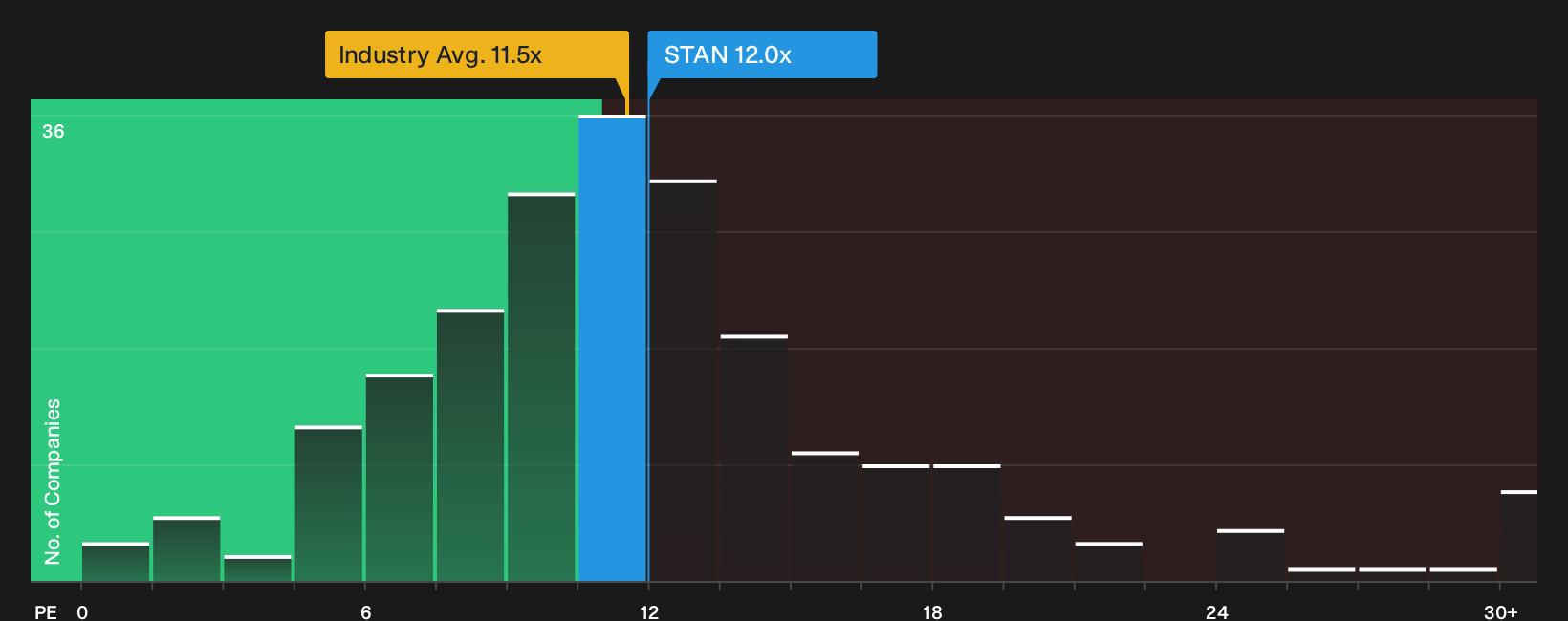
The SWS DCF model flags Standard Chartered as good value against an estimated future cash flow value of £32.08, yet the market is currently paying about 12x earnings. That sits above both the European banks group at 11.5x and peers at 9.7x. The fair ratio points closer to 9.9x, which suggests less of a clear-cut bargain. Does that gap reflect real quality or simply raise the risk that expectations are already generous?
See what the numbers say about this price — find out in our valuation breakdown.
Next Steps
Mixed signals on Standard Chartered can either sharpen or blur your view, so move quickly, review the full picture, and weigh the 4 key rewards and 3 important warning signs.
Looking for more investment ideas beyond Standard Chartered?
Standard Chartered may be on your radar today, but your next strong idea could be sitting elsewhere. Do not leave that potential edge untouched.
- Target resilient capital growth by scanning a carefully filtered set of high quality undervalued opportunities with the 10 high quality undervalued stocks.
- Review potential income streams by looking at companies screened for stronger yields and balance sheet support through the 5 dividend fortresses.
- Limit avoidable shocks by focusing on businesses that pass strict financial health filters using the 4 resilient stocks with low risk scores.
Have feedback on this article? Concerned about the content? Get in touch with us directly. Alternatively, email editorial-team@simplywallst.com