


Ryanair Stock And European Airline Shares Facing New Scrutiny Over Pilot Fatigue
Pilot fatigue has moved from technical briefing to front-page issue, and that shift in attention can reshape how the market views European aviation safety and compliance leaders. When regulators and passengers start asking tougher questions, money often follows perceived discipline. This article walks through three stocks from our screener that are closely tied to this story and explains how stronger fatigue risk management might matter for your portfolio decisions.
The three stocks discussed below are just a starter set. The full European aviation safety and compliance screen surfaced 13 more listed operators and service providers with equally compelling regulatory and operational narratives that are not covered here.
To go deeper, head straight into the European Aviation Safety and Compliance Leaders screener to identify, filter, and analyze aviation opportunities built around safety, compliance, and financial robustness.
Ryanair Holdings (ISE:RYA)
Ryanair Holdings is the purest safety and compliance test case in this screen, a huge low cost carrier whose scale, route density, and EU oversight exposure make any shift in fatigue rules or reporting culture show up quickly in both operations and investor sentiment.
Ryanair runs short haul flights across Europe while selling extras like bags, seat selection, food, and travel add ons. Most revenue comes from its core Ryanair DAC unit at about €16.3b and a further €1.7b from other airlines, and the group is valued around €23.6b.
"Completion of the 210 Gamechanger program by early 2026 and the phased introduction of MAX 10 aircraft from 2027 will increase seats per flight while cutting fuel burn per flight."
What really moves the dial for Ryanair is how one unseen pressure on its cost base and crew model eventually feeds through into margins and fares.
That pressure point is exactly what the full narrative for Ryanair Holdings unpacks, showing where Ryanair Holdings’ fatigue risk, fleet shift, and pricing power may be quietly decoupling.

Jet2 (AIM:JET2)
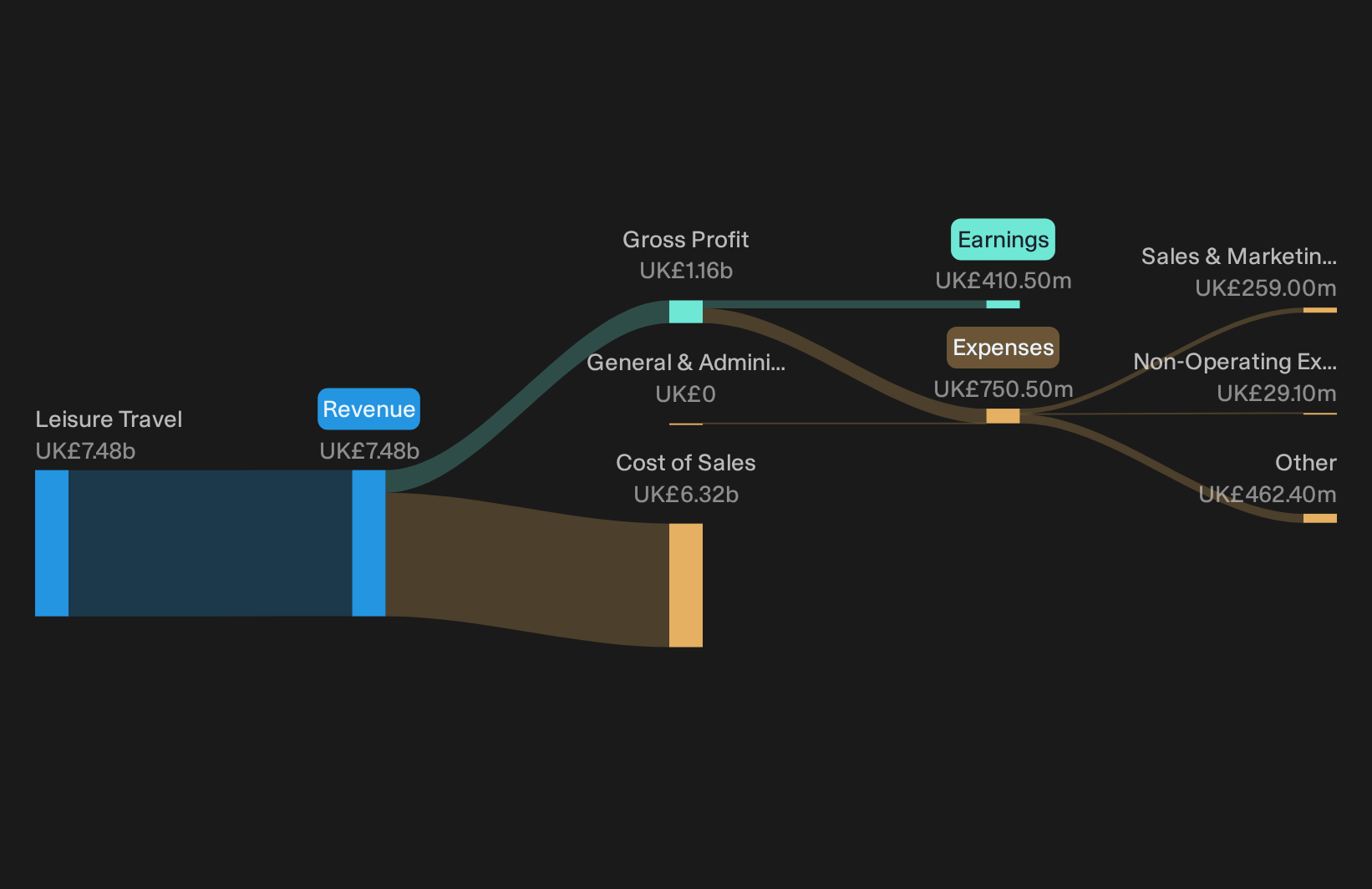
Jet2 is a UK leisure travel group that sits squarely in this safety and compliance focused screen, flying holidaymakers to Mediterranean and European resorts through its package brands and airline, generating about £7.5b from leisure travel and valued around £2.6b.
Jet2 is involved in the same safety and fatigue conversation as major airlines, but from a holiday focused angle where trust and reliability can directly influence which operator families pick for their annual trip.
"Low household penetration below 5% in the South of England, combined with the ramp up of Gatwick, Luton, Bournemouth and Bristol and evidence of strong early load factors and higher than expected package mix at Gatwick, creates room for Jet2 to build a second leg of package holiday growth that could lift total revenue and mix driven margins as these bases mature."
What happens if that growth story meets one unresolved pressure in the cost base will matter a lot for how much of it reaches profit.
That pressure on Jet2’s cost base is exactly what the full narrative for Jet2 unpacks. It reveals where package growth, pricing power, and fatigue risk might already be quietly decoupling.
easyJet (LSE:EZJ)
easyJet is the clearest UK overseen low cost carrier in this safety focused screen, blending fatigue conscious short haul flying with a holidays arm that lets it package trips for risk aware travellers who increasingly care which operators regulators view as disciplined.
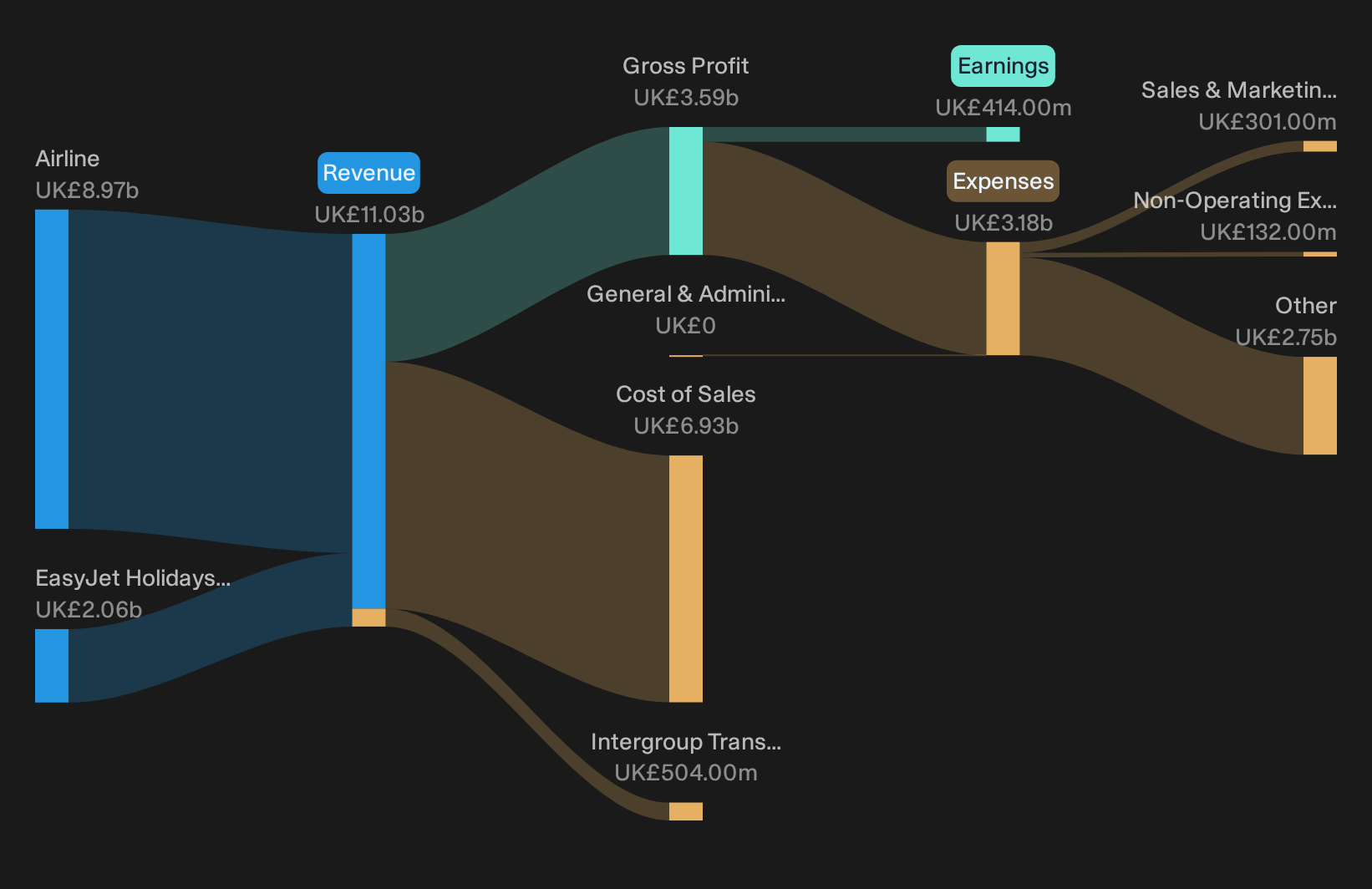
easyJet runs a low cost airline that generates about £9.0b from its core flying business and £2.1b from easyJet Holidays, giving the group a roughly £5.1b market value that investors weigh against its safety culture and fatigue management record.
For the aviation safety theme, easyJet matters because it combines UK regulatory scrutiny with a low cost model that already leans into fatigue management as a commercial selling point rather than a compliance burden.
"EasyJet ranks among the best players in this industry, both in terms of operational efficiency and market share."
What happens if one quiet cost pressure in its crew model shifts at the same time as regulators tighten fatigue rules will be crucial for margins.
If that crew pressure is on your mind, read the full narrative for easyJet to see whether easyJet’s efficiency story is accelerating or quietly stalling.
Seeking Alternatives Before Momentum Flies
Fresh ideas move first. By the time every investor talks about a breakout, the easy entry often slips away. Scan these under the radar themes while it matters and consider them before they become widely followed.
- Target cash rich opportunities by running the 195 high quality undervalued stocks that filters for robust balance sheets and earnings strength before momentum investors start crowding into the same tickers.
- Spot potential developments in automation through the curated 95 robotics and automation stocks and track companies generating revenue from robots, sensors, and industrial upgrades while attention still lags.
- Evaluate infrastructure related ideas with the 42 power grid technology and infrastructure stocks that highlights grid technology players before spending plans and electrification demand become a dominant focus.
Have feedback on this article? Concerned about the content? Get in touch with us directly. Alternatively, email editorial-team@simplywallst.com