


What Hongkong Land Holders Got Right
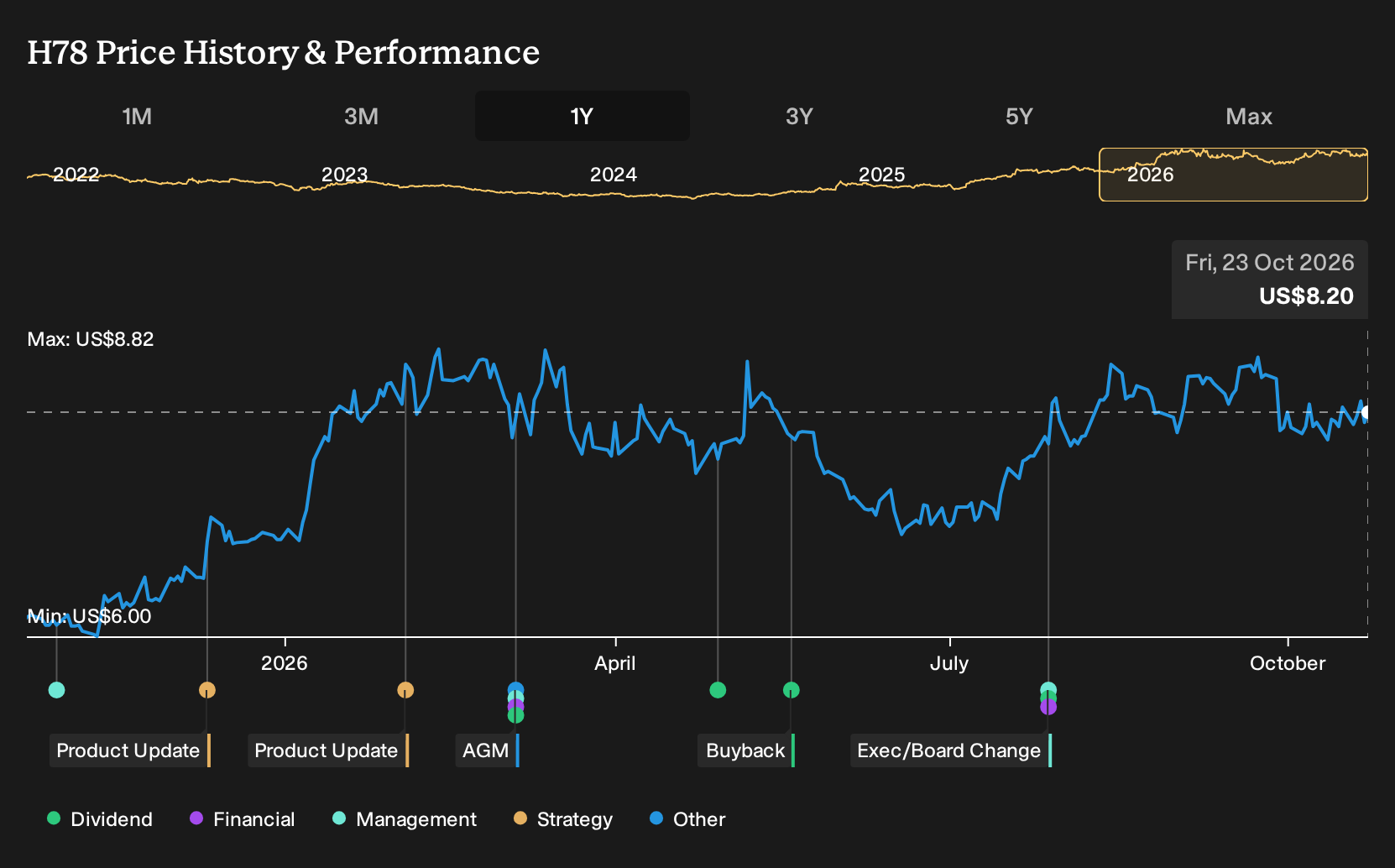
If you had worried that Hongkong Land’s heavy office exposure and China projects might cap any upside, the past year delivered a different story. Investors who held Hongkong Land over the past year are up 36.3%, including dividends. That result came alongside share cancellations, a new Singapore private fund and early talks on Orchard Road assets. If you were deciding back in October 2025, what would have mattered most in weighing that outcome against the clear structural risks?
Hongkong Land has already moved. See which of 194 high quality undervalued stocks still trade below our estimates.
What Hongkong Land Investors Were Really Arguing About
The shares cost US$6.19 at the start of the period, and anyone looking at Hongkong Land then had to choose between two very different stories about premium Asian property.
On the optimistic side, the bullish view pointed to a Fair Value of US$7.42, a price implied by assumptions of 15.3% yearly revenue growth and profit margins rising toward 46.7% within three years. That Narrative leaned on rapid capital recycling, fund management fees, and greener CBD assets attracting higher paying tenants.
The bearish camp saw a Fair Value of US$4.88, based on expectations that revenue would decline 12.3% annually even as margins improved to 73.0%. This scenario focused on lasting remote work effects, weaker demand for Central offices, and higher retrofit costs weighing on returns.
What The Evidence Did To The Hongkong Land Argument
Hongkong Land pushed hard on buybacks and cancellations in mid 2026, shrinking share count while profit for H1 2026 reached US$1,259.5 million against US$220.9 million a year earlier. Revenue moved from US$751.2 million in H1 2025 to US$632.7 million in H1 2026. The evidence cut both ways for the original optimistic and cautious cases.
The key lesson is simple. When a property group like Hongkong Land leans on capital recycling and fee income, track reported profit alongside revenue direction and share count, then judge whether per share economics, not just headline growth, are actually improving.
What Hongkong Land's Price Now Assumes
With Hongkong Land at US$8.2 today, this Narrative’s Fair Value sits above the current price based on its own set of expectations rather than a settled fact. That view leans on fee income, a larger fund platform and a portfolio model that aims to keep gearing restrained.
The Narrative asks you to judge whether today’s price underestimates how far third party capital, Landmark retail rents and China Integrated Properties could reshape recurring earnings. In simple terms, a buyer now is assuming those engines do not deliver more fee based and rental income than the market currently expects.
"The ramp up of Hongkong Land Holdings' third-party capital platform, with assets under management at US$51.8b and an ambition to reach US$100b, creates room for a higher mix of fee income that can add a separate revenue and earnings stream in addition to rental income."
One Narrative has put a figure on that disagreement. → See the Narrative with its higher Fair Value, assumptions and all
Looking Beyond Hongkong Land
Once you understand Hongkong Land, you might ask what shapes many tenants’ choices. Offices, malls and hotels depend on information long before a lease is signed.
Investors often stop at the buildings. The next layer is the data that helps buyers, lenders and brokers decide which properties to back.
One specialist concentrates on detailed property information, analytics and digital marketplaces that support those choices across regions and asset types.
Its tools help real estate professionals compare markets, benchmark loan books and market space more efficiently. As demand for sharper decisions grows, that quiet role could prove pivotal.
The case is on the record, with the assumptions it rests on. → See the Narrative that values this company 52% above its price
Have feedback on this article? Concerned about the content? Get in touch with us directly. Alternatively, email editorial-team@simplywallst.com