


Schrödinger Stock Gets A Battery Research Boost From Nature Study
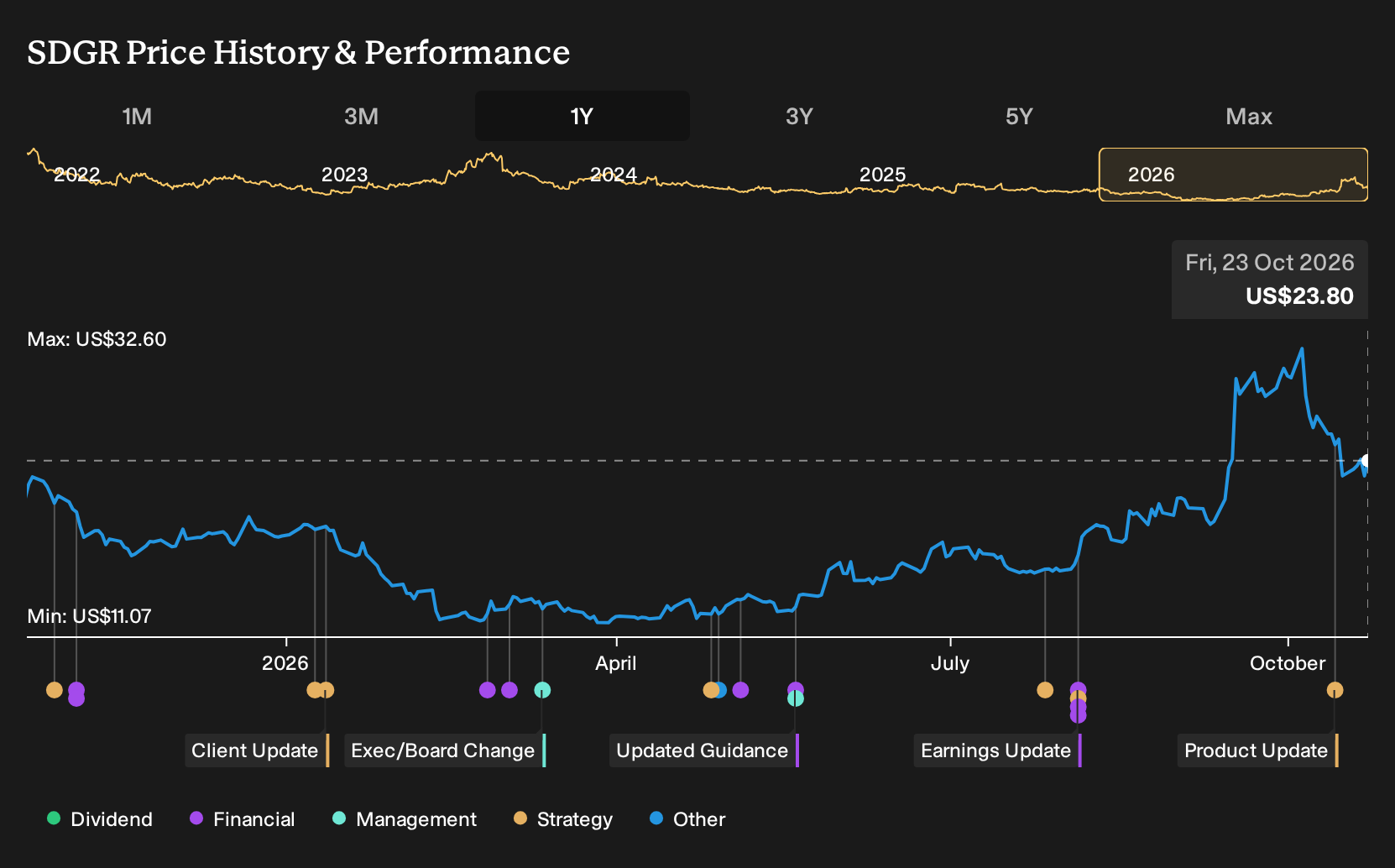
- Schrödinger reported that research using its physics-powered computational platform, published in Nature with Columbia University and the New York Structural Biology Center, uncovered previously unrecognized multi-lithium ion clusters in lithium-ion battery electrolytes.
- The work suggests these multi-lithium ion clusters could be key intermediates in forming the solid electrolyte interphase, a layer that strongly influences battery lifespan and safety. This may broaden Schrödinger’s role in materials discovery beyond pharmaceuticals.
- We will now assess how Schrödinger’s lithium-ion electrolyte clustering insights could reshape the existing investment narrative around its computational platform.
Scan beyond Schrödinger and this lithium-ion breakthrough to see which other energy and materials stocks are on the move with our curated list of 42 power grid technology and infrastructure stocks.
Schrödinger Investment Narrative Recap
To own Schrödinger, you need to believe its physics-based engine can translate into broader commercial use across both drug discovery and materials, despite the firm still reporting losses and forecasts that do not show profitability over the next three years. The recent lithium-ion electrolyte work supports that long-term thesis around platform breadth, but it does not change the near term focus on software uptake and drug milestones.
The most immediate swing factor remains whether software revenue can grow beyond deeper use at existing clients while margin pressure from investments and mix shift is managed. The biggest risk is that biotech funding headwinds, volatile milestone income and ongoing cost controls combine to keep earnings under strain for longer.
The Nature publication on lithium-ion electrolytes ties directly to Schrödinger’s core value proposition that its physics-powered and machine learning force field platform can address complex molecular problems outside traditional pharma. That is operationally relevant because management is already reporting software revenue from both life sciences and materials, which gives another potential use case to discuss with customers.
For catalysts, this kind of peer reviewed validation can support the story alongside existing drivers like predictive toxicology adoption and large pharma collaborations. The tension remains that analysts still expect revenue growth of 12.8% a year with earnings forecast to decline on average, so execution on converting high profile research into recurring software spend and stable margins is critical.
Schrödinger's current analyst narrative points to revenues of $356.2 million and earnings of $25.4 million by 2029. This implies 11.2% yearly revenue growth and an earnings swing of about $79.7 million, from a loss of $54.3 million today to positive forecast consensus earnings in that same year.
Uncover why Schrödinger's fair value indicates a 6% potential downside to its current price, leaving little room for error.
Exploring Other Perspectives
For a very different angle, focus on the risk that Schrödinger’s hosted software shift drags on reported sales. The most bearish analysts were only penciling in 2.4% annual revenue growth and earnings of about US$19.8 million by 2029 before this Nature battery research, so their story is far more cautious. Views clearly vary. Use this lithium electrolyte work as a prompt to compare several narratives and decide which assumptions you find most reasonable.
Explore 3 other Schrödinger fair value estimates, including one that suggests up to 6% downside from the current price.
Decide For Yourself
Don't just follow the ticker. Dig into the data and build a conviction that's truly your own.
- A great starting point for your Schrödinger research is our analysis highlighting 1 key reward and 3 important warning signs that could impact your investment decision.
- See our latest analysis for Schrödinger. The report includes a comprehensive fundamental analysis summarized in a single visual, the Snowflake, making it easy to evaluate Schrödinger's overall financial health at a glance.
Looking For More Investment Ideas Beyond Schrödinger?
Once you have a view on Schrödinger, it can help to widen the lens and compare it with other opportunities using the Simply Wall St Screener.
- If you are chasing mispriced quality and want a starting shortlist you can actually work through in an evening, take a look at our hand picked set of 29 high quality undervalued stocks.
- If capital preservation sits high on your priority list and you want businesses with steadier risk profiles, filter for companies in the 30 resilient stocks with low risk scores.
- If you prefer under-the-radar stories where the crowd is not already packed in, start with this carefully curated group of 21 high quality undiscovered gems.
Have feedback on this article? Concerned about the content? Get in touch with us directly. Alternatively, email editorial-team@simplywallst.com