


What Maximus (MMS)'s Revenue Miss Means For Shareholders
- Maximus reported Q2 2026 revenue of US$1.28b, down 5.1% year on year and 3.7% below analyst expectations, and updated full year EPS guidance cautiously.
- The quarter highlighted pressure on execution, with Maximus delivering the weakest performance versus analyst estimates in its government and technical consulting peer group.
- We will examine how Maximus's investment narrative relates to the weaker quarter and the softer full year EPS outlook.
Balance weaker guidance at Maximus by scouting peers that currently screen better on fundamentals using the hand picked list of solid balance sheet and fundamentals (24 results) in the government and technical services space.
Maximus Investment Narrative Recap
To own Maximus, you need to be comfortable with a contractor that leans heavily on large, often complex government programs and a growing focus on AI enabled, program integrity work. The softer Q2 and cautious EPS guidance keep the near term story more about execution than expansion, with the paused VA incentives and low margin international work still weighing on the earnings mix.
The key short term swing factor is whether new awards and AI rich contracts start to offset those headwinds. The biggest risk right now is that the weak book to bill ratio and modest contract conversion persist, which would keep revenue growth and earnings progress under pressure even if operational metrics inside existing contracts improve.
The recent M&A call that featured Maximus and Agile Defense matters because it sits right in the area where management has been talking about more defense and national security exposure. This part of the addressable market is large, and the company already reports work with agencies such as the Air Force and TSA, so any transaction or deeper partnership could shape how that pipeline turns into revenue.
For you as a shareholder, the relevance is practical rather than abstract. Expansion in defense and technical services could diversify away from slower moving civilian programs, but it would also raise execution risk around integration, contract delivery and capital allocation at a time when VA incentive changes, international profitability and a 0.5x book to bill already demand tight operational discipline.
What The Current Maximus Consensus Is Pricing In
Maximus' narrative projects US$6.0b revenue and US$444.7m earnings by 2029. This assumes 4.4% yearly revenue growth and an earnings increase of about US$73.8m from US$370.9m today.
Uncover why Maximus' fair value indicates a 47% potential upside to its current price that may not last much longer.
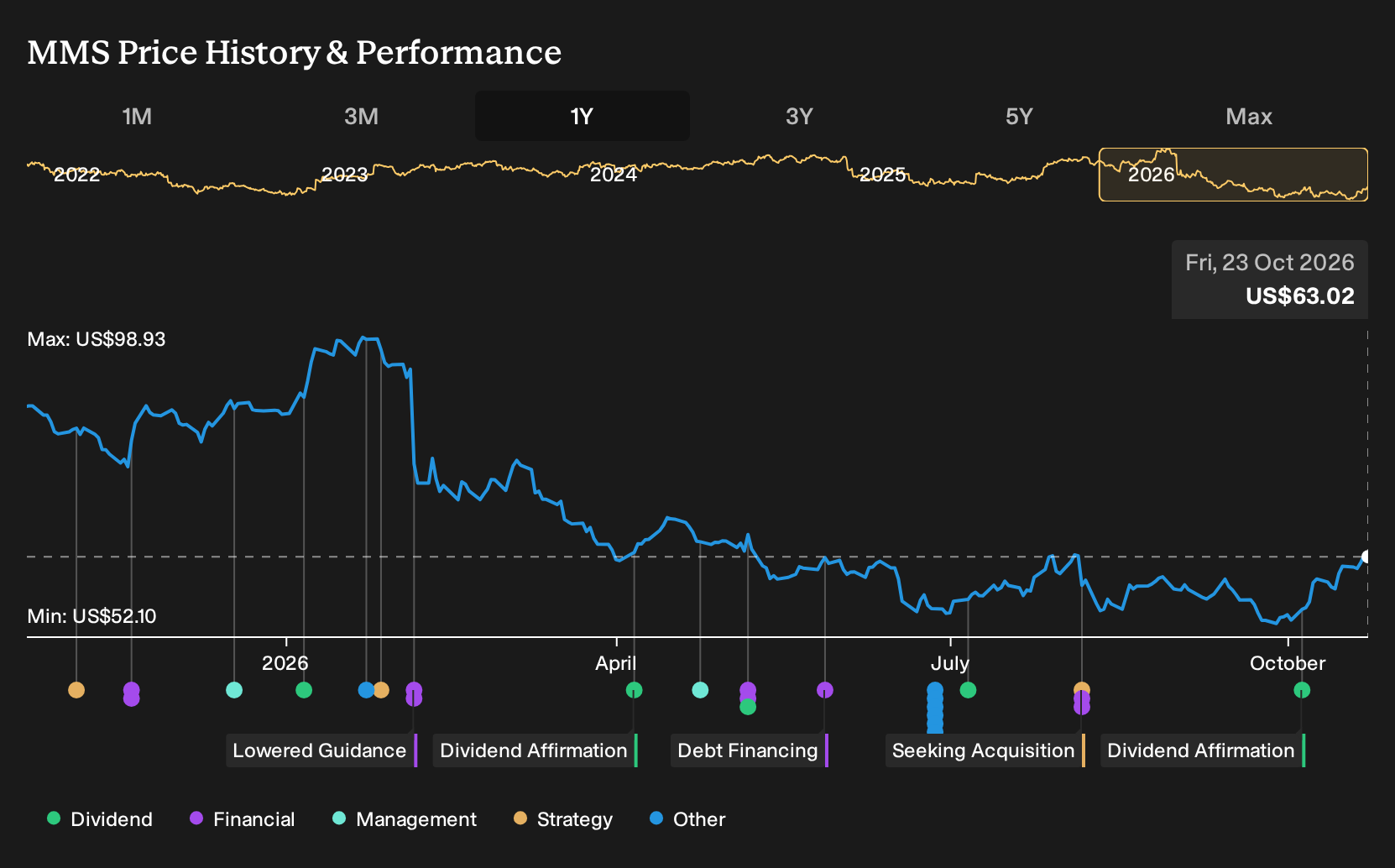
Exploring Other Perspectives
For Maximus, the bearish twist is contract risk rather than AI upside. The lowest analysts worry that slow conversions from a US$50.4b pipeline and tighter federal pricing could leave 2029 revenue nearer US$6.1b and earnings around US$458.1m. Those expectations pre date this quarter, so your view might shift as new information lands.
Explore 2 other Maximus fair value estimates, including one that suggests as much as 21% downside from the current price.
Reach Your Own Conclusion
Disagree with existing narratives? Some investors believe extraordinary investment returns rarely come from following the herd, so consider trusting your own analysis.
- A great starting point for your Maximus research is our analysis highlighting 5 key rewards and 1 important warning sign that could impact your investment decision.
- See our latest analysis for Maximus. The report includes a comprehensive fundamental analysis summarized in a single visual, the Snowflake, making it easy to evaluate Maximus' overall financial health at a glance.
Looking for more investment ideas beyond Maximus?
If the Maximus story leaves you wanting a broader watchlist, it can help to line it up against other companies with different strengths and risk profiles using the Simply Wall St Screener.
- For investors hunting for potential mispricings with strong fundamentals, start by scanning our 29 high quality undervalued stocks that combine quality metrics with attractive valuations.
- If reliability and balance sheet strength matter most to you, filter for financially robust businesses through the list of solid balance sheet and fundamentals (24 results) and compare how they stack up on debt, cash and core profitability.
- When you want new ideas that are not already crowded trades, broaden your opportunity set with a curated pool of 21 high quality undiscovered gems that score well on fundamentals but fly under many investors' radar.
Have feedback on this article? Concerned about the content? Get in touch with us directly. Alternatively, email editorial-team@simplywallst.com