


What Insurance Australia Group Shares' Tight Claims Buffer Means For Shareholders
- Insurance Australia Group recently disclosed a A$12.4b claims bill for 2026 and natural peril costs that closely matched its allowance, underscoring limited room for extra weather related stress as El Niño driven bushfire risk rises.
- The tight gap between IAG’s peril allowance and actual claims, set against El Niño linked wildfire warnings, highlights how weather volatility now directly pressures underwriting buffers and rebuild costs.
- We will examine how Insurance Australia Group's investment narrative holds up as rising El Niño bushfire risk puts additional pressure on its peril buffer.
Insurance Australia Group Investment Narrative Recap
To own Insurance Australia Group, you need to be comfortable with a business that relies on scale, brand strength and technology to offset weather volatility and pressure on affordability. The key short term swing factor is whether pricing and reinsurance together can keep insurance margins aligned with its 14% to 16% guidance range while customers tolerate higher premiums.
The biggest operational risk right now sits in natural perils. El Niño linked bushfire risk and a A$12.4b claims bill that already pressed close to the peril allowance leave little room if this summer proves severe. That tight buffer keeps pressure on underwriting discipline, reinsurance decisions and cost control across Retail and Intermediated Insurance Australia.
The most relevant recent development is that Insurance Australia Group’s net natural perils claim cost for 2026 closely matched its allowance. That outcome shows the current reinsurance structure and perils budget are being fully used during heavy weather years, which matters a lot when Moody’s and Gallagher Re are flagging higher wildfire risk in El Niño periods.
For catalysts, this near maxed out allowance pushes focus onto three levers: pricing sophistication and AI driven underwriting; the quota share and perils covers that shape volatility; and the mix shift between faster growing direct consumer lines and slower intermediated commercial premiums. How effectively Insurance Australia Group balances these elements will shape how investors view its ability to handle the next bushfire season.
How The Forecasts Frame Insurance Australia Group’s Next Chapter
Insurance Australia Group’s current analyst narrative points to A$12.0b of revenue and A$1.2b of earnings by 2029. That profile sits on assumed yearly revenue decline of 14.5% and an earnings increase of about A$200m from A$1.0b today, with the 2029 forecasts anchoring the consensus view.
Uncover why Insurance Australia Group's fair value indicates a 7% potential downside to its current price, leaving little room for error.
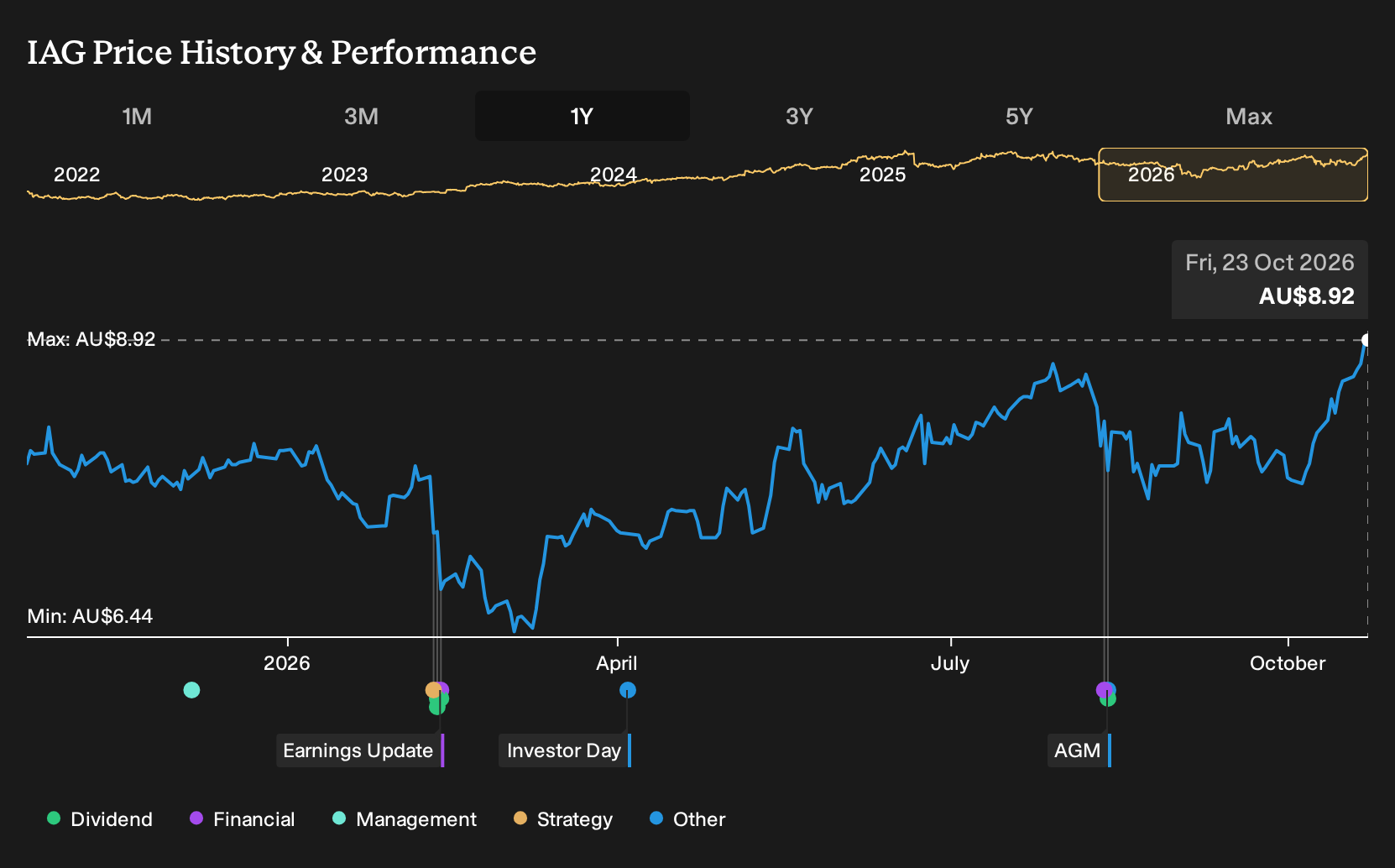
Exploring Other Perspectives
The Simply Wall St Community supplies only two fair value estimates for Insurance Australia Group, yet they already stretch from A$8.30 to about A$10.66 per share. That small sample hints at how far opinions can diverge. When you also consider rising El Niño bushfire risk and contested RAC Insurance deal outcomes, you have plenty of reasons to compare multiple viewpoints yourself.
Explore another Insurance Australia Group fair value estimate, including one that indicates there could be as much as 20% upside from the current price.
The Verdict Is Yours
Don't just follow the ticker; dig into the data and build a conviction that's truly your own.
- A great starting point for your Insurance Australia Group research is our analysis highlighting 2 key rewards and 2 important warning signs that could impact your investment decision.
- See our latest analysis for Insurance Australia Group. The report includes a comprehensive fundamental analysis summarized in a single visual, the Snowflake, making it easy to evaluate Insurance Australia Group's overall financial health at a glance.
Looking For More Ideas Beyond Insurance Australia Group?
Once you have formed a view on Insurance Australia Group, it can help to compare it with other businesses that have different risk profiles and balance sheet characteristics. The Simply Wall St Screener lets you scan wider markets quickly so you can pressure test your thesis and spot alternatives that may fit your own risk and return preferences.
- If you want potential value combined with quality fundamentals, start with a focused set of 4 high quality undervalued stocks that currently clear strict balance sheet and cash flow filters.
- For investors who care most about resilience, stress test your downside by reviewing a curated 6 resilient stocks with low risk scores that screen well on volatility and financial strength metrics.
- If you are hunting for under the radar opportunities, broaden your watchlist with a hand picked pool of 15 high quality undiscovered gems that pair solid fundamentals with relatively low current attention.
Have feedback on this article? Concerned about the content? Get in touch with us directly. Alternatively, email editorial-team@simplywallst.com