


How Investors Are Reacting To Netflix (NFLX) Leadership Shakeup And Lowered Forecasts
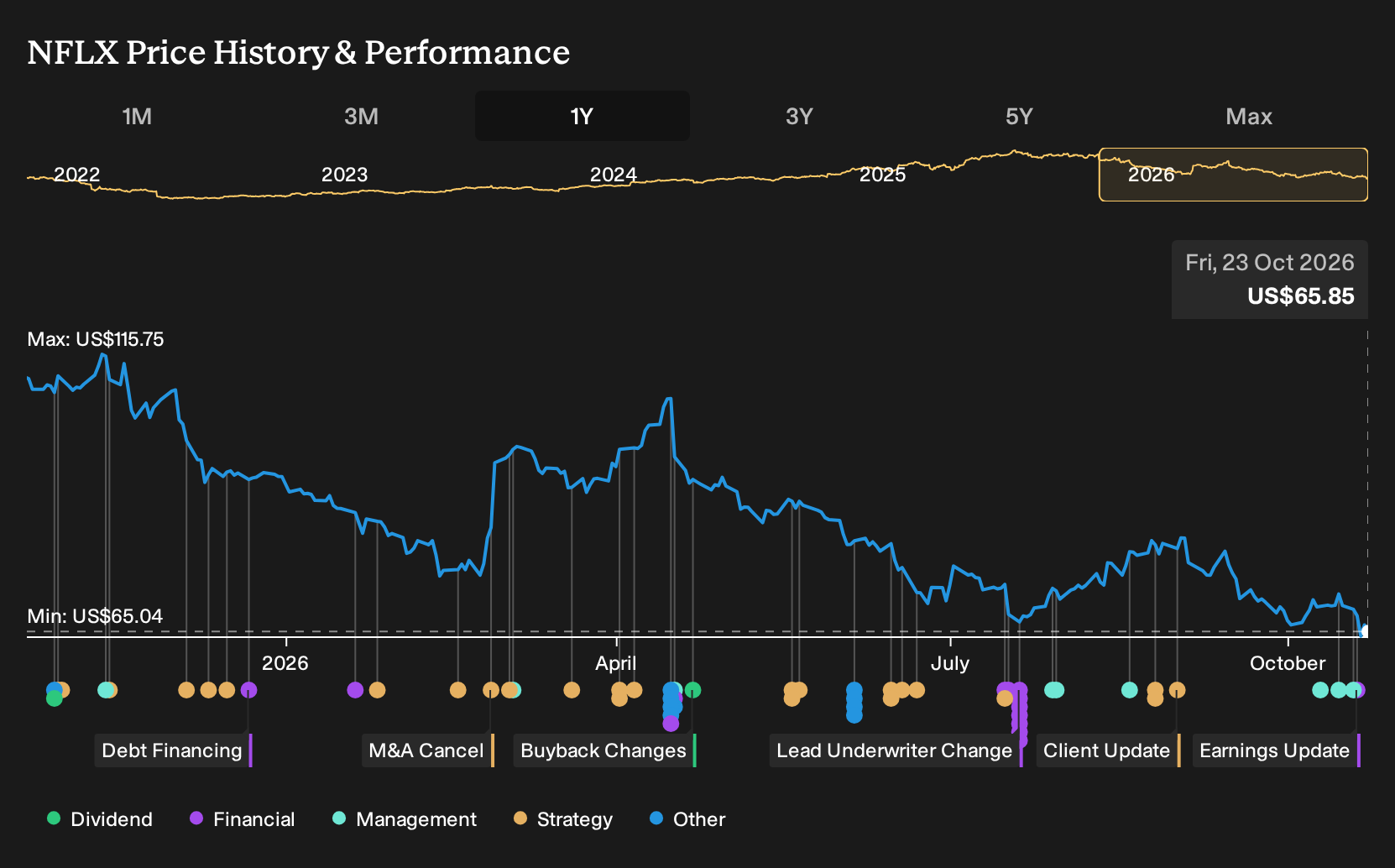
- Netflix reported third quarter 2026 revenue of US$12.9b and net income of US$3.7b, alongside leadership changes, layoffs affecting about 6% of staff, and reduced guidance for advertising and free cash flow.
- The combination of executive turnover, including Peter Rice replacing Bela Bajaria as chief content officer, and weaker forward guidance highlights how content decisions, ad execution, and cost control are now tightly linked to Netflix’s earnings story.
- The focus now turns to how Netflix’s investment narrative holds up when set against leadership upheaval and softer forward guidance.
Scan how other media and entertainment stocks are reacting to the same pressures on advertising, engagement and cash generation by reviewing our curated list of 27 high quality undervalued stocks.
Netflix Investment Narrative Recap
To own Netflix today, you need to believe it can convert a very large subscriber base into healthier engagement and advertising over time while keeping content spend and staffing under tighter control. The latest quarter did show higher sales and net income, but management cut ad and free cash flow guidance, which keeps the near term ad ramp as the key swing factor.
Right now, the biggest catalyst is whether Netflix can fix its ad tech rollout and turn ad tier viewing into meaningful revenue without hurting the user experience. The main risk is that softening engagement and intense competition from Big Tech and free ad supported platforms weaken pricing power and make those ad and margin ambitions harder to reach.
The most relevant update here is the appointment of Peter Rice as chief content officer alongside the layoffs and the dismissal of film chief Dan Lin. That reshapes who decides where billions of content dollars go. For an investor, the question is whether a new leader can align the slate with what actually drives viewing hours, ad demand and retention.
Leadership churn at the top of content comes just as Netflix is leaning more on live events, licensed shows and global originals to support engagement and ad inventory. Execution on Rice’s first few programming cycles, as well as how tightly content spending tracks to viewing data, will feed directly into operating margin resilience and whether the advertising business can become a more dependable growth engine.
Netflix's narrative projects US$66.5b revenue and US$19.9b earnings by 2029. This assumes 10.2% yearly revenue growth and an earnings increase of about US$5.1b from earnings of US$14.8b today.
Uncover why Netflix's fair value indicates a 31% potential upside to its current price that may not last much longer.
Exploring Other Perspectives
Some of the lowest Netflix analysts frame leadership upheaval and the Florida ads lawsuit as the real swing issue, not just engagement. Before this week’s earnings and job cuts, they were pencilling in US$64.0b of 2029 revenue and US$17.1b of earnings. That is far more cautious than consensus. Use those gaps to stress test your own view.
Explore 44 other Netflix fair value estimates, including one that suggests as much as 11% downside from the current price.
The Verdict Is Yours
Disagree with existing narratives? Extraordinary investment returns rarely come from following the herd, so consider trusting your own research and judgment.
- A great starting point for your Netflix research is our analysis highlighting 4 key rewards and 1 important warning sign that could impact your investment decision.
- See our latest analysis for Netflix. The report includes a comprehensive fundamental analysis summarized in a single visual, the Snowflake, making it easier to evaluate Netflix's overall financial health at a glance.
Looking for more Netflix investment ideas beyond this stock?
If this Netflix review has sharpened your thinking, the next step is to broaden your watchlist with other companies that fit clear, rules based filters. Use the Simply Wall St Screener to line up opportunities that match your own risk tolerance and income goals instead of relying only on headline names.
- For investors hunting for higher income potential, check out a curated set of steady payers through 5 dividend fortresses.
- If capital preservation sits higher on your priority list, focus on sturdier businesses by reviewing a list of solid balance sheet and fundamentals (25 results).
- To widen your opportunity set beyond well known giants like Netflix, scan a 21 high quality undiscovered gems that may not yet be on most radars.
Have feedback on this article? Concerned about the content? Get in touch with us directly. Alternatively, email editorial-team@simplywallst.com