


Trustmark (TRMK) Could Be 8% Undervalued As Muted Growth Clouds The Valuation Case
Muted growth puts Trustmark under a sharper lens
Fresh analyst commentary on Trustmark (TRMK) highlights subdued net interest income trends, slower earnings progress compared with other banks, and a return on equity that indicates fewer compelling reinvestment opportunities at today’s share price.
Trustmark’s recent share price tells a mixed story. The stock is near US$46.31 after a 7 day share price return of 3.14% and an 18.47% share price return year to date. The 3 year total shareholder return of 158.13% suggests earlier momentum was much stronger than what investors are seeing around the latest muted growth commentary.
Compare Trustmark’s muted progress with a curated 27 high quality undervalued stocks that currently show stronger growth or value signs in the banking space.
Trustmark has just logged a solid year to date climb, yet recent commentary paints a cooler growth picture. Does that set up a sensible entry now, or a case for patience while valuations reset?
Most Popular Narrative: 8% Undervalued
On the most followed view, Trustmark’s fair value of $50.50 sits above the recent $46.31 close, which puts the recent share price strength in the context of a still implied discount.
The main thing that has to go right is that Trustmark converts its new FIS platforms, AI planning, and expense actions into durable efficiency gains while maintaining strong core deposits and credit quality.
The current valuation implies that the market is not fully pricing in this narrative, which holds a bullish view that Trustmark is undervalued given its capital returns, stable net interest margin, and franchise strength.
See why 0 investors see Trustmark as 8% undervalued.
Result: Fair Value of $50.50 (UNDERVALUED)
Still, the Trustmark story can crack if Gulf South industrial and data center activity cools, or if projected loan growth and future P/E assumptions fail to materialize.
Find out about the key risks to this Trustmark narrative.
Another View: Trustmark Through The P/E Lens
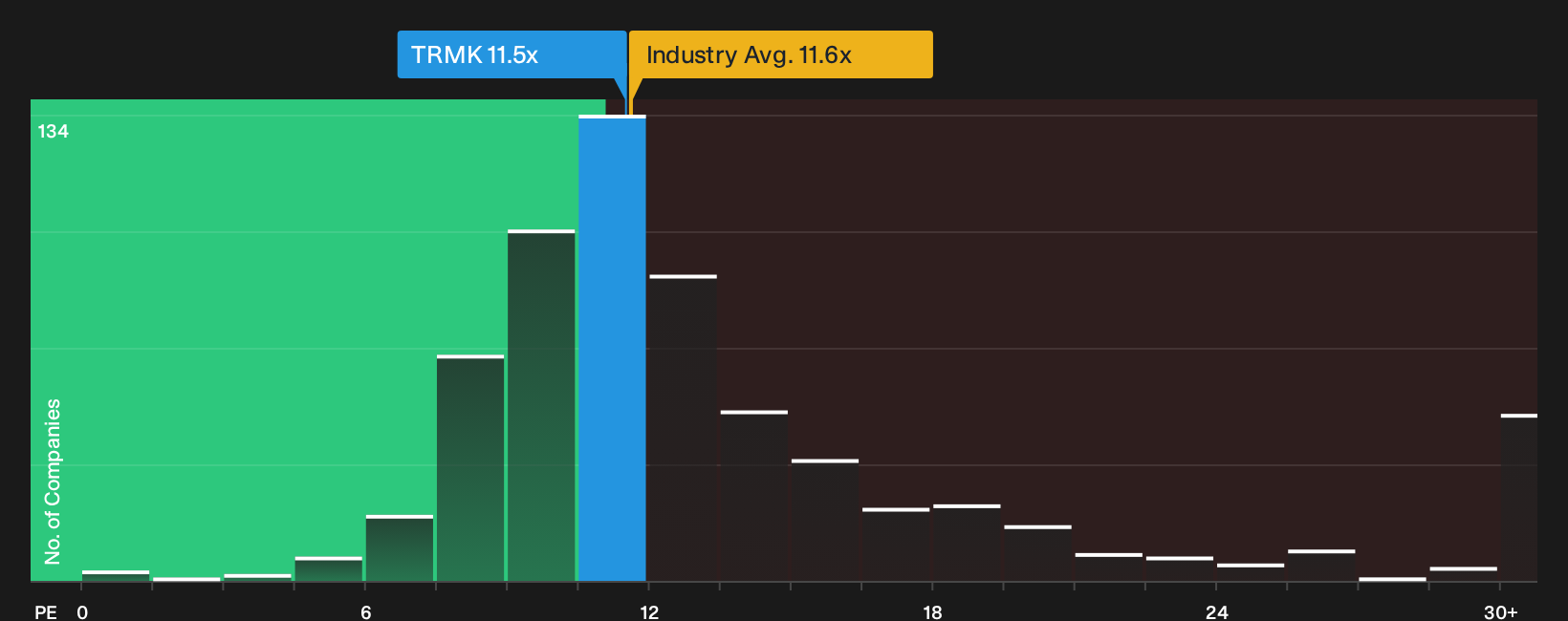
The first narrative leans on a fair value of $50.50. A second cut looks at Trustmark through its P/E of 11.5x. That is slightly below peers at 12.6x and close to the 11.6x US Banks average, yet above the 10.7x fair ratio the market could move toward over time.
If the share price drifts toward that fair ratio, upside from here could be limited, while a move back toward peer levels would point the other way. For anyone weighing that trade off, the next step is to see what the numbers imply in detail, then ask which scenario feels more realistic for you as an investor. See what the numbers say about this price — find out in our valuation breakdown.
Next Steps
If the Trustmark debate feels finely balanced, that is the signal to go to the source data quickly and stress test the upside case yourself. To see what optimistic investors are focused on, review the 3 key rewards.
Looking for more investment ideas beyond Trustmark?
If Trustmark has your attention, use that momentum to scan other opportunities that may fit your style, risk profile, and return goals.
- Target dependable income and stress test your portfolio’s payout stream with a curated list of 5 dividend fortresses.
- Hunt for potential mispriced opportunities by reviewing a focused set of 21 high quality undiscovered gems that combine quality markers with under-the-radar coverage.
- Dial down portfolio risk while staying invested by filtering for 30 resilient stocks with low risk scores that score well on resilience and financial durability.
Have feedback on this article? Concerned about the content? Get in touch with us directly. Alternatively, email editorial-team@simplywallst.com