


SEC AI Rules Put Flywire Stock And Payment Rails In Focus
Regulators just pulled AI and tokenization into the same risk conversation as banks and trading venues, and that puts market plumbing stocks under a brighter spotlight. When the SEC rewrites the rulebook, capital often follows, whether towards potential winners or away from future headaches. This article walks through 3 stocks our screener flags as positively exposed to the news, and explains why they deserve a closer look now.
The companies highlighted below are just a starting sample, and the full screen surfaced 22 more regulated financial market infrastructure and custody providers with equally compelling narratives that are not covered here.
Head straight into the Regulated Financial Market Infrastructure & Custody Providers screener to identify, filter, and analyze the highest conviction plays in this corner of the market.
Flywire (FLYW)
Flywire plugs into the screener theme as a regulated cross border payments platform, providing the kind of settlement, compliance and data plumbing that matters more as regulators focus on AI driven workflows and tokenized flows inside financial infrastructure.
Flywire runs a payment enablement and software platform that processes data processing revenue of about $713 million across education, healthcare, travel and B2B clients. With a market value near $2.3b it sits squarely in mid cap territory for regulated payment rails.
"AI enabled workflows already auto-resolve about 45% of customer inquiries, with a target above 50% by year end and roughly 30% lower handling time and cost per contact."
What happens to Flywire’s margins if one quiet shift in how clients value this kind of embedded workflow control moves more sharply in its favor?
If that shift is what you are betting on, the full narrative for Flywire explains where AI efficiency, pricing power and competitive risk could be decoupling next.

Western Union (WU)
Western Union sits squarely in the regulated money movement theme, running global payment rails that are built for compliance first and consumer apps second. That mix of oversight and reach is exactly where investors watching AI and tokenization risk are starting to pay closer attention.
Western Union operates regulated cross border and domestic money transfers plus a range of digital financial services, generating about US$3.5b from Consumer Money Transfer and US$576 million from Consumer Services, and carries a market value of roughly US$2.0b.
"The ongoing digital transformation, including expanded digital wallet offerings, card-based retail transactions, and value-added services, remains in progress and now includes wallet launches in markets such as Mexico, Singapore, Australia and the Philippines, which together can support transaction growth and a gradual improvement in net margins as fixed technology and distribution costs are spread over more digital volume."
The real hinge for Western Union is whether one quiet shift inside its cost and funding mix changes how investors view those regulated rails entirely.
If that hinge matters to your thesis, the full narrative for Western Union shows how the regulated rails, cash flows and digital mix of Western Union could be quietly re-rated.

WEX (WEX)
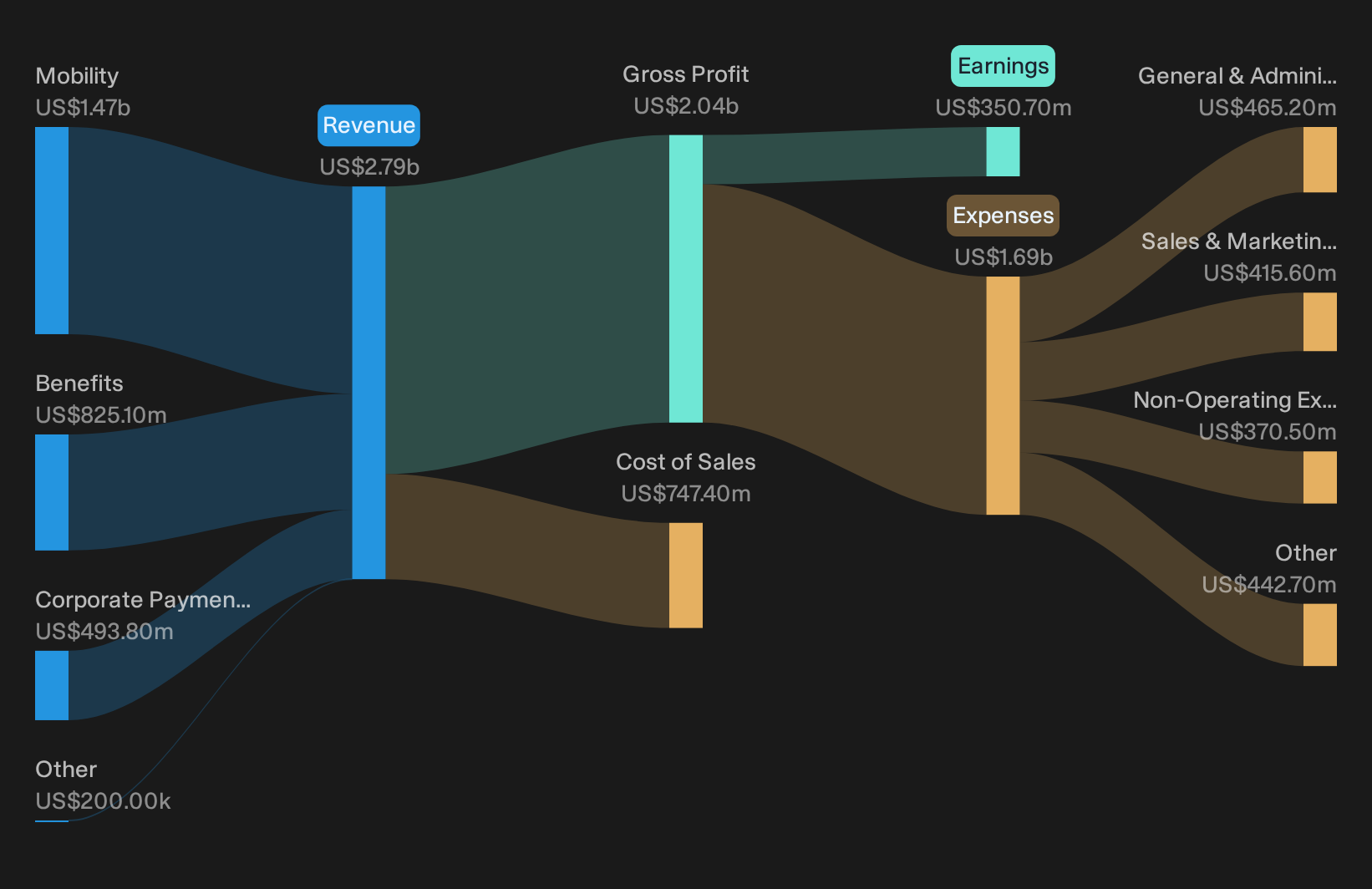
WEX runs regulated payment and benefits rails that plug directly into the market infrastructure theme, handling high volumes of auditable transactions for fleets, corporate spend, and health benefits. The group generates about US$1.5b from Mobility, US$825 million from Benefits, and US$494 million from Corporate Payments, with a market value near US$6.8b.
For investors tracking regulated market plumbing, WEX offers a mix of fleet payments, corporate spend tools, and benefits platforms that are already wired into compliance heavy transaction flows. This makes how it reinvests in its own technology stack especially important.
"Expanding investments in product innovation and AI based tools, including the claims automation engine that now processes over 600,000 FSA claims with 95% accuracy and the SecureFuel fraud product that screens transactions across roughly 95% of U.S. fuel stations, point to an ongoing shift toward higher value software and data services that can support margin expansion and earnings growth."
The real test is what happens to WEX’s earnings power if one quiet shift in how customers value this type of regulated payment plumbing breaks its way.
If that potential break point is what you care about, the full narrative for WEX traces how WEX’s regulated rails, AI tools and pricing power could be quietly accelerating.
Seeking Alternatives Before Others Catch On
Fresh ideas often move first. Breakout stories can gain momentum while slower capital is still watching. Scan new lists while they are under the radar, and consider them at an early stage.
- Spot potential turnaround stories early by scanning the curated 21 high quality undiscovered gems before they are caught by broader momentum chasers.
- Track cash rich compounding stories using the focused list of solid balance sheet and fundamentals (25 results) and monitor businesses that aim to defend earnings when sentiment drops.
- Follow structural themes in real assets by reviewing the curated 16 top copper producer stocks while the current setup may still favor investors who act earlier than others.
Have feedback on this article? Concerned about the content? Get in touch with us directly. Alternatively, email editorial-team@simplywallst.com