


London Exit Could Be A Game Changer For Taylor Wimpey Stock (LSE:TW.)
- Taylor Wimpey has reshaped its homebuilding approach, stepping away from constructing homes in London to redirect capital toward projects that management believes offer stronger cash generation and a better regulatory fit.
- This pivot intensifies attention on how margin pressures, building safety liabilities, and the new project mix will influence Taylor Wimpey’s ability to fund future cash returns.
- We will now look at how Taylor Wimpey’s investment narrative could be reshaped by its decision to withdraw from the London market.
Taylor Wimpey Investment Narrative Recap
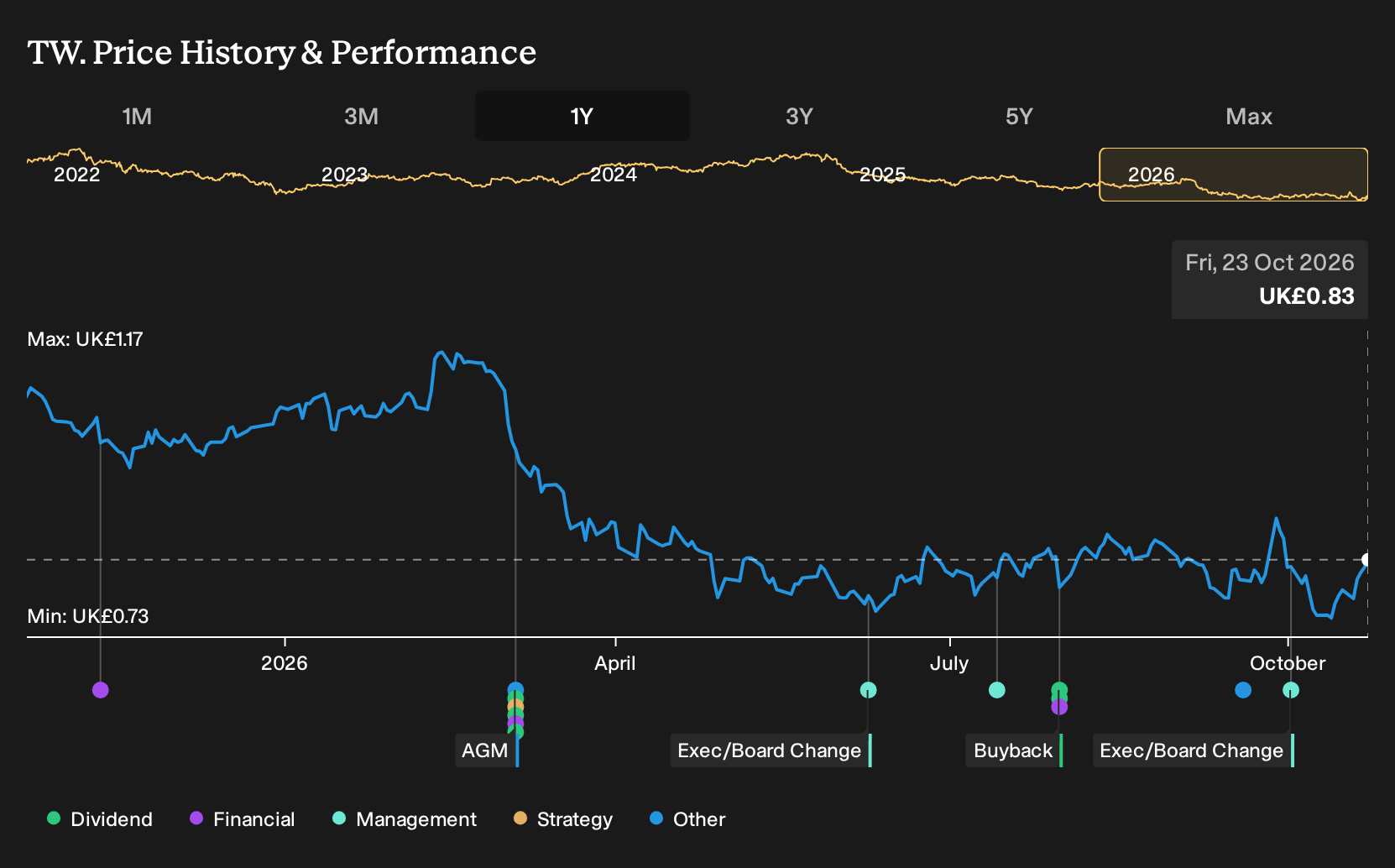
To own Taylor Wimpey today, you need to believe the refocus on cash generation can offset pressure from weaker share performance and margin headwinds. The key short term swing factor is how quickly the new, non London mix of sites converts into steady reservations and completions without heavy incentives eating into profitability.
The biggest near term risk remains cash leaving the business faster than it comes in. Building safety provisions, build cost inflation, tougher affordability and a dividend flagged as not well covered by free cash flow all pull in the same direction. The London exit does not remove those issues; it reshapes where capital is at work.
The most relevant move for this discussion is Taylor Wimpey’s decision to stop building in London and reallocate that capital to projects that management believes offer stronger cash generation and a better regulatory fit. That choice ties directly into the market’s focus on whether future cash flow can support ongoing shareholder distributions and remediation spending.
For catalysts, this retreat from the capital concentrates execution risk in regional sites and the existing land bank. Investors are watching how quickly these locations turn into cash, how incentives affect selling prices and whether margins hold up against rising labour costs and competitive pressure from secondhand homes, all while legal and safety liabilities continue to run through cash flow.
Taylor Wimpey Earnings And Revenue Assumptions
Taylor Wimpey's analyst case now hangs on relatively modest top line growth paired with some earnings pressure. Consensus modelling points to revenue expanding by 3.5% per year over the next few years while profit margins compress from 6.4% today to 5.5% by 2029. On that view, earnings move from £248.9 million today to £235.2 million by 2029, a decline of about £13.7 million, as the refocused site mix and ongoing safety costs work through the income statement.
Taylor Wimpey's narrative projects £4.3 billion revenue and £235.2 million earnings by 2029. This assumes 3.5% yearly revenue growth and about £13.7 million earnings decrease from £248.9 million today.
Uncover how Taylor Wimpey's fair value indicates a 4% potential increase from its current price before sentiment shifts and the discount narrows.
Exploring Other Perspectives
Some of the most optimistic analysts focus on outlet growth rather than London exposure. They were sketching a backdrop in which Taylor Wimpey reaches about £4.5b of revenue and £248.3m of earnings by 2029, compared with the consensus £4.3b and £235.2m. You can treat that spread as a prompt to explore how views may shift after this news.
Explore 5 other Taylor Wimpey fair value estimates, including one that suggests as much as 33% upside from the current price.
Form Your Own Verdict
Disagree with existing narratives? Extraordinary investment returns rarely come from following the herd, so go with your instincts.
- A great starting point for your Taylor Wimpey research is our analysis highlighting 4 key rewards and 1 important warning sign that could impact your investment decision.
- See our latest analysis for Taylor Wimpey. The report includes a comprehensive fundamental analysis summarized in a single visual, the Snowflake, making it easy to evaluate Taylor Wimpey's overall financial health at a glance.
Looking For More Investment Ideas Beyond Taylor Wimpey?
Once you have a view on Taylor Wimpey, it can help to compare the opportunity set with other listed businesses that share some of the qualities you care about, whether that is value, balance sheet strength, or income potential.
- If you are hunting for mispriced quality, scan a curated 8 high quality undervalued stocks collection of companies that blend strong cash generation with disciplined financial profiles.
- If capital protection matters most to you, focus on resilience by reviewing a 4 resilient stocks with low risk scores group of businesses screened for lower risk scores and sturdier fundamentals.
- If income is your priority, shortlist high yielders through a 5 dividend fortresses set of stocks that currently offer dividend yields above 5% with an emphasis on stability.
Have feedback on this article? Concerned about the content? Get in touch with us directly. Alternatively, email editorial-team@simplywallst.com