


First Mining And The Challenge Of Turning Gold Deposits Into Mines
Finding gold is only half the battle.
If it were easy, then there would be a long list of gold stocks flowing with money given the current gold prices.
A mine can have millions of ounces of gold underneath its surface. But that doesn’t mean it can be mined profitably.
Before they can even start digging up a single ounce, miners need to go through a gauntlet of approvals, financing, construction, drilling, testing, and other activities. All of this costs money. Sometimes, a miner even does all of that and still can’t make the economics work.
This is the challenge that Canadian gold company First Mining Gold (TSX:FF) is currently tackling.
Two gold deposits but at different stages
First Mining is a Canadian gold developer with two major projects, one in Ontario, known as Springpole, and one in Quebec, known as Duparquet.
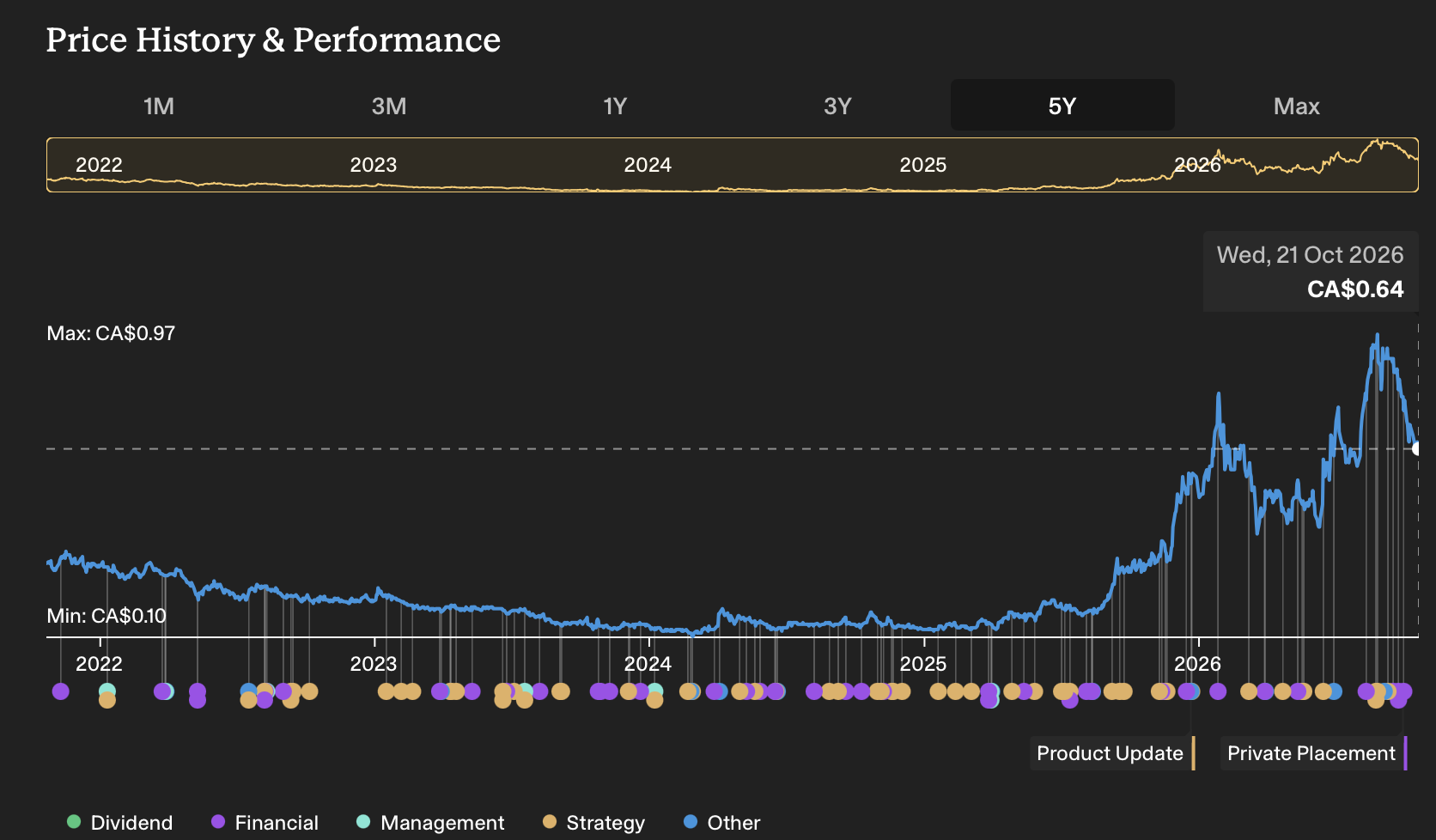
Both of these mines contain substantial deposits, but they are at very different stages of development.
Springpole is the more advanced of the two.
First Mining calls it one of the largest, undeveloped, open-pit deposits in Canada. It holds reserves of around 3.1 million ounces of gold at 0.94 grams of gold per tonne of rock. It also has around 16 million ounces of silver at 4.9 grams per tonne of rock. A pre-feasibility study estimates that an average gold production of 330,000 ounces per year in the first five years is possible.
Springpole has received federal environmental assessment approval and is advancing a feasibility study as it works towards development.
Duparquet, meanwhile, is considered by First Mining to be one of the largest undeveloped gold projects in North America. Around 3.4 million ounces of gold are categorised as indicated, meaning geologists have gathered enough confidence to map the gold deposit with a reasonable level of certainty. Another 2.6 million ounces are categorised as inferred, which means geologists know the gold is present but that they cannot guarantee the exact shape, size, or quality.
Together, the projects illustrate a large potential opportunity for First Mining, assuming it can develop an economically viable mine.
From gold in the ground to a viable mine
So, First Mining has found large deposits. Now comes, arguably, the harder part.
Take Springpole as an example.
Its November 2025 pre-feasibility study outlined a proposed open-pit operation with an estimated net present value (NPV) of US$2.1 billion, which assumes a gold price of US$3,100 an ounce. However, this study also assumes initial capital costs of approximately US$1.1 billion. This needs to be invested upfront before anything comes out of the ground.
But even before we get to that part, Springpole still needs to jump through further hurdles.
It only recently (June 2026) received federal environmental assessment approval and is now advancing feasibility work, which should provide a more detailed assessment of the project's design, costs, and expected returns. There is a chance this assessment comes up with a different view than the initial one, both positively and negatively. Further approvals, financing, and decisions from both the company and regulators are further hurdles that will need to be cleared.
And that is just Springpole. Duparquet is still further away from becoming an operating mine.
Can First Mining turn potential into production?
Having an attractive valuation attached to a theoretical project does not guarantee a successful mine.
First Mining’s challenge is now to continue investing capital and advancing its projects effectively, knowing that it won’t generate any revenue to cover those costs until it can start its proposed mining activities.
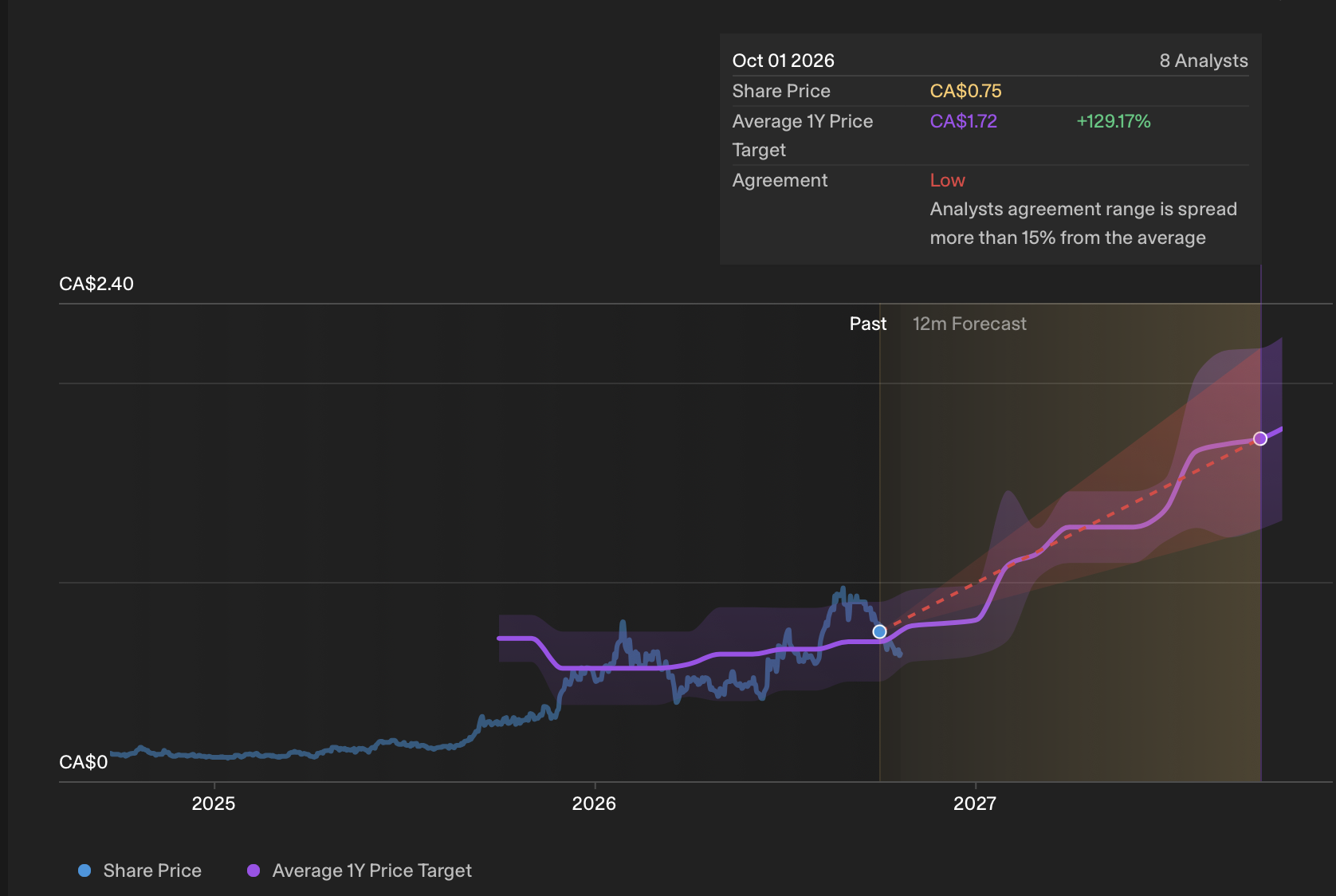
Analysts, as shown above, are optimistic, and there is significant reward if it can succeed. But it is far from guaranteed.
If First Mining can demonstrate that its projects are economically viable, secure the necessary approvals and financing, and successfully build and operate a mine, it could eventually move from being a gold developer to a gold producer. But rising construction costs, delays or unfavourable financing terms could affect the economics and the value ultimately created for shareholders.
Ultimately, First Mining's story is not just about how much gold lies beneath the ground. It is about whether the company can turn that potential into operating mines and lasting shareholder value.
Springpole’s US$2.1 billion NPV assumes gold at US$3,100 an ounce. Ask Charlie how the numbers change at today’s gold price.
Have feedback on this article? Concerned about the content? Get in touch with us directly. Alternatively, email editorial-team@simplywallst.com