


Enzyme Discovery Could Be A Big Step For Ajinomoto Stock (TSE:2802)
- bitBiome reported that its joint development project with Ajinomoto reached key milestones, discovering novel enzymes from its microbial database that meet Ajinomoto’s target specifications, which Ajinomoto has already validated for effectiveness and is now assessing for broader social use.
- The milestone points to Ajinomoto deepening its enzyme and microbial capabilities, which could be relevant for higher value amino acids, functional materials and biopharma services over time.
- We will examine how Ajinomoto’s investment narrative could evolve as enzyme discovery with bitBiome contributes to its broader specialty portfolio.
Scan beyond Ajinomoto to find other enzyme-focused and specialty material opportunities by reviewing our curated 73 high quality undiscovered gems, which are often overlooked by the broader market.
Ajinomoto Investment Narrative Recap
To own Ajinomoto, you need to believe its shift toward higher value Functional Materials, biopharma services and more premium foods can steadily offset pressure in traditional umami seasonings and input costs. The bitBiome enzyme milestone supports that broader shift in Healthcare and specialty ingredients, but on its own the impact looks more symbolic than financially material in the short term.
The near term swing factor still sits in execution on ABF capacity, biopharma CDMO ramp up and pricing power in Seasonings and Foods as energy, packaging and logistics costs bite. The biggest risk remains that higher spending and raw material inflation outpace price and mix gains, which would compress margins even with solid earnings momentum.
Among recent themes tied to this development, Ajinomoto’s push in biopharma CDMO and specialty amino acids looks closest to the bitBiome news. Enzyme discovery that feeds into amino acid or contract manufacturing pipelines aligns with the idea of Healthcare and Others becoming a stronger second earnings pillar alongside Seasonings and Foods.
For catalysts, investors are watching whether Functional Materials such as ABF materials and the CDMO network, including Forge, can sustain earnings growth while Seasonings and Foods handle raw material and energy headwinds. The bitBiome progress slightly reinforces the operational story around higher margin, specialty products, but cost inflation and volume softness in legacy categories still shape the near term balance of risks and potential rewards.
Ajinomoto Consensus Setup Behind the bitBiome Story
Ajinomoto's long term story that underpins the bitBiome partnership sits on a set of analyst assumptions that lean heavily on gradual compounding rather than dramatic step changes. Consensus models build in revenue growth of 6.9% a year over the next three years, with profit margins moving from 8.5% today to 10.2% in that same period. That framing matters for enzyme and specialty material work because it means new projects are layered onto expectations that already assume steadier mix improvement in higher value businesses.
On earnings, the market is working with a move from ¥138.9b in business profit today to ¥204.0b by 2029, with some analysts stretching that to ¥244.1b at the top end. In simple terms, the consensus view implies roughly a ¥65b uplift in profit over the next few years. For an investor, that framing helps size the bitBiome milestone in context. Enzyme led products might add to the earnings bridge, but the heavy lifting in most models still comes from ABF materials, biopharma CDMO and premium food lines that are already visible in segment disclosures.
Valuation work lines up around that 2029 anchor. For today’s share price to match the analyst price objectives, Ajinomoto would need to deliver revenue of ¥1,993.3b and earnings of ¥204.0b in 2029, while trading on a P/E of 32.4x compared with 37.4x at present. That multiple would also sit above the current 16.4x P/E level for the broader Japanese food group, which signals that analysts treat Ajinomoto more as a specialty ingredients and healthcare player than a conventional packaged food stock. Enzyme discovery with bitBiome fits that framing because success would deepen Ajinomoto’s profile in higher complexity, higher margin activities rather than bulk seasonings.
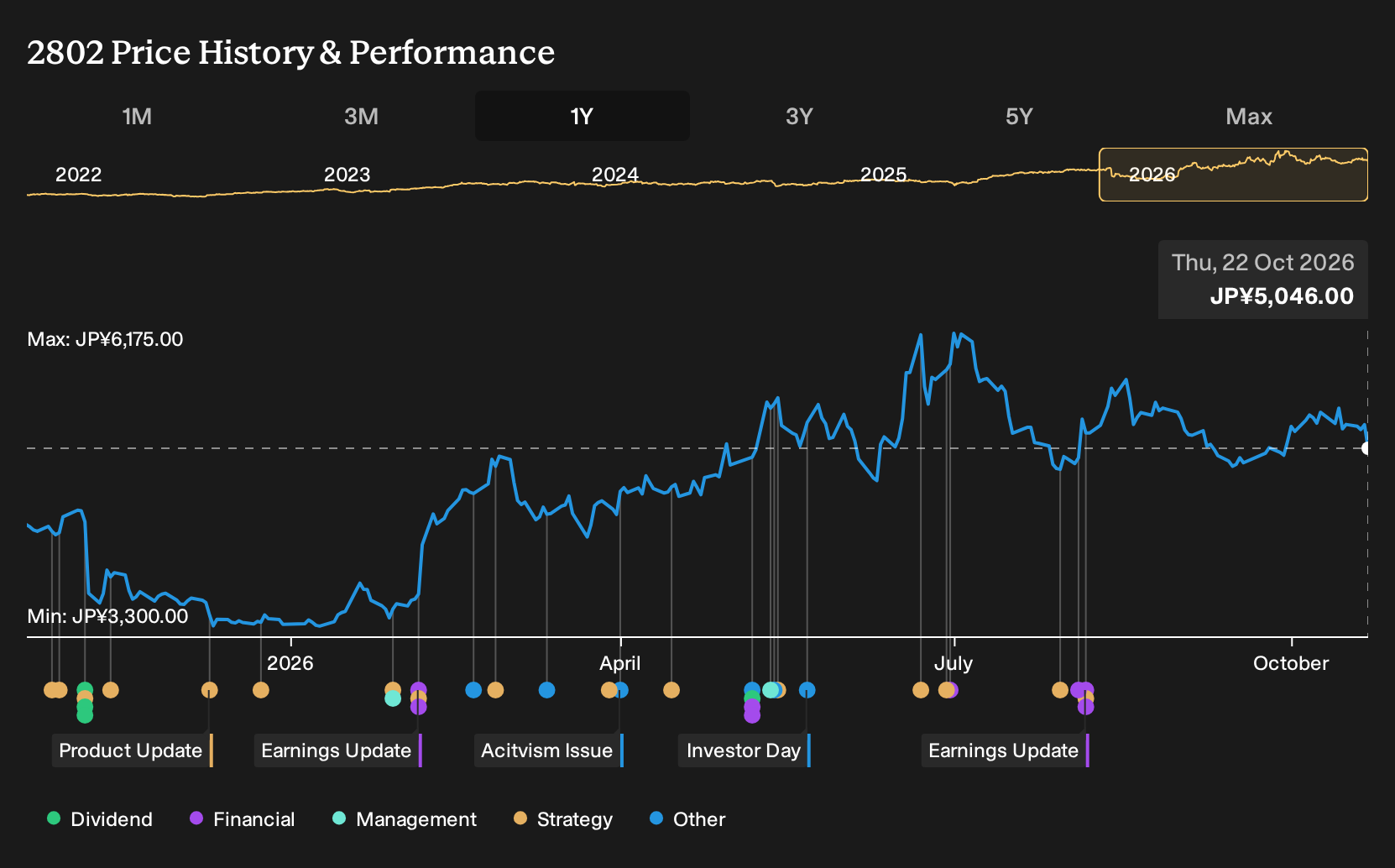
Consensus price objectives cluster around ¥6,321, with a range between ¥5,800 and ¥7,300. That spread reflects genuine disagreement on how far Functional Materials and Healthcare earnings can stretch, and on how much investors should pay for those segments relative to more traditional food activities. The bitBiome project by itself is unlikely to close that valuation gap. It does, however, feed into the broader question you need to answer, which is whether Ajinomoto deserves to trade closer to specialized chemicals and CDMO peers than to the average food producer.
Ajinomoto's narrative projects ¥1,993.3b revenue and ¥204.0b earnings by 2029. This rests on assumed 6.9% yearly revenue growth and an earnings increase of roughly ¥65.1b from ¥138.9b today.
Uncover why Ajinomoto's fair value indicates a 25% potential upside to its current price before other investors close that gap.
Exploring Other Perspectives
The alternate Ajinomoto story leans on a single catalyst. Bearish analysts focus on the chance that ABF and healthcare projects scale more slowly, which would leave earnings closer to ¥186.0b on ¥1,934.8b revenue by 2029. Those estimates came before the bitBiome enzyme progress, so you should expect views to shift.
Explore 3 other Ajinomoto fair value estimates, including one that suggests it could be worth just ¥6265!
Form Your Own Verdict
Don't just follow the ticker. Dig into the data and build a conviction that's truly your own.
- A great starting point for your Ajinomoto research is our analysis highlighting 4 key rewards and 1 important warning sign that could impact your investment decision.
- See our latest analysis for Ajinomoto. The report includes a comprehensive fundamental analysis summarized in a single visual, the Snowflake, making it easy to evaluate Ajinomoto's overall financial health at a glance.
Looking For More Investment Ideas Beyond Ajinomoto?
If Ajinomoto has sharpened your interest in specialty ingredients and resilient earnings models, it can be useful to line it up against other opportunities and see how it compares on quality, balance sheet strength and valuation. The Simply Wall St Screener gives you a quick way to build that wider watchlist without getting lost in noise.
- For investors who care most about resilience and capital preservation, start with a set of companies screened for sturdier profiles and see the 21 resilient stocks with low risk scores that pass those filters.
- If reliable finances matter to you more than a hot story, zero in on businesses with stronger balance sheets and consistent fundamentals through this curated list of solid balance sheet and fundamentals (22 results).
- When you want mispriced quality instead of headlines, focus on companies that pair sound financials with appealing valuations through the 14 high quality undervalued stocks and see what surfaces.
Have feedback on this article? Concerned about the content? Get in touch with us directly. Alternatively, email editorial-team@simplywallst.com