


Mastercard (MA) Stock Still Looks Reasonable As Its 91% Five Year Run Continues
Mastercard has delivered strong share-price gains in recent years. With the stock last closing at US$622.62, the key question now is whether that level is supported by the returns the business earns on its capital.
- Over the past 5 years the stock has returned 91.1%, which puts more weight on whether those gains line up with the profitability of each dollar Mastercard reinvests.
- New products such as the Global Money Platform and the Stablecoin Security API can influence how much capital Mastercard needs to commit and how efficiently it can turn that spending into long term returns.
- Prefer to judge Mastercard on earnings? See why Mastercard's 33.5x P/E tells a different valuation story.
The issue now is whether Mastercard's current share price is appropriately supported by the returns it earns on its capital today and what investors expect those returns to look like over time.
If you want to explore the same question about returns on capital across a broader set of businesses, scan through 33 high quality undervalued stocks.
Is Mastercard Still Cheap on Excess Returns?
The Excess Returns model looks at how effectively Mastercard turns each dollar of shareholder capital into profits above its equity cost. On the latest inputs, book value is estimated at $6.40 per share while stable EPS is projected at $33.71 per share, against a cost of equity of $1.11 per share. That gap leaves an excess return of $32.60 per share, with an average return on equity that is a very large multiple of the equity cost and a stable book value projection of $15.05 per share.
Excess Returns treats those projected earnings above the equity charge as the core driver of intrinsic worth, then discounts them back over time. For Mastercard, the projections imply that high returns on invested capital persist for longer than the current share price of $622.62 seems to assume. This is why the model puts its estimated intrinsic value substantially above the current share price. Because the launch of the Global Money Platform pushes Mastercard deeper into fee rich, capital light flows, the market may be slower to fully price those excess returns in. Find out what Mastercard could be worth using our Excess Returns estimate.
The Mastercard Narrative: What Would Justify Today's Price?
Simply Wall St Narratives pick up where the valuation puzzle for Mastercard leaves off. They spell out which paths for growth, margins and earnings would need to play out for the stock to be worth meaningfully more or meaningfully less than today's price on the Community page. Instead of a single output from a ratio or model, they map the future that figure relies on so you can watch over time whether Mastercard's actual progress lines up with those conditions.
Mastercard inspires sharply different interpretations, with some community members seeing a quality business on sale while others think expectations already look full.
Bull case: 17% undervalued
"Mastercard’s return on capital runs somewhere around 7-8x its cost of capital, and few businesses anywhere get close to that…"
Discover why this Narrative puts Mastercard at 17% undervalued.
Bear case: 20% overvalued
"Valuation premium: Mastercard trades at around 30× forward earnings, above the industry average (~22×), which some investors see as leaving little margin for error…"
Explore why this Narrative puts Mastercard at 20% overvalued.
One more Mastercard check that belongs beside the share price
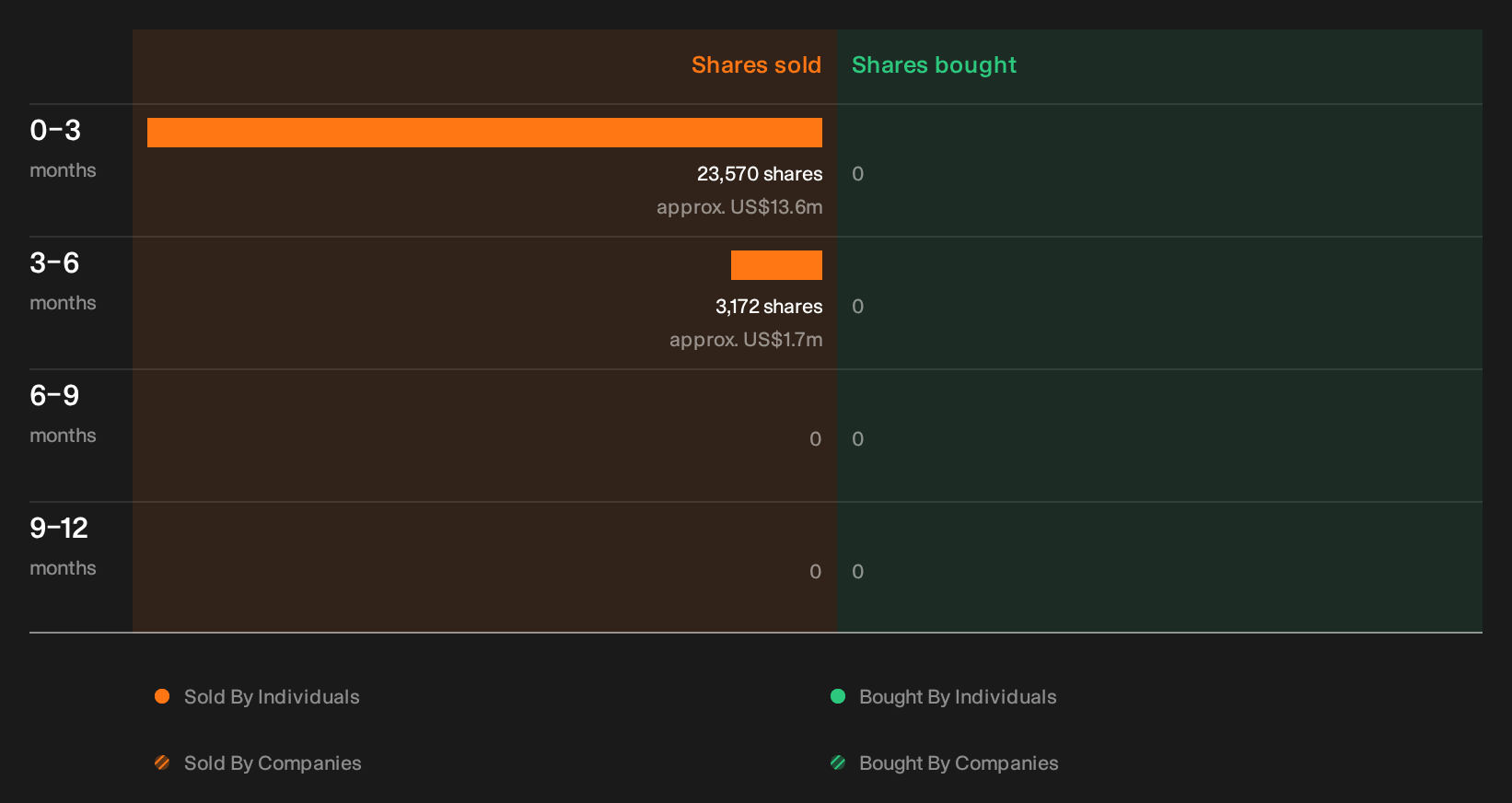
Price and profitability only tell part of the story, because recent trades by people inside Mastercard can hint at how they view the current setup. The specific sellers, volumes and possible read throughs are worth your time to inspect. See the recent insider selling flagged for Mastercard.
Have feedback on this article? Concerned about the content? Get in touch with us directly. Alternatively, email editorial-team@simplywallst.com