


DataWalk (WSE:DAT) Is In A Good Position To Deliver On Growth Plans
Just because a business does not make any money, does not mean that the stock will go down. For example, biotech and mining exploration companies often lose money for years before finding success with a new treatment or mineral discovery. Nonetheless, only a fool would ignore the risk that a loss making company burns through its cash too quickly.
So, the natural question for DataWalk (WSE:DAT) shareholders is whether they should be concerned by its rate of cash burn. For the purpose of this article, we'll define cash burn as the amount of cash the company is spending each year to fund its growth (also called its negative free cash flow). We'll start by comparing its cash burn with its cash reserves in order to calculate its cash runway.
When Might DataWalk Run Out Of Money?
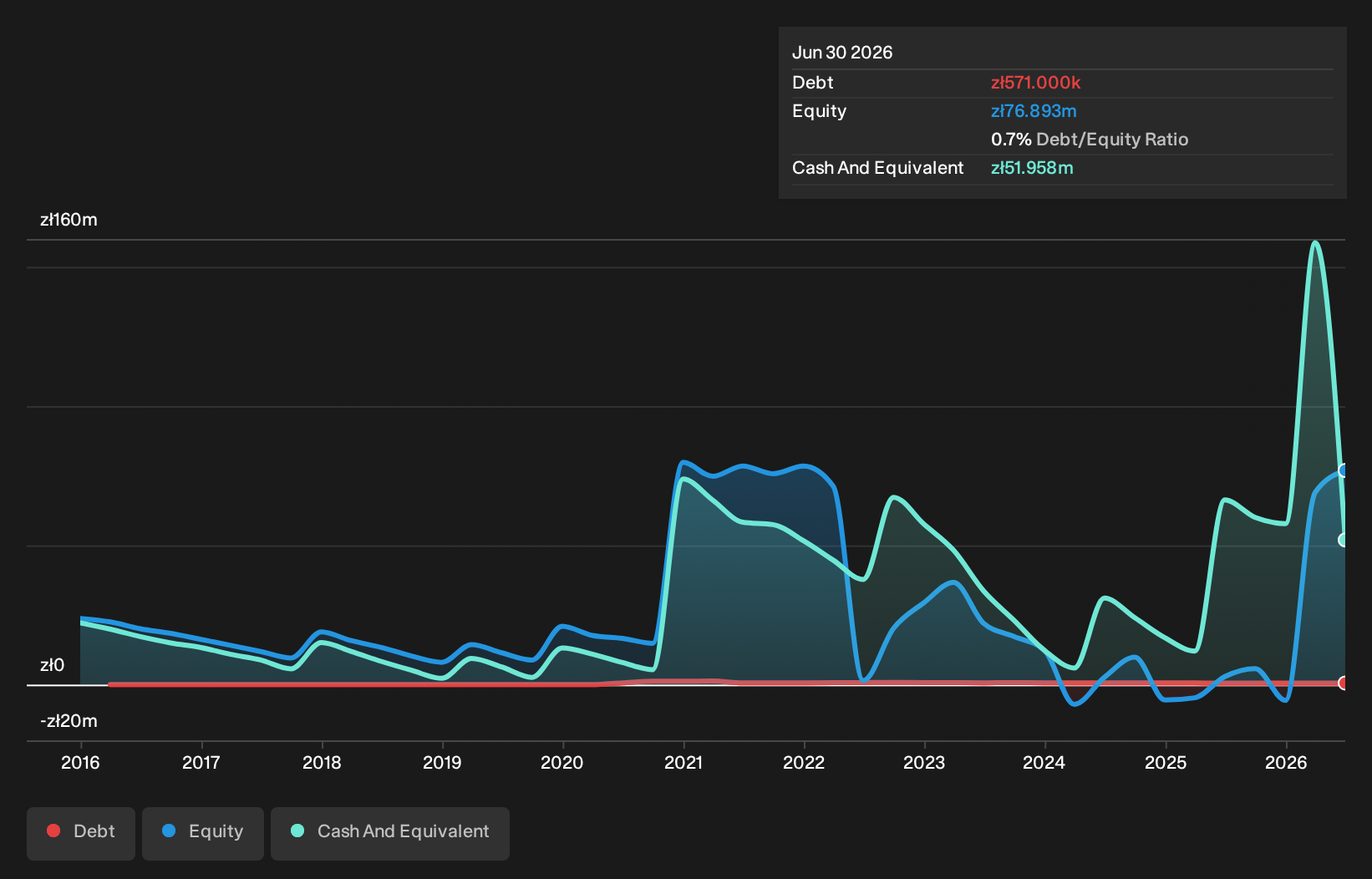
A cash runway is defined as the length of time it would take a company to run out of money if it kept spending at its current rate of cash burn. As at June 2026, DataWalk had cash of zł52m and such minimal debt that we can ignore it for the purposes of this analysis. Looking at the last year, the company burnt through zł29m. Therefore, from June 2026 it had roughly 21 months of cash runway. While that cash runway isn't too concerning, sensible holders would be peering into the distance, and considering what happens if the company runs out of cash. Depicted below, you can see how its cash holdings have changed over time.
View our latest analysis for DataWalk
How Well Is DataWalk Growing?
Some investors might find it troubling that DataWalk is actually increasing its cash burn, which is up 36% in the last year. And we must say we find it concerning that operating revenue dropped 33% over the same period. Taken together, we think these growth metrics are a little worrying. In reality, this article only makes a short study of the company's growth data. You can take a look at how DataWalk has developed its business over time by checking this visualization of its revenue and earnings history.
How Easily Can DataWalk Raise Cash?
Even though it seems like DataWalk is developing its business nicely, we still like to consider how easily it could raise more money to accelerate growth. Generally speaking, a listed business can raise new cash through issuing shares or taking on debt. One of the main advantages held by publicly listed companies is that they can sell shares to investors to raise cash and fund growth. By comparing a company's annual cash burn to its total market capitalisation, we can estimate roughly how many shares it would have to issue in order to run the company for another year (at the same burn rate).
DataWalk's cash burn of zł29m is about 4.0% of its zł730m market capitalisation. That's a low proportion, so we figure the company would be able to raise more cash to fund growth, with a little dilution, or even to simply borrow some money.
Is DataWalk's Cash Burn A Worry?
On this analysis of DataWalk's cash burn, we think its cash burn relative to its market cap was reassuring, while its falling revenue has us a bit worried. Cash burning companies are always on the riskier side of things, but after considering all of the factors discussed in this short piece, we're not too worried about its rate of cash burn. On another note, we conducted an in-depth investigation of the company, and identified 2 warning signs for DataWalk (1 can't be ignored!) that you should be aware of before investing here.
Of course, you might find a fantastic investment by looking elsewhere. So take a peek at this free list of companies with significant insider holdings, and this list of stocks growth stocks (according to analyst forecasts)
Have feedback on this article? Concerned about the content? Get in touch with us directly. Alternatively, email editorial-team (at) simplywallst.com.