


MCP Security Launch Might Change The Case For Investing In Radware (RDWR)
- Radware recently introduced MCP Server Protection, a security offering for Model Context Protocol servers that aims to safeguard AI agent connections across cloud, on premises and hybrid deployments while monitoring agent activity and MCP specific attack patterns.
- The launch expands Radware’s AI security portfolio beyond agents and models to the MCP server layer, targeting a new attack surface as enterprises plug AI agents directly into core applications, data and workflows.
- This development also shapes how Radware’s investment narrative is viewed in relation to its MCP server protection launch and its focus on AI infrastructure.
Scan how Radware’s MCP launch fits into a wider AI infrastructure push by reviewing a curated set of 55 AI infrastructure stocks that are also building security and tooling around next generation agent workloads.
What Is Radware's Investment Narrative?
To own Radware, you need to believe that AI security is becoming its own category and that the firm can turn that into durable, high quality earnings rather than one off wins. MCP Server Protection extends Radware’s existing agent and LLM defenses into a fuller AI infrastructure suite, which speaks directly to that story. The near term catalysts still look execution heavy, such as converting this broader platform into recurring cloud revenue while keeping operating discipline, since the business already runs with a relatively low 5.4% net margin and a low 4.8% Return on Equity.
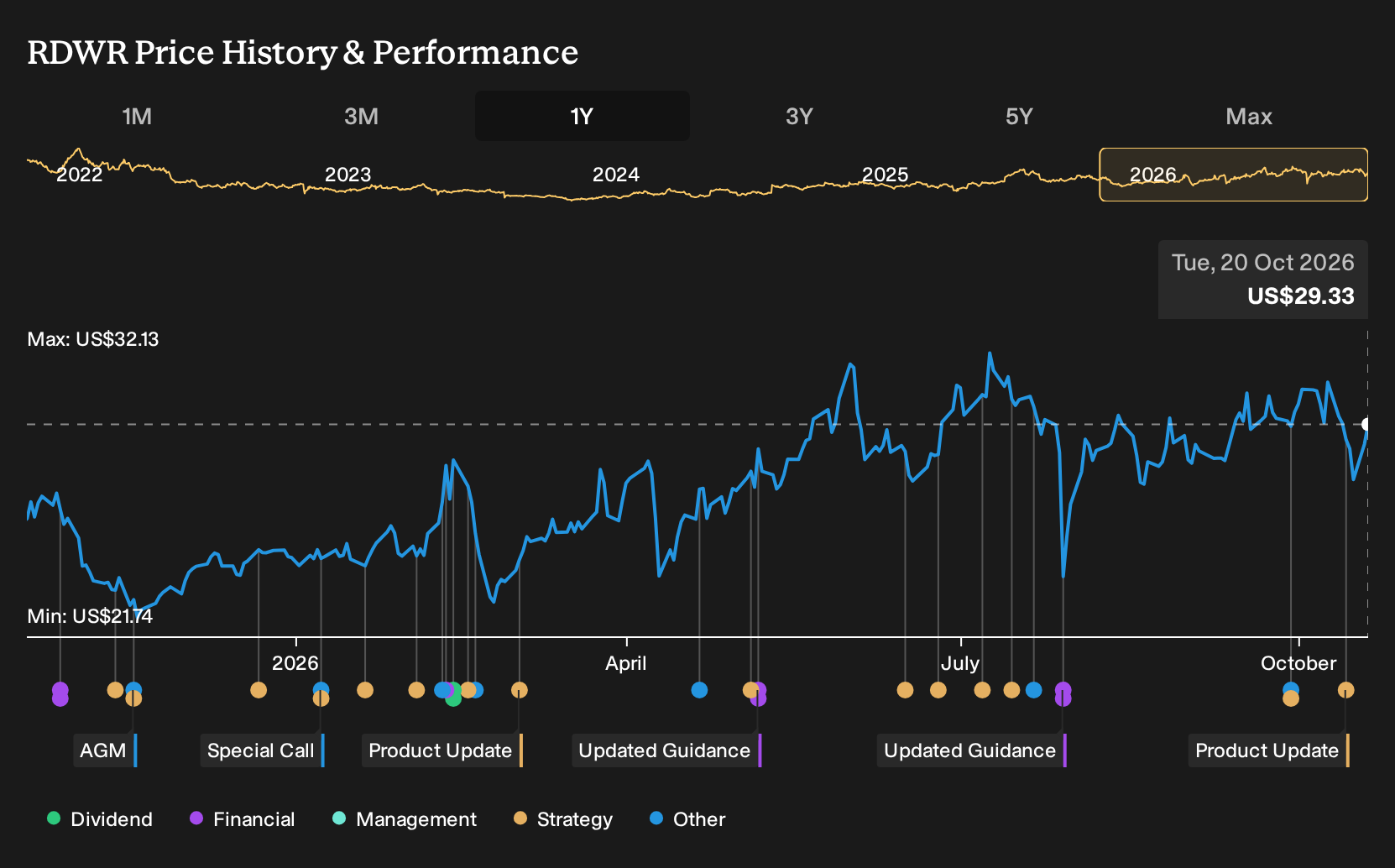
The new product does not rewrite the investment case overnight, although the stock has already climbed 23.3% year to date and trades on a P/E of 71.5x versus 31.7x for US software peers. MCP Server Protection can support demand as enterprises test MCP in production, but investors still have to weigh pricing power, capital needs to support cloud delivery and the fact that recent results include a sizeable one off gain and some meaningful insider selling over the past three months.
That said, there is a less comfortable angle to the Radware story that sits beneath the AI narrative and it starts with ...
There's only one way to know the right time to buy, sell or hold Radware. Head to Simply Wall St's company report for the latest analysis of Radware's Fair Value.
Exploring Other Perspectives
The Simply Wall St Community only supplies two fair value views on Radware, yet they already span from about US$19.59 to US$30.50 per share. That gap reflects how far private investors can spread on future AI security economics. With the MCP Server Protection launch announced on 14 October 2026, you now face fresh reasons to compare those older estimates and explore several contrasting viewpoints.
Explore another Radware fair value estimate, including one that suggests as much as 33% downside from the current price.
Reach Your Own Conclusion
Disagree with this assessment? Extraordinary investment returns rarely come from following the herd, so consider your own analysis and judgment.
- A great starting point for your Radware research is our analysis highlighting 1 key reward and 2 important warning signs that could impact your investment decision.
- See our latest analysis for Radware. The report includes a comprehensive fundamental analysis summarized in a single visual, the Snowflake, making it easy to evaluate Radware's overall financial health at a glance.
Looking For More Investment Ideas Beyond Radware?
If Radware's MCP story has you thinking more broadly about where to put fresh capital, it can help to compare it with other businesses that share some of the qualities you value, whether that is pricing discipline, balance sheet strength, or income potential.
- For readers hunting for mispriced quality, scan a focused set of 34 high quality undervalued stocks that pair stronger fundamentals with what our model views as discounted valuations.
- If resilience matters more to you than excitement, narrow your search to a 31 resilient stocks with low risk scores that score well on financial health and risk metrics.
- Income oriented investors can zero in on steady cash generators by reviewing a curated 8 dividend fortresses that combine higher yields with screened fundamentals.
Have feedback on this article? Concerned about the content? Get in touch with us directly. Alternatively, email editorial-team@simplywallst.com