


3 European Cyclical Stocks To Watch on Russia Ukraine De Escalation Hopes
Geopolitics rarely offers a calm backdrop, yet talk of a potential peace track around the Russia Ukraine conflict has quietly shifted how risk is being priced across European cyclicals. If war-related disruption eases, some businesses tied to regional demand or energy costs could move back into focus faster than many expect, and sitting on the sidelines may feel uncomfortable. This article discusses three stocks from our de-escalation screener that appear particularly sensitive to this theme and explains why they may be relevant for your portfolio watchlist.
The three examples below are only a sample of this idea, and the full screen surfaced 63 more European cyclicals with equally compelling geopolitical and energy-sensitive narratives that are not covered here. To identify and analyze your own highest conviction angles around this theme, head straight into the European Cyclical Equities Benefiting From Russia-Ukraine De-escalation screener.
Salzgitter (XTRA:SZG)
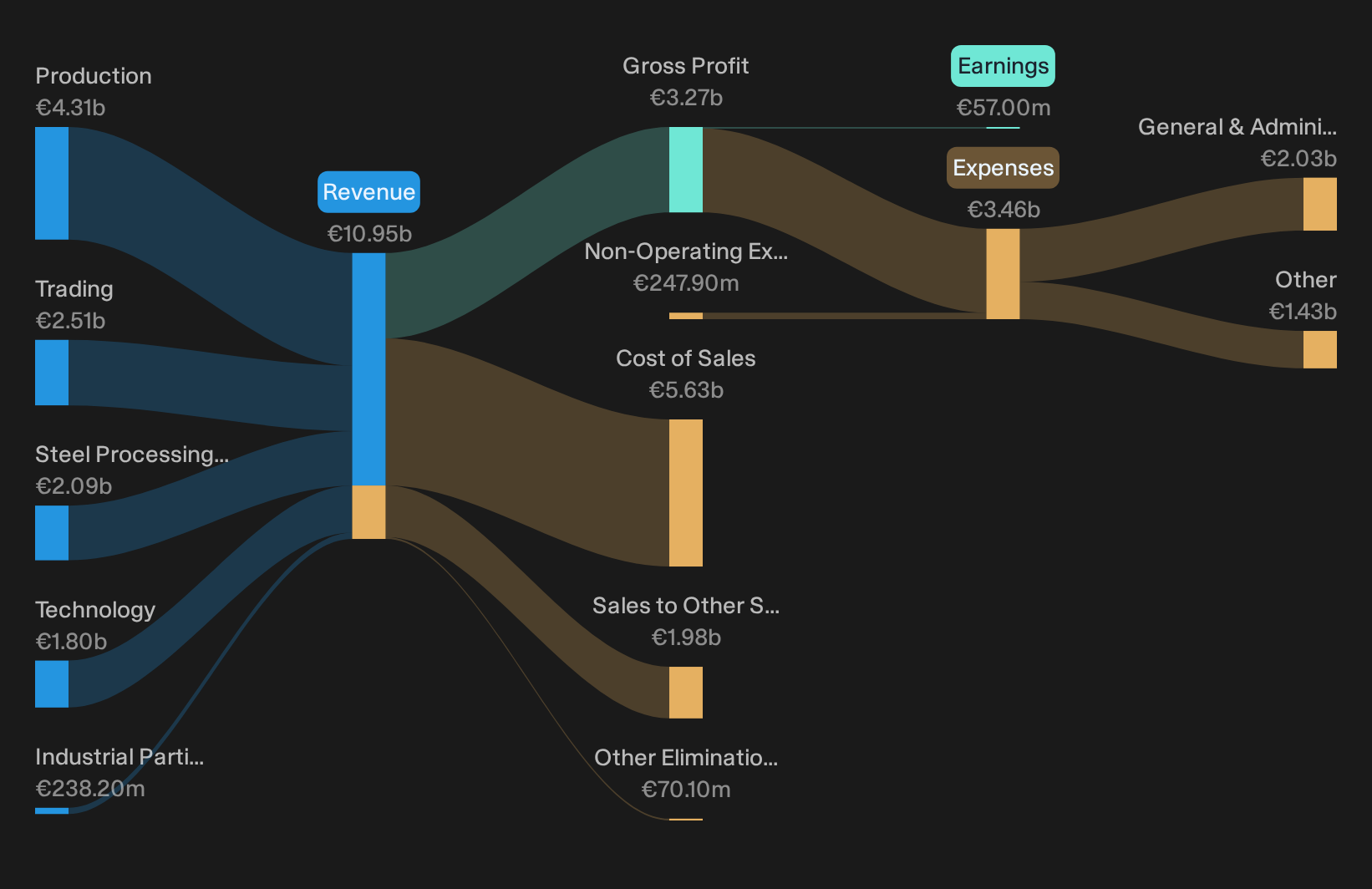
Overview: Salzgitter is a German steel and technology group that produces and processes steel products and machinery for industrial, construction and packaging customers worldwide.
Operations: Salzgitter generates most of its revenue from steel-related activities, with €4.3b from Production, €2.5b from Trading and €2.1b from Steel Processing.
Market Cap: €2.7b
Salzgitter sits near the sharp edge of this screener theme because its steel operations feel every shift in European demand and energy pricing. This makes current peace talk headlines more than just background noise for investors watching how cyclical earnings might respond.
"Sustained and escalating capital expenditure obligations for decarbonization programs, such as SALCOS, will strain free cash flow and push net debt higher, increasing financial risk and leaving less capital for shareholder returns or strategic growth opportunities."
What happens to Salzgitter’s margins if a single key assumption about future European steel demand and pricing quietly moves the wrong way?
If that question keeps nagging at you, read the full narrative for Salzgitter to see how decarbonization, capital intensity and geopolitics could be accelerating or masking Salzgitter’s next chapter.
thyssenkrupp (XTRA:TKA)
Overview: thyssenkrupp is a German industrial and technology group that combines steel, materials trading, and capital-goods engineering for global customers.
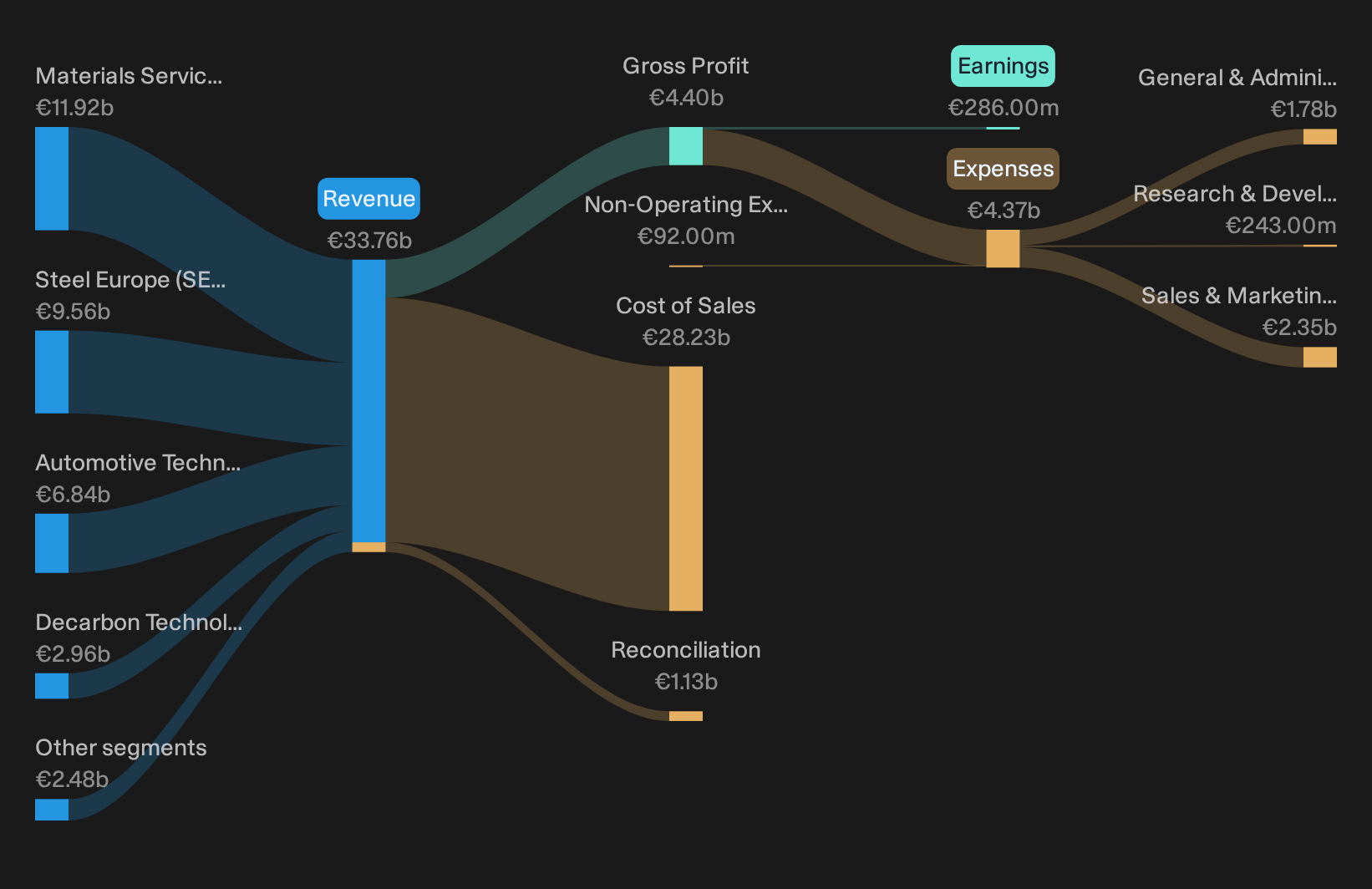
Operations: thyssenkrupp generates about €11.9b from Materials Services, €9.6b from Steel Europe, €6.8b from Automotive Technology, €3.0b from Decarbon Technologies and €2.5b from Marine Systems.
Market Cap: €8.9b
thyssenkrupp sits squarely in this cyclical, energy-sensitive theme because its steel and capital-goods activities react quickly to shifts in European confidence and input costs, so any credible move toward Russia Ukraine de-escalation can change how investors frame its earnings power.
"Persistent global decarbonization efforts and stricter emissions regulations are driving up compliance and capital expenditure costs for heavy industry, while at the same time, advancements in alternative materials like composites and lightweight alloys are set to reduce long-term demand for thyssenkrupp's core steel offerings."
What happens to thyssenkrupp’s earnings profile if a single key assumption about how it passes through these extra costs starts to break?
If that earnings assumption feels like the first domino, read the full narrative for thyssenkrupp to see where thyssenkrupp’s decarbonization spend and cash generation could be quietly decoupling.
Deutsche Lufthansa (XTRA:LHA)
Overview: Deutsche Lufthansa runs a global passenger airline, cargo logistics and aircraft maintenance group whose fortunes closely track European travel demand and fuel costs.
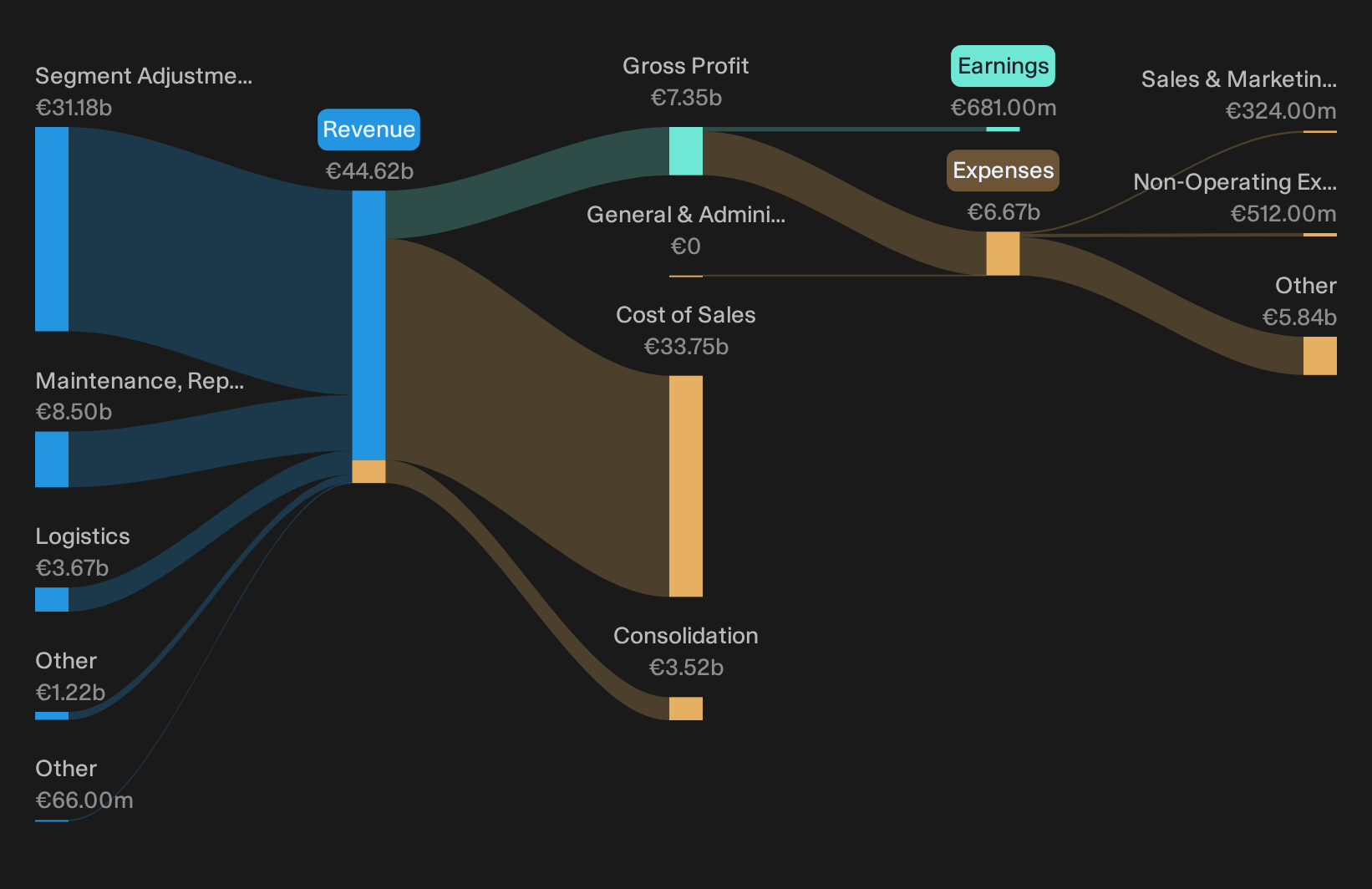
Operations: Deutsche Lufthansa reports €31.2b from segment adjustments, €8.5b from MRO, €3.7b from Logistics and €1.2b from other activities, offset by €3.5b consolidation.
Market Cap: €8.6b
For a cyclical screen built around European confidence, energy prices and geopolitics, Deutsche Lufthansa is almost a textbook example of how quickly sentiment on travel demand and operating costs can reshape the outlook for a flagship carrier.
"Although Lufthansa is heavily hedged on passenger fuel for 2026, the roughly €1.7b upward swing in the projected fuel bill and the need to cut capacity and retire aircraft to reduce unhedged exposure point to a scenario where any further fuel or crack spread shock could compress operating margins more than current models allow."
The real swing factor for Deutsche Lufthansa now is how one stubborn cost pressure lines up against management’s plans to lift profitability.
If that trade off between margin pressure and upside on travel demand matters to you, read the full narrative for Deutsche Lufthansa to see how Deutsche Lufthansa’s recovery story could be accelerating beyond the fuel debate.
Seeking Fresh Alternatives Before They Fly
Some of the sharpest breakout stories start quietly, then momentum builds and the best entry points vanish. Scan these fresh ideas while it matters and get in early.
- Spot strong cash generators before the crowd by scanning a curated 189 high quality undervalued stocks that aims to balance solid balance sheets with meaningful upside potential.
- Ride the next wave of automation gains by tracking a hand-picked pool of 91 robotics and automation stocks with exposure to factories, logistics and real-world productivity shifts.
- Position ahead of the next energy buildout cycle by reviewing a focused group of 42 power grid technology and infrastructure stocks that tap into electrification and grid-modernization spending.
This article by Simply Wall St is general in nature. We provide commentary based on historical data and analyst forecasts only using an unbiased methodology and our articles are not intended to be financial advice. It does not constitute a recommendation to buy or sell any stock, and does not take account of your objectives, or your financial situation. We aim to bring you long-term focused analysis driven by fundamental data. Note that our analysis may not factor in the latest price-sensitive company announcements or qualitative material. Simply Wall St has no position in any stocks mentioned.
Have feedback on this article? Concerned about the content? Get in touch with us directly. Alternatively, email editorial-team@simplywallst.com