


Did Airfreight Capacity Crunch Just Shift DSV (CPSE:DSV) Stock Narrative?
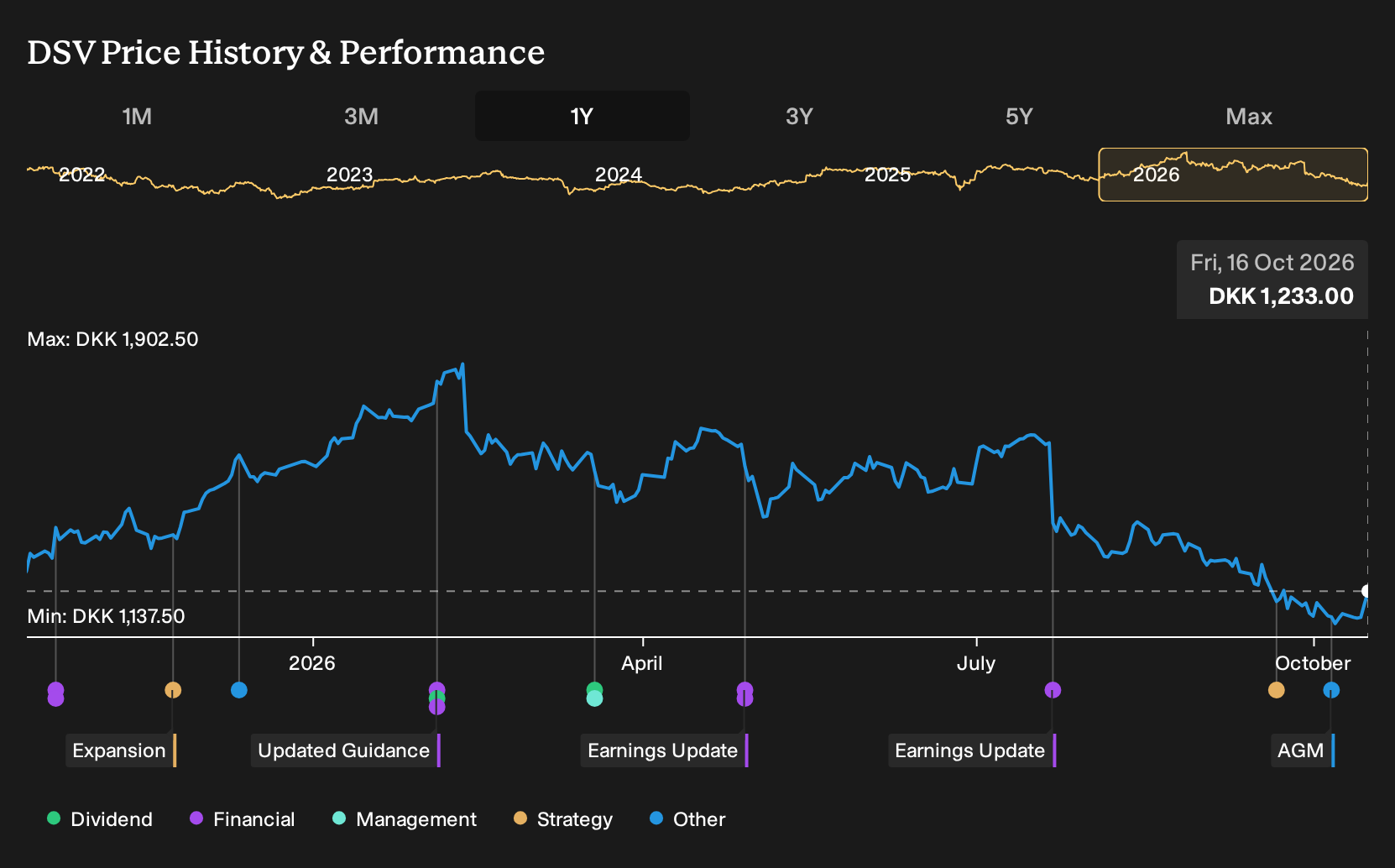
- DSV recently highlighted that peak season airfreight demand, including heavy AI infrastructure shipments, is meeting tight capacity and rising jet fuel costs, which is creating pressure on its air cargo operations.
- The logistics group also expanded its low carbon offering through a CMA CGM biofuel agreement. This supports emissions reduction yet arrives just as core airfreight economics face new strain.
- We will now see how DSV's investment narrative might be affected by airfreight capacity pressure and rising jet fuel costs.
Scan how other logistics and infrastructure plays are positioned for tight capacity and AI-driven freight by zeroing in on 55 AI infrastructure stocks within the sector.
DSV Investment Narrative Recap
To own DSV you need to be comfortable with a freight forwarder that leans on scale, IT and contract logistics to squeeze more earnings out of each krone of gross profit. The near term hinge is Schenker integration and productivity work in Road. Tight airfreight capacity and higher jet fuel prices mostly shift mix and margin risk toward the Air & Sea division.
The immediate swing factor is whether DSV can push through pricing and prioritise AI infrastructure loads without eroding service for other customers. The biggest risk sits in execution across Road and cash conversion, where integration costs, one offs and working capital already weigh on free cash flow and reported profitability.
The CMA CGM biofuel deal is the clearest operational link to this airfreight story. It gives DSV a concrete low carbon solution while jet fuel costs are rising and AI infrastructure freight is filling capacity. That matters for large shippers that care about emissions accounting on top of delivery speed and reliability.
For catalysts, this agreement plugs directly into DSV efforts to grow higher value verticals such as healthcare and technology, and to use low emission offerings as a differentiator in tenders. The flip side is cost. If biofuel premiums and volatile fuel prices are not matched by customer willingness to pay, margin pressure could add to the existing strain from Road integration and weak cash coverage of debt.
DSV's narrative projects DKK 316.0b revenue and DKK 23.0b earnings by 2029. This is based on an assumed 2.8% yearly revenue growth and an earnings increase of DKK 15.8b from DKK 7.2b today.
Uncover why DSV's fair value indicates a 57% potential upside to its current price that could narrow quickly.
Exploring Other Perspectives
One big swing factor that bullish analysts focus on is margin expansion at DSV. Before this airfreight capacity squeeze, the most optimistic forecasts were built on revenue reaching about DKK 328.6b and earnings of DKK 29.9b by 2029, far above consensus. That view could shift once this fuel and AI freight story is fully reflected, so treat it as one of several viewpoints to stress test rather than a single roadmap.
Explore 2 other DSV fair value estimates, including one that suggests the potential for as much as 85% upside from the current price.
The Verdict Is Yours
Disagree with existing narratives? Extraordinary investment returns rarely come from following the herd, so go with your instincts.
- A great starting point for your DSV research is our analysis highlighting 3 key rewards and 4 important warning signs that could impact your investment decision.
- See our latest analysis for DSV. The report includes a comprehensive fundamental analysis summarized in a single visual, the Snowflake, making it easy to evaluate DSV's overall financial health at a glance.
Looking for more DSV-style investment ideas?
If the DSV story has you thinking about what else might fit your watchlist, it can help to scan for other businesses with clear financial traits and then compare their narratives side by side.
- Prefer to focus on quality at a discount. Start with a curated set of 189 high quality undervalued stocks that combine strong fundamentals with attractive pricing.
- Want steadier pay-outs. Filter for companies built around reliable income streams by reviewing a focused group of 215 dividend fortresses.
- Care most about resilience. Zero in on a 234 resilient stocks with low risk scores that score well on financial strength and risk checks.
This article by Simply Wall St is general in nature. We provide commentary based on historical data and analyst forecasts only using an unbiased methodology and our articles are not intended to be financial advice. It does not constitute a recommendation to buy or sell any stock, and does not take account of your objectives, or your financial situation. We aim to bring you long-term focused analysis driven by fundamental data. Note that our analysis may not factor in the latest price-sensitive company announcements or qualitative material. Simply Wall St has no position in any stocks mentioned.
Have feedback on this article? Concerned about the content? Get in touch with us directly. Alternatively, email editorial-team@simplywallst.com