


Did Malaysia Assembly Deal Just Shift BYD's (SEHK:1211) Investment Narrative?
- BYD has moved to deepen its electric vehicle manufacturing footprint in Southeast Asia through a completely knocked down assembly partnership with Inokom in Malaysia and has prepared a second generation Seagull launch after redesigning the model to seat five and adjust its drivetrain and chassis.
- The Malaysian assembly tie up and Seagull redesign both point to BYD reallocating effort toward export friendly production and addressing pressure from weaker domestic demand in its smaller car segment.
- We will explore how BYD’s Malaysian CKD partnership shapes the existing investment narrative around overseas expansion and localised production.
Scan for other electric vehicle manufacturers trying similar export pivots by checking out our curated list of 42 power grid technology and infrastructure stocks alongside BYD's latest moves.
BYD Investment Narrative Recap
To own BYD, you need to be comfortable with a simple idea. The thesis leans on the shift in sales mix toward overseas markets with stronger pricing, while domestic China stays crowded and price sensitive. The key near term swing factor is how quickly export volumes and local assembly arrangements offset pressure seen in first half 2026 revenue and earnings.
The biggest near term risk now sits on the policy side. Talk of the UK accepting higher tariffs on Chinese EVs adds to existing barriers in the United States and could slow access to premium markets. If those hurdles harden further, the payoff from BYD’s international push could be limited.
The most relevant update here is the possible rise in UK tariffs on Chinese electric vehicles, which would directly touch BYD’s European export ambitions. For investors, that ties into the core catalyst that analysts have focused on. Overseas volumes and higher value markets need to do more heavy lifting while China remains intense on pricing.
Trade friction adds another layer to that story. BYD is already leaning on overseas plants such as the Camacari project in Brazil and new CKD assembly in Malaysia to support shipments. If more countries follow the UK and tighten import terms, the execution risk around that whole ecosystem, from plants to shipping fleet to charging roll out, becomes more important to track.
BYD's narrative projects CN¥561.1b revenue and CN¥66.0b earnings by 2029. This aligns with analyst assumptions of a 10.3% yearly revenue decline and an earnings increase of about CN¥36.7b from CN¥29.3b today.
Uncover why BYD's fair value indicates a 71% potential upside to its current price, which could narrow quickly.
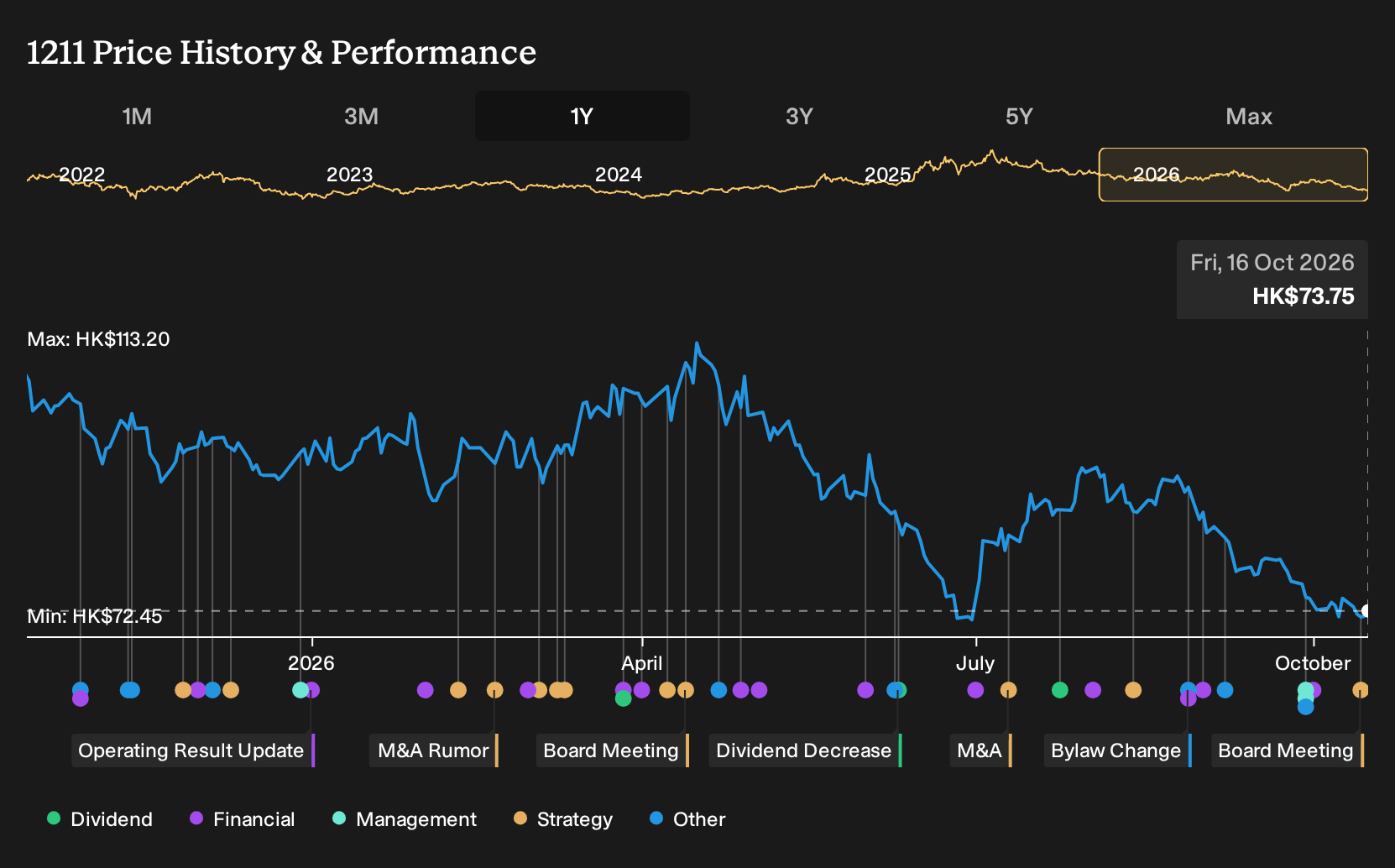
Exploring Other Perspectives
Some of the most optimistic analysts frame BYD’s overseas push as a potential earnings engine rather than just a tariff risk. Before this news, the bullish camp was pencilling in revenue rising to about CN¥1,410.2b and earnings of CN¥88.1b by 2029. You can treat those forecasts as one end of the spectrum and compare them with your own view, then decide how this Malaysia and Seagull update might shift the story.
Explore 6 other BYD fair value estimates, including one that suggests as much as 563% upside from the current price.
Reach Your Own Conclusion
Don't just follow the ticker. Dig into the data and build a conviction that's truly your own.
- A great starting point for your BYD research is our analysis highlighting 3 key rewards and 1 important warning sign that could impact your investment decision.
- See our latest analysis for BYD. The report includes a comprehensive fundamental analysis summarized in a single visual, the Snowflake, making it easy to evaluate BYD's overall financial health at a glance.
Looking for more investment ideas beyond BYD?
Once you have a view on BYD, the next step is to widen your watchlist and see how other businesses stack up on quality, value, and risk using the Simply Wall St Screener.
- For investors who want potential value with a quality tilt, start with a focused set of 189 high quality undervalued stocks that already clear some fundamental checks.
- If capital preservation is high on your list, narrow things down to a 234 resilient stocks with low risk scores that can help you filter for more resilient balance sheets and business profiles.
- To surface ideas the wider market may be overlooking, scan through a 614 high quality undiscovered gems and see which companies warrant a closer look.
This article by Simply Wall St is general in nature. We provide commentary based on historical data and analyst forecasts only using an unbiased methodology and our articles are not intended to be financial advice. It does not constitute a recommendation to buy or sell any stock, and does not take account of your objectives, or your financial situation. We aim to bring you long-term focused analysis driven by fundamental data. Note that our analysis may not factor in the latest price-sensitive company announcements or qualitative material. Simply Wall St has no position in any stocks mentioned.
Have feedback on this article? Concerned about the content? Get in touch with us directly. Alternatively, email editorial-team@simplywallst.com