


How Recycled Aluminum Shift Will Impact Yamaha Motor Stock Investors
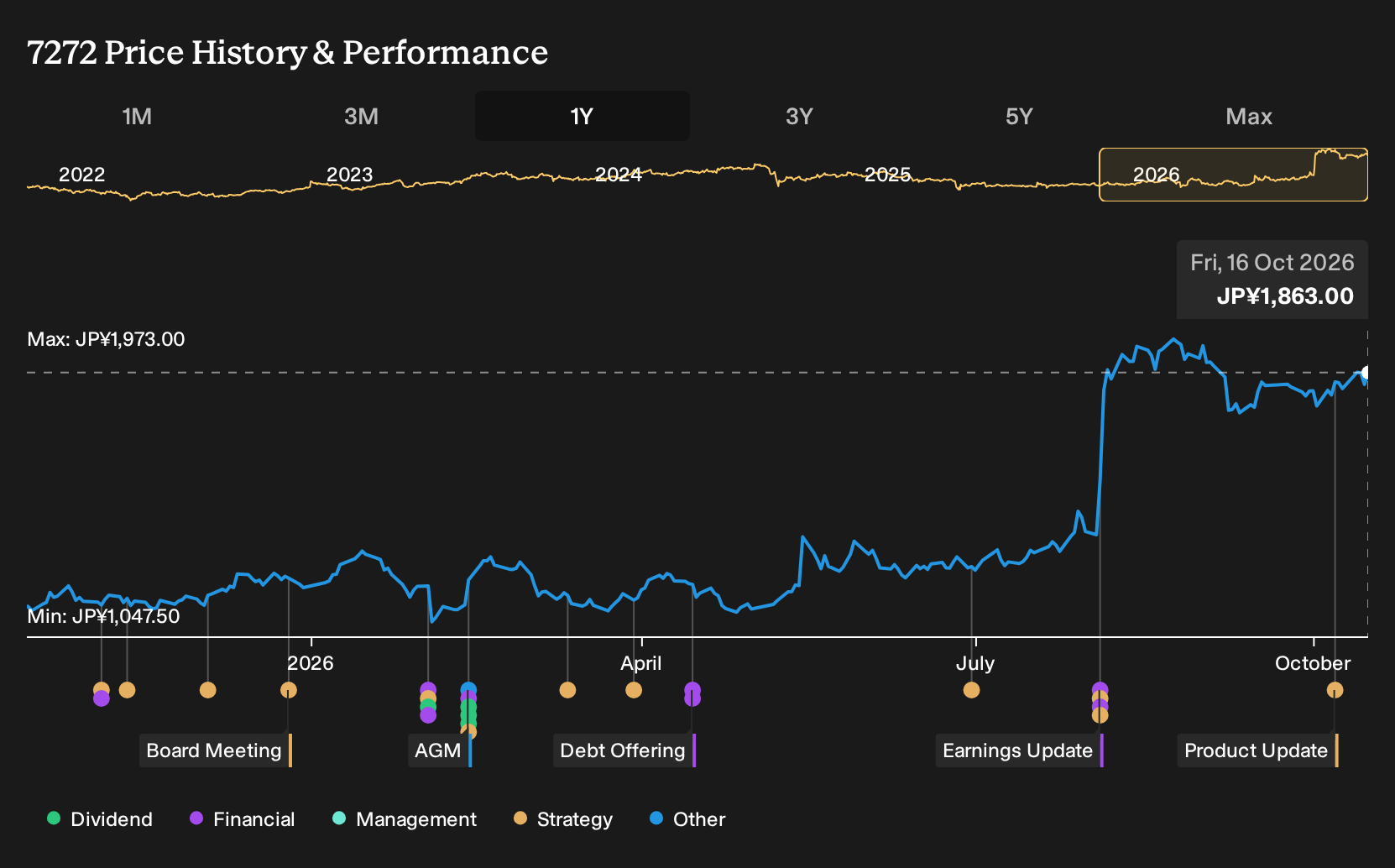
- Yamaha Motor announced in October 2026 that it will shift its all-aluminum DiASil Cylinder production from virgin to recycled aluminum alloy by 2030, targeting an estimated annual CO2 reduction of about 47,000 tons once fully adopted.
- The move suggests Yamaha Motor is trying to cut material-related emissions while keeping manufacturing costs and cylinder performance aligned with existing quality standards.
- We will now assess how this recycled aluminum shift in Yamaha Motor's DiASil Cylinder program could reshape the broader investment narrative.
Scan how Yamaha Motor's recycled aluminum push compares with peers by reviewing a curated group of 23 resilient stocks with low risk scores that also focus on material efficiency and lower supply chain risk.
Yamaha Motor Investment Narrative Recap
Yamaha Motor may appeal to you if you believe its mix of motorcycles, marine products, OLV and robotics can keep turning solid product technology into steadier earnings, despite raw material inflation and currency swings. The recycled aluminum DiASil program fits that story, but the direct near term catalyst still appears more tied to execution in core motorcycle premiumization and marine demand recovery than to this single materials decision.
The biggest swing factor remains whether higher costs, restructuring charges and any quality provisions stay contained so margin progress does not stall. A key risk is that weaker marine demand or aggressive pricing in RV and specialty vehicles lingers, which would pressure already modest net margins and make Yamaha Motor's higher P/E versus peers harder to justify.
The DiASil recycled alloy rollout aligns most clearly with the premiumization push in motorcycles and the broader materials cost issue. If Yamaha Motor can keep cylinder performance and reliability at current levels while swapping in recycled inputs, that supports the idea of a better product mix without relying entirely on higher pricing in India, Indonesia and other growth markets.
It also connects with the effort to tighten operations across the Outdoor Land Vehicle unit, where cost control and manufacturing efficiency are central catalysts. Consistent execution on this material shift, alongside improved inventory management in marine and higher value motorcycle launches, would address several operational pressure points at once while still leaving the structural risks around exchange rates, debt and demand cycles for you to evaluate.
Yamaha Motor's current analysis implies revenues of ¥3,145.6b and earnings of ¥193.6b by 2029, based on an assumed 4.5% yearly top line growth rate. Profits are modeled to rise from ¥76.9b today to ¥193.6b, which is about 2.5 times higher than current earnings.
Uncover why Yamaha Motor's fair value indicates a 5% potential downside to its current price, which leaves little room for error.
Exploring Other Perspectives
Bullish analysts lean hard on Robotics and Financial Services rather than materials efficiency. They were modeling Yamaha Motor to reach ¥3,444.5b in revenue and ¥251.3b in earnings by 2029, well above consensus. That optimism predates the recycled DiASil news, so you may see those upbeat scenarios either reinforced or rethought as forecasts refresh.
Explore 2 other Yamaha Motor fair value estimates, including one that suggests as much as 13% upside from the current price.
Form Your Own Verdict
Disagree with existing narratives? Extraordinary investment returns rarely come from following the herd, so consider trusting your own analysis.
- A great starting point for your Yamaha Motor research is our analysis highlighting 2 key rewards and 3 important warning signs that could impact your investment decision.
- See our latest analysis for Yamaha Motor. The report includes a comprehensive fundamental analysis summarized in a single visual, the Snowflake, making it easier to evaluate Yamaha Motor's overall financial health at a glance.
Looking for more Yamaha Motor investment ideas?
If you want to cross-check Yamaha Motor against other opportunities, using the Simply Wall St Screener can help you quickly filter for companies that better fit your risk tolerance, income goals, or value focus.
- If capital preservation ranks high for you, start with companies screened for resilience through a 23 resilient stocks with low risk scores that emphasises balance sheet strength and lower risk profiles.
- If value is your priority, hunt for mispriced opportunities by reviewing a 13 high quality undervalued stocks that blend solid fundamentals with more modest expectations baked into the share price.
- If income matters most, focus on cash return potential by scanning a 29 dividend fortresses that target higher yields supported by underlying business quality.
This article by Simply Wall St is general in nature. We provide commentary based on historical data and analyst forecasts only using an unbiased methodology and our articles are not intended to be financial advice. It does not constitute a recommendation to buy or sell any stock, and does not take account of your objectives, or your financial situation. We aim to bring you long-term focused analysis driven by fundamental data. Note that our analysis may not factor in the latest price-sensitive company announcements or qualitative material. Simply Wall St has no position in any stocks mentioned.
Have feedback on this article? Concerned about the content? Get in touch with us directly. Alternatively, email editorial-team@simplywallst.com