


How CFO Appointment Will Impact Renault Shares (ENXTPA:RNO) Investors
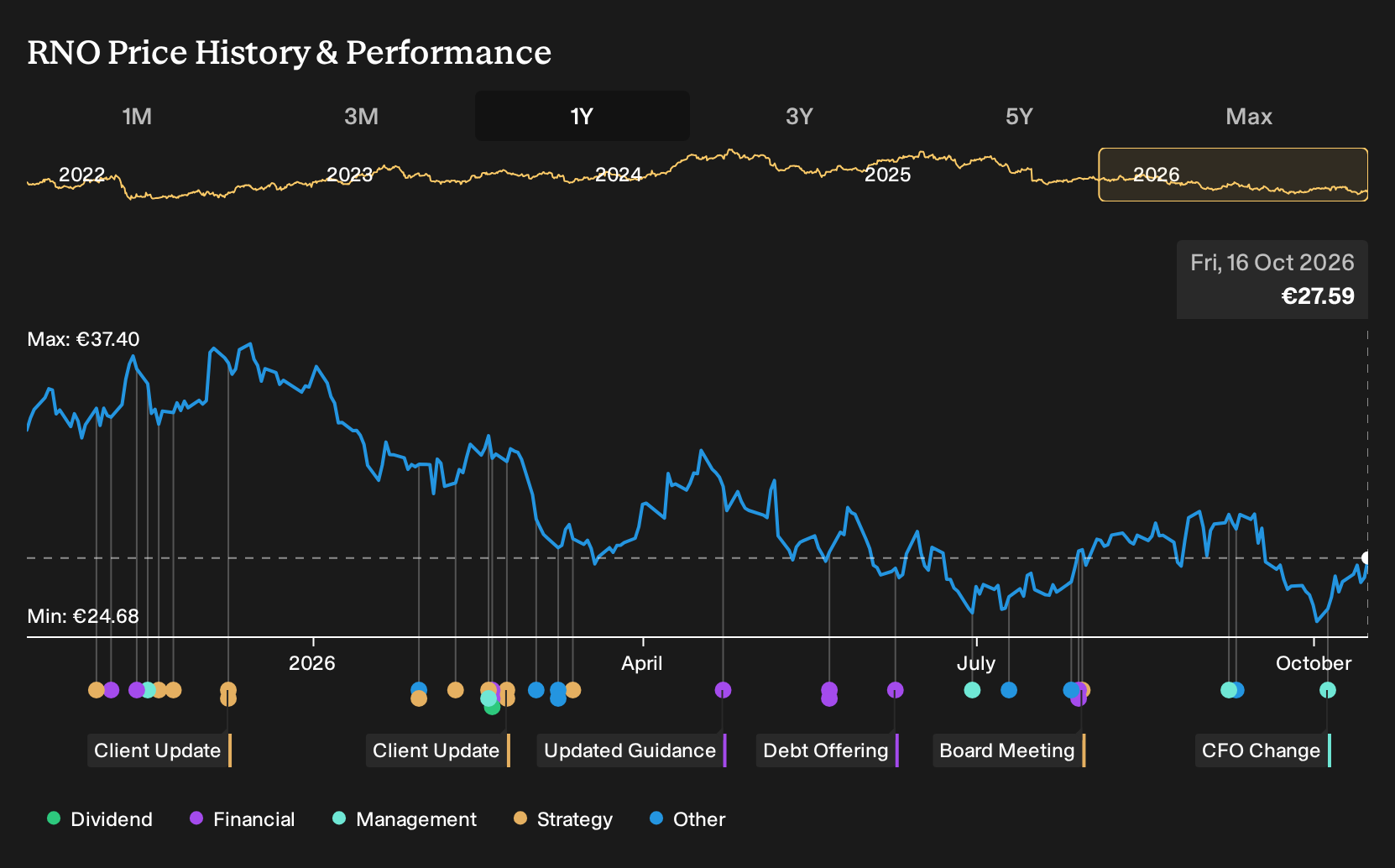
- Renault Group appointed Carine Damois as Chief Financial Officer, effective 14 November 2026, replacing outgoing CFO Duncan Minto and placing her directly under CEO François Provost.
- Damois brings more than 20 years of experience across treasury, risk management, tax, consolidation, sustainable finance and large scale organizational transformation, which directly relates to Renault's focus on execution, cost discipline and operational agility.
- This article now explores how Renault's investment narrative could be influenced by the appointment of Carine Damois as its new Chief Financial Officer.
Scan how Renault’s leadership shake-up compares with other financially disciplined businesses by running your next ideas through our curated list of list of solid balance sheet and fundamentals (205 results).
Renault Investment Narrative Recap
To own Renault, you need to believe the group can turn its product push in EVs and hybrids, its Ampere cost program and its partnerships into steadier earnings, even while revenue growth expectations sit at a modest 2.3% a year. In the near term, the key swing factor remains execution on margins, given recent profitability rests on a backdrop of past one-off hits.
The biggest operational risk still lies in cash generation and regulatory pressure. Debt is not well covered by operating cash flow, and EV incentives to meet CAFE rules can squeeze profitability. Carine Damois’ arrival appears to represent continuity in financial discipline rather than a clear near-term catalyst for change.
With no fresh operational announcements tied directly to this CFO change, the most relevant context is Renault’s existing plan to cut development time and costs through the Ampere initiative. That program aims to support quicker EV model cycles and leaner spending. This is particularly important when revenue growth forecasts are relatively low compared with earnings expectations of 16.2% a year.
Viewed through that lens, a finance chief with experience in digital transformation and large, international footprints may matter most in how effectively Renault delivers those planned efficiencies and manages the balance sheet while it relies on higher-risk funding. For investors, the key question is whether execution on Ampere and partnerships can offset currency exposure, regulatory costs and any ongoing noise from associates such as Nissan.
What The New CFO Means For Renault’s Targets
Renault's narrative projects €62.6b revenue and €2.0b earnings by 2029. This assumes 2.6% yearly revenue growth and an earnings swing of about €12.9b from a loss of €10.9b today.
Uncover why Renault's fair value indicates a 40% potential upside to its current price, which could narrow quickly.
Exploring Other Perspectives
One bullish twist you might want to explore is how some analysts were already leaning hard into Renault’s cost efficiency story. Before this CFO news, the most optimistic forecasts were built on revenue reaching €69.8b and earnings of €2.3b by 2029, versus consensus at €62.6b and €2.0b. That gap shows how much opinions differ and why this leadership change could shift those narratives in either direction once analysts update their models.
Explore 3 other Renault fair value estimates, including one that suggests there could be as much as 110% upside from the current price!
The Verdict Is Yours
Disagree with existing narratives? Extraordinary investment returns rarely come from following the herd, so go with your instincts.
- A great starting point for your Renault research is our analysis highlighting 4 key rewards and 3 important warning signs that could impact your investment decision.
- See our latest analysis for Renault. The report includes a comprehensive fundamental analysis summarized in a single visual, the Snowflake, making it easy to evaluate Renault's overall financial health at a glance.
Looking For More Investment Ideas Beyond Renault?
Once you have a view on Renault, it can help to compare it with other listed businesses that fit different risk and return profiles using the Simply Wall St Screener.
- If you want potential mispricing alongside quality fundamentals, scan a curated set of 191 high quality undervalued stocks and see how they stack up against your Renault thesis.
- For investors who prioritise resilience and balance sheet strength, filter for companies in the 234 resilient stocks with low risk scores and compare their profiles with Renault’s risk mix.
- When you are searching for lesser known opportunities with solid numbers, broaden your watchlist with a focused group of 617 high quality undiscovered gems.
This article by Simply Wall St is general in nature. We provide commentary based on historical data and analyst forecasts only using an unbiased methodology and our articles are not intended to be financial advice. It does not constitute a recommendation to buy or sell any stock, and does not take account of your objectives, or your financial situation. We aim to bring you long-term focused analysis driven by fundamental data. Note that our analysis may not factor in the latest price-sensitive company announcements or qualitative material. Simply Wall St has no position in any stocks mentioned.
Have feedback on this article? Concerned about the content? Get in touch with us directly. Alternatively, email editorial-team@simplywallst.com