


Microsoft (MSFT) Secures 1,100 MW Indiana Power Deal
- Microsoft (NasdaqGS:MSFT) agreed a 20-year, 1,100 MW power deal with NiSource to serve its planned Indiana data center campus.
- UK regulators are weighing whether to give Microsoft's business software a strategic market status that would increase ongoing scrutiny of its services.
- Microsoft and other large tech groups are preparing for expanded US congressional investigations into corporate ties with government agencies.
- The 1,100 MW Indiana power deal, possible UK strategic market status and new US probes are only one slice of Microsoft's story. Take a look at 1 warning sign we have identified for Microsoft.
For a broader view on how AI build outs are reshaping power and compute demand, explore the wider set at 55 AI infrastructure stocks.
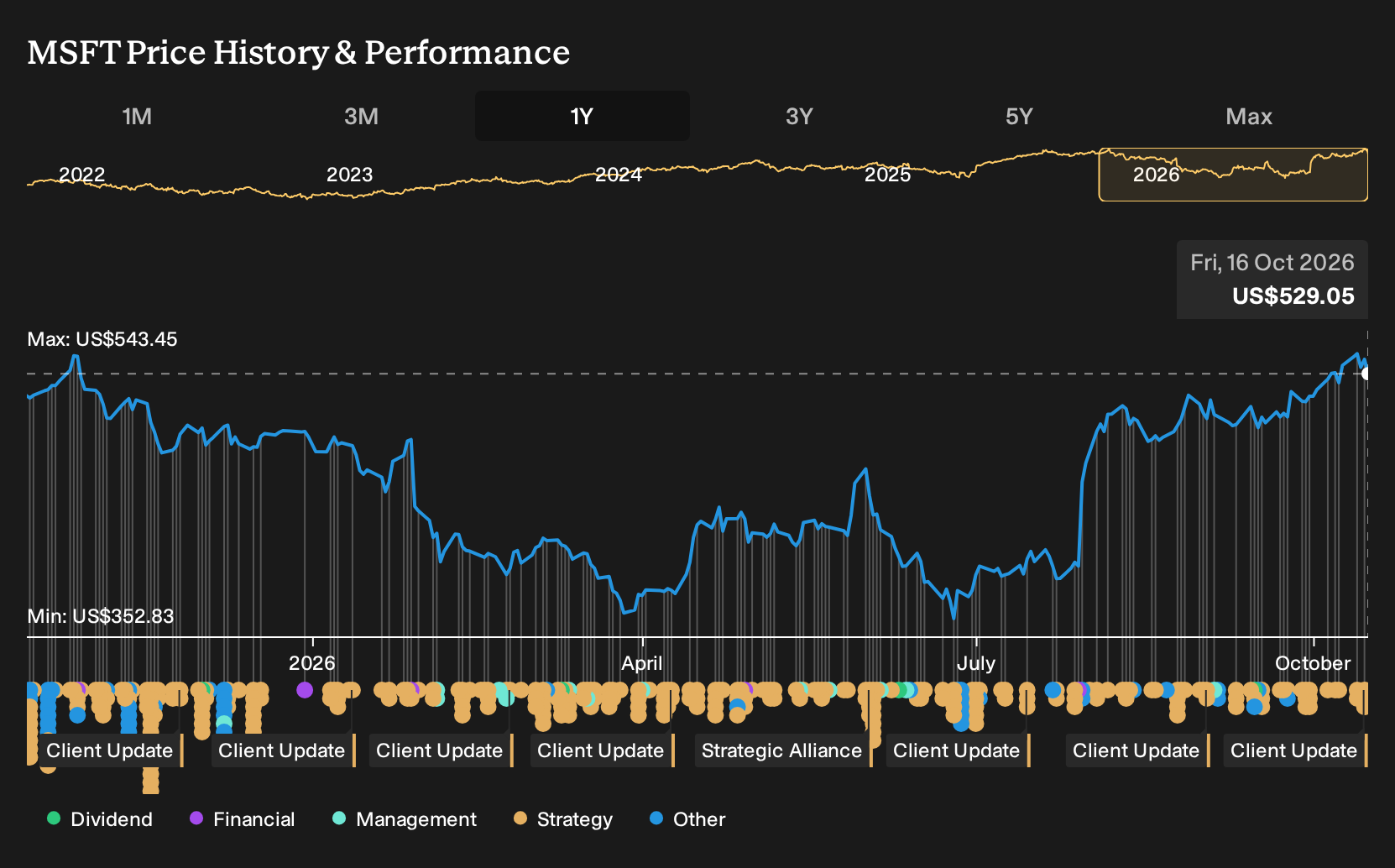
Microsoft runs a global software and cloud platform that underpins many corporate IT systems. As a result, long term power sourcing for data centers and closer scrutiny of its business tools both sit right on the fault line between its infrastructure ambitions and how regulators want that influence managed.
See how Microsoft's balance sheet measures up.
How does a 1,100 MW, 20 year NiSource power deal matter financially for Microsoft?
The NiSource agreement locks in a large block of electricity for an Indiana data center hub through 2048, which supports Microsoft’s heavy AI and cloud capex plan. Long term contracts like this can give more predictable operating costs for power intensive Azure workloads, while also committing the group to significant fixed infrastructure usage over time.
Does this change the Microsoft Narrative on AI capex, margins and regulation?
The UK strategic market review and new US political scrutiny both point directly at the Narrative risk that regulation could raise effective costs for AI infrastructure and cloud contracts. Extra oversight on business software and government ties adds to existing concerns about tax treatment and data center obligations when investors judge whether US$175b to US$190b of planned 2026 capex can be comfortably supported.
See how these catalysts shape Microsoft's path to a $579 fair value.
What should investors watch next from Microsoft around these developments?
The key signposts are any formal UK decision on strategic market status for Microsoft’s business software and the first public timetable for US congressional hearings into tech government relationships. Alongside that, details on when the 1,100 MW Indiana supply starts feeding live data centers will show how quickly those long dated power commitments turn into operational spend.
One big Microsoft question this article has not touched
Everything here has focused on what Microsoft is doing, not what the whole enterprise might reasonably be worth if you only follow the cash coming in and out. Find out exactly what Microsoft is worth today based on its cash flows.
This article by Simply Wall St is general in nature. We provide commentary based on historical data and analyst forecasts only using an unbiased methodology and our articles are not intended to be financial advice. It does not constitute a recommendation to buy or sell any stock, and does not take account of your objectives, or your financial situation. We aim to bring you long-term focused analysis driven by fundamental data. Note that our analysis may not factor in the latest price-sensitive company announcements or qualitative material. Simply Wall St has no position in any stocks mentioned.
Have feedback on this article? Concerned about the content? Get in touch with us directly. Alternatively, email editorial-team@simplywallst.com