


Cathie Wood Is Avoiding Micron. Micron Bulls Might Want to Celebrate
Cathie Wood isn’t buying the memory chip boom. Speaking to investors in Hong Kong on October 13, the ARK Invest CEO said her firm avoids traditional memory makers. Her reason is the same one most memory skeptics give: prices can collapse when supply outruns demand. “The trend is up, but the cycles are vicious,” she said.
Her bigger concern, though, is China. She warned that a few more Chinese competitors could make those price swings even worse. Her comments came as Micron Technology's (MU) stock was already sliding with a broader chip selloff.
Micron Has Already Planned for This
Wood’s concern is fair. Memory has a long history of booms followed by painful price crashes. China’s CXMT is also expanding, and some Chinese AI chipmakers are already testing its high-bandwidth memory. I’ve written before about how China’s memory push is a worry for Sandisk (SNDK) investors, but I think Micron is better protected this time. For one, it’s more diversified than Sandisk. More importantly, on its September 30 earnings call, Micron said it has signed 26 long-term agreements with customers, covering more than 35% of its revenue through 2030. Those deals include about $150 billion in contracted future revenue, and customers have already committed $32 billion, mostly as cash deposits. CFO Mark Murphy added that even at the contracts’ lowest prices, Micron expects margins above any past peak. That won’t end the cycle, but it puts a floor under it. As I covered earlier, the key question for Micron’s stock is whether investors stop treating it as a typical cyclical company. Contracts like these are what could make that happen.
About Micron Stock
Micron makes memory and storage chips for data centers, PCs, smartphones, and cars, including the high-bandwidth memory used in AI processors. Its long-term contracts with major customers set it apart from past memory cycles, a key point in the debate around Wood’s warning. Founded in 1978, the company is headquartered in Boise, Idaho.
Micron’s stock is up about 195% so far this year, far ahead of the 64% gain for the iShares Semiconductor ETF (SOXX). Soaring demand for AI memory sent shares to an all-time high of $1,255 in late June. Since then, the stock has pulled back roughly 26%, as chip stocks sold off and worries about Chinese competition grew.
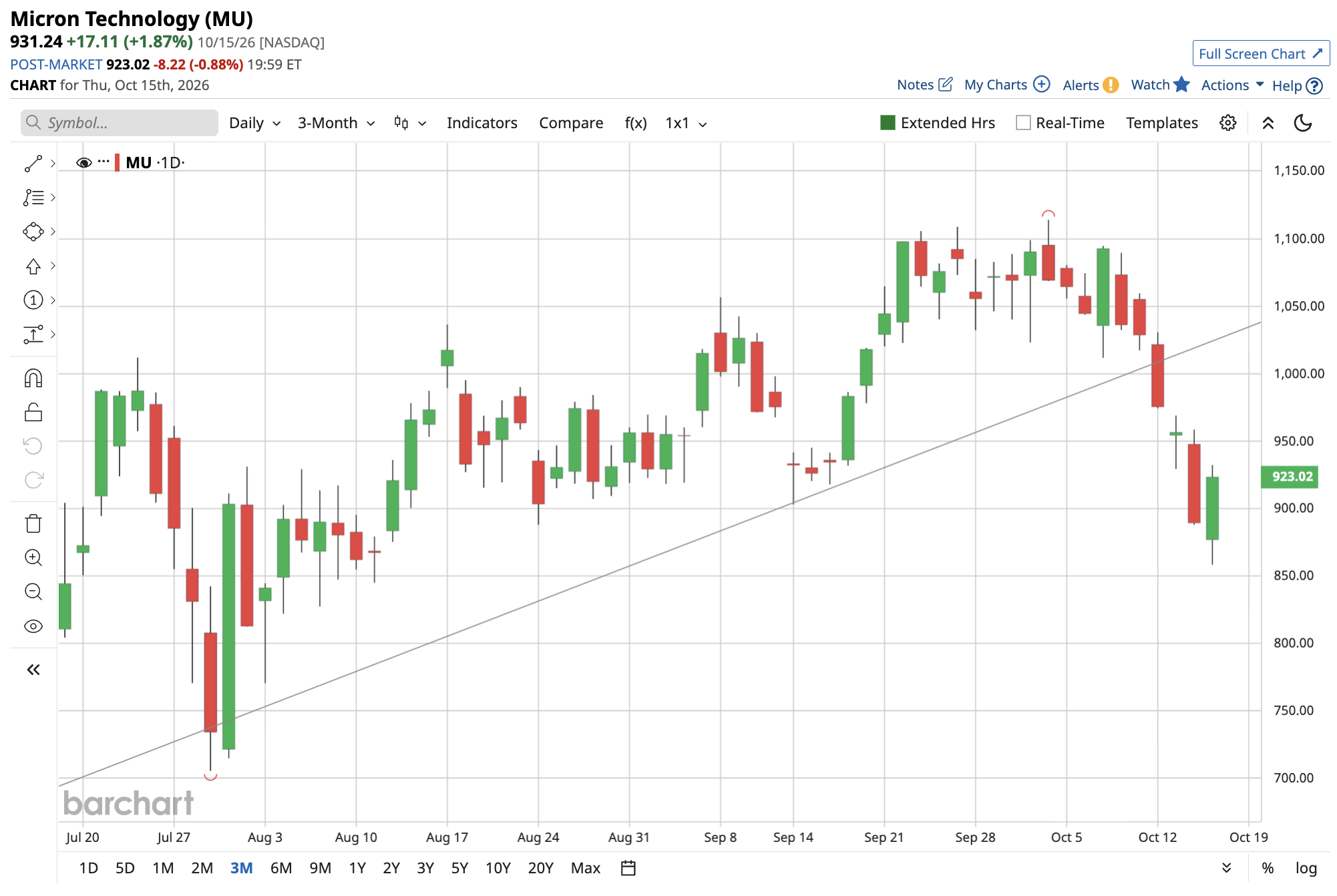
Micron’s valuation shows how much doubt investors already have. The forward non-GAAP P/E of 5.41x sits about 93% below its five-year average of 74.25x. That average is slightly misleading, though, as it is inflated by downturn years when profits were thin. The forward price-to-sales ratio of 3.92x is about 6% under its average. Analysts expect EPS to jump about 133% this fiscal year and 17% the next, then slip and fall about 32% by fiscal 2030. So Wall Street’s own forecasts already include the kind of downturn Wood is warning about. The balance sheet is strong. Micron holds about $38 billion more cash than debt. For investors, at around 5x earnings, much of the cycle risk already looks priced in.
Micron Expects Another Record Quarter
Micron reported its fourth-quarter fiscal 2026 results on September 30. Revenue jumped 379% year-over-year to a record $54.2 billion, its sixth straight record quarter. That was also up 31% from the previous quarter. EPS came in at $32.87, and full-year revenue reached $133.2 billion. Even so, shares slipped after the report, as investors weighed the company’s heavy spending plans.
For the first quarter of fiscal 2027, Micron expects revenue of about $61.5 billion and EPS of about $38.15, give or take $1. That would mark yet another record. Management also plans about $25 billion in capital spending in the first half of fiscal 2027 alone as it adds capacity to meet demand.
What Do Analysts Expect for Micron Stock?
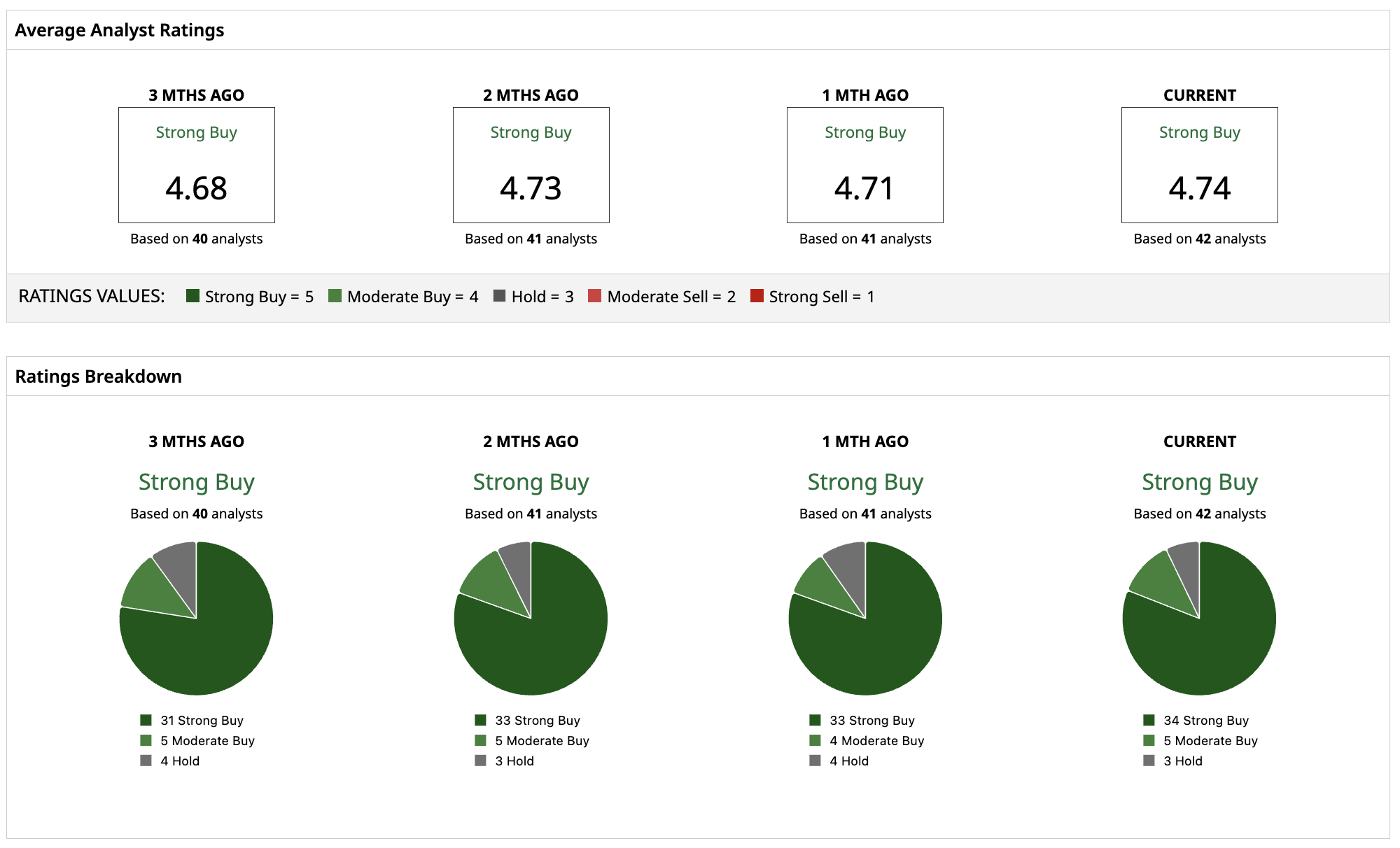
Based on 42 Wall Street analysts, Micron holds a “Strong Buy” rating with a mean price target of $1,563.22, indicating a healthy upside of 68%. So while skeptics like Wood worry that the memory boom won’t last, Wall Street still sees plenty of room for the stock to climb.
On the date of publication, Jabran Kundi did not have (either directly or indirectly) positions in any of the securities mentioned in this article. All information and data in this article is solely for informational purposes. For more information please view the Barchart Disclosure Policy here.