


3 Western Defense Stocks Retail Investors Are Watching As Aerospace Demand Builds
Western defense and aerospace stocks sit at the crossroads of politics, security, and energy, and this week that intersection looks unusually busy. Diplomatic strain between the US and UK, fresh questions over Ukraine support, and shifting Russian fuel flows are all reshaping risk and potential reward. This article walks through three stocks exposed to these headlines and explains where the current mix of demand, uncertainty, and defense spending could create opportunity or justify caution.
The stocks covered below are just a starting sample, and the full Western defense and aerospace screen surfaced 45 more listed companies with equally compelling narratives that are not covered here. To get straight to the broader opportunity set, analyze and filter potential high-conviction ideas directly in the Western Defense & Aerospace Stocks screener.
Safran (ENXTPA:SAF)
Overview: Safran is a global aerospace and defense group that supplies aircraft engines, equipment, and cabin interiors for civil and military fleets.
Operations: Safran generates most revenue from Propulsion at €17.3b and Equipment & Defense at €13.5b, with Aircraft Interiors contributing €3.3b.
Market Cap: €131.4b
Safran matters in this Western defense and aerospace screen because it links European defense electronics with global commercial aviation, giving you exposure to both sides of the security story.
"Rising global air travel and defense spending, paired with strategic acquisitions, are boosting Safran's growth, diversifying revenue, and increasing earnings stability."
The real swing factor is how one unresolved supply chain pressure feeds through to future pricing power and long term margin resilience.
That supply chain wildcard is exactly what the full narrative for Safran unpacks, separating short term friction from the areas where Safran’s earnings power could be quietly decoupling.

Arxis (ARXS)
Overview: Arxis designs and manufactures electronic and mechanical components that sit inside mission-critical U.S. defense, space, and commercial aerospace systems.
Operations: Arxis generates around US$773 million from Electronic Components and about US$997 million from Mechanical Components, with both feeding defense and aerospace demand.
Market Cap: US$23.2b
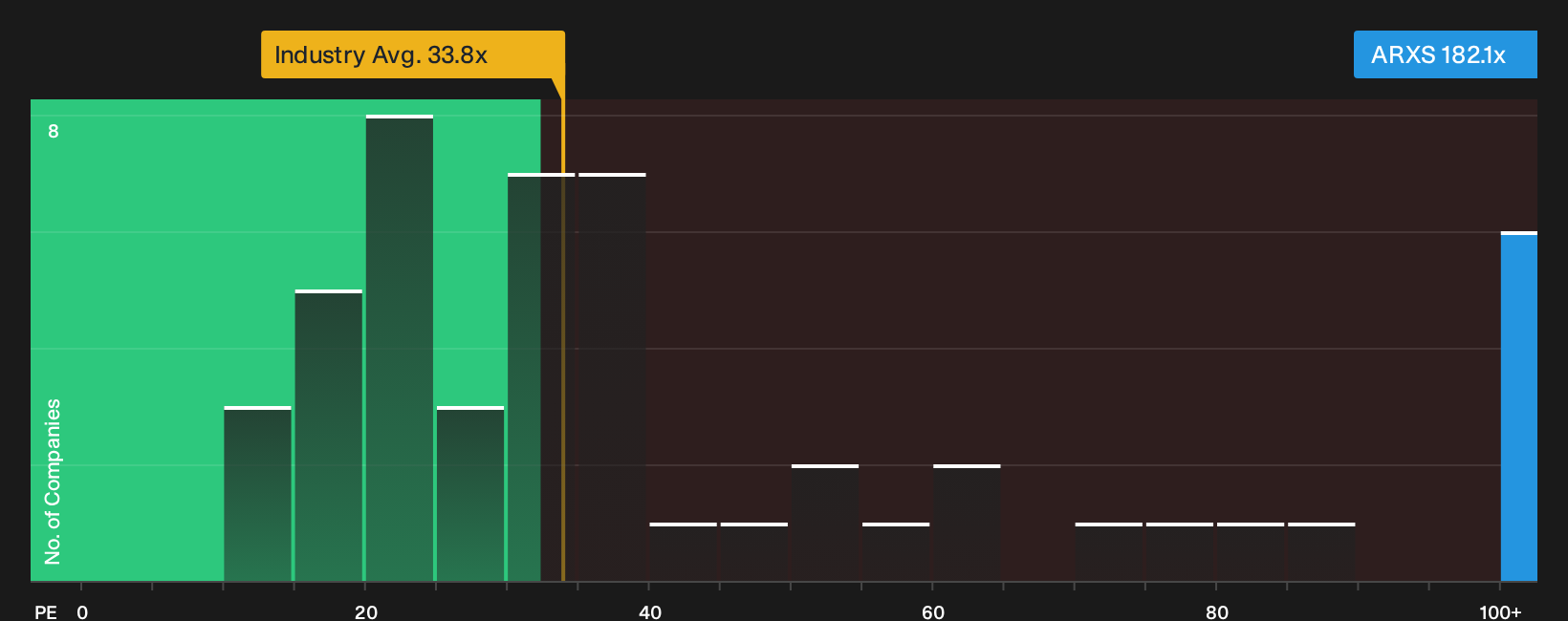
Arxis fits this Western defense and aerospace screen as a U.S. component supplier that feeds radar, missile, and space platforms rather than selling finished systems. This positioning helps tie its outlook to long-lived defense programs, as well as index inclusion and guided revenue of up to US$1.98b, depending on how one unseen pressure in the supply chain and funding mix plays out.
That hidden pressure is exactly where many investors get blindsided, so stress test your thesis against the 2 key rewards and 1 important warning sign before Arxis sentiment moves again.
DPC Holdings (DPC)
Overview: DPC Holdings manufactures precision cast engine components and nickel and cobalt superalloys for aerospace, defense propulsion, industrial gas turbines, and turbochargers.
Operations: DPC Holdings derives about $451 million from Europe, $326 million from North America, and $184 million from Turbo Wheels, serving global propulsion markets.
Market Cap: $4.7b
DPC Holdings plugs directly into the Western Defense & Aerospace Stocks theme because its metal components sit inside engines that power allied aircraft and potentially missile platforms. As a result, any shift in long term propulsion demand quickly matters for this supplier.
"Long-term growth in global passenger air travel, large aircraft backlogs with major OEMs and aging engine fleets are expected to support demand for aerospace engine structural castings and airfoils."
The crux for DPC Holdings is what happens to pricing and margins if a single capacity and funding assumption breaks under that demand.
If that core assumption breaks or accelerates, the full narrative for DPC Holdings shows how DPC Holdings' pricing power, contract mix, and capacity bets could quietly reshape the story.

Seeking Fresh Alternatives Before They Fly
New themes are building momentum while most investors stay focused on yesterday's headlines. Spot fresh ideas that are still under the radar, before prices start breaking away, and consider acting while they remain less widely followed.
- Target reliable income first, then use the 214 dividend fortresses to spot high-yield candidates before broader yield interest potentially increases competition.
- Look for durable balance sheets and robust fundamentals through the list of solid balance sheet and fundamentals (203 results) while it still highlights under-owned companies.
- Review real earnings momentum by checking the 38 profitable AI stocks that aren't just burning cash to analyze profitable AI leaders alongside more speculative peers.
This article by Simply Wall St is general in nature. We provide commentary based on historical data and analyst forecasts only using an unbiased methodology and our articles are not intended to be financial advice. It does not constitute a recommendation to buy or sell any stock, and does not take account of your objectives, or your financial situation. We aim to bring you long-term focused analysis driven by fundamental data. Note that our analysis may not factor in the latest price-sensitive company announcements or qualitative material. Simply Wall St has no position in any stocks mentioned.
Have feedback on this article? Concerned about the content? Get in touch with us directly. Alternatively, email editorial-team@simplywallst.com