


Should App And Starbucks Push Require Action From Target (TGT) Investors?
- Target expanded its myDay store operations app and, alongside Starbucks, introduced a limited-time Cake Pop drinkware collection inside in-store cafés. Both initiatives aim to streamline store tasks and draw guests into its physical locations.
- The push to save more than 2 million labor hours annually through myDay, along with deepening in-store partnerships, signals management’s focus on execution, service quality, and in-store engagement during an operational reset.
- This article will examine how Target’s investment narrative is influenced by the myDay efficiency initiative and the deeper in-store Starbucks collaboration.
Target Investment Narrative Recap
To own Target, an investor needs to believe the merchandising reset, store operations upgrades and brand partnerships can keep traffic and digital engagement healthy while home and apparel recover from softer trends. In the near term, the key swing factor remains execution in those higher margin discretionary categories. The Simply Shabby Chic relaunch fits that need but does not change the story by itself.
The biggest operational risk still sits in reputational issues and any fading in traffic or digital comps. News around the shoplifting incident involving a police officer intersects more with store security optics than fundamentals, so it appears immaterial unless it feeds a broader perception problem.
The Simply Shabby Chic return matters most for Target because it lands exactly where current risks sit. Home and soft home are still under pressure versus 2024 levels. A recognizable label in bedding and decor gives the retailer more tools within the ongoing merchandising reset that is concentrating capital into priority categories for families.
This launch also connects to catalysts investors already track. Management is emphasizing accessible price points, curated aesthetics and mix and match assortments while rolling out store remodels, myDay productivity tools and deeper Starbucks partnerships. The thesis rests on whether these moves together can support steady comps and prevent high margin categories from becoming a drag.
Target myDay Efficiency Push Inside the Investment Story
Target's narrative projects US$119.1b revenue and US$4.6b earnings by 2029. This leans on 3.4% yearly revenue growth and about US$0.2b earnings increase from US$4.4b today.
myDay is the connective tissue between that outlook and what happens on the sales floor. Management is trying to squeeze more productive hours out of existing payroll so teams can spend less time on rote checklist work and more time focusing on shelf availability, presentation and service. The goal to save more than 2 million labor hours a year sets a clear hurdle that readers can compare against future store productivity commentary.
Think of that time savings as a buffer. If traffic in home and apparel is choppy, stores that can reallocate hours toward guest facing work, item location and pickup speed have more room to protect conversion and basket size without simply adding more payroll. If those operational gains do not show up in cleaner in stocks or faster service, the earnings path implied by analysts becomes harder to line up with what guests actually experience day to day.
The efficiency push also interacts directly with analyst assumptions on profitability. Consensus expects profit margins to move from 4.1% today to 3.8% in three years while earnings step from US$4.4b to US$4.6b by 2029. That gap means myDay is not a free margin tailwind that solves everything. It is more of a tool that might soften pressure from mix shifts, shrink, wage inflation or price investments rather than an automatic lift.
For readers, the key lens is simple. If future updates show myDay driving measurable gains in task completion, order pick times and guest satisfaction without repeated spikes in store level expense, then the operational reset looks aligned with the consensus path to US$4.6b in earnings. If, instead, the app becomes one more workflow layer that teams struggle to adopt or that requires constant retraining, then the forecast improvement in profits could start to look more demanding relative to what stores can actually deliver.
Uncover why Target's fair value indicates a 5% potential upside to its current price, which could narrow quickly.
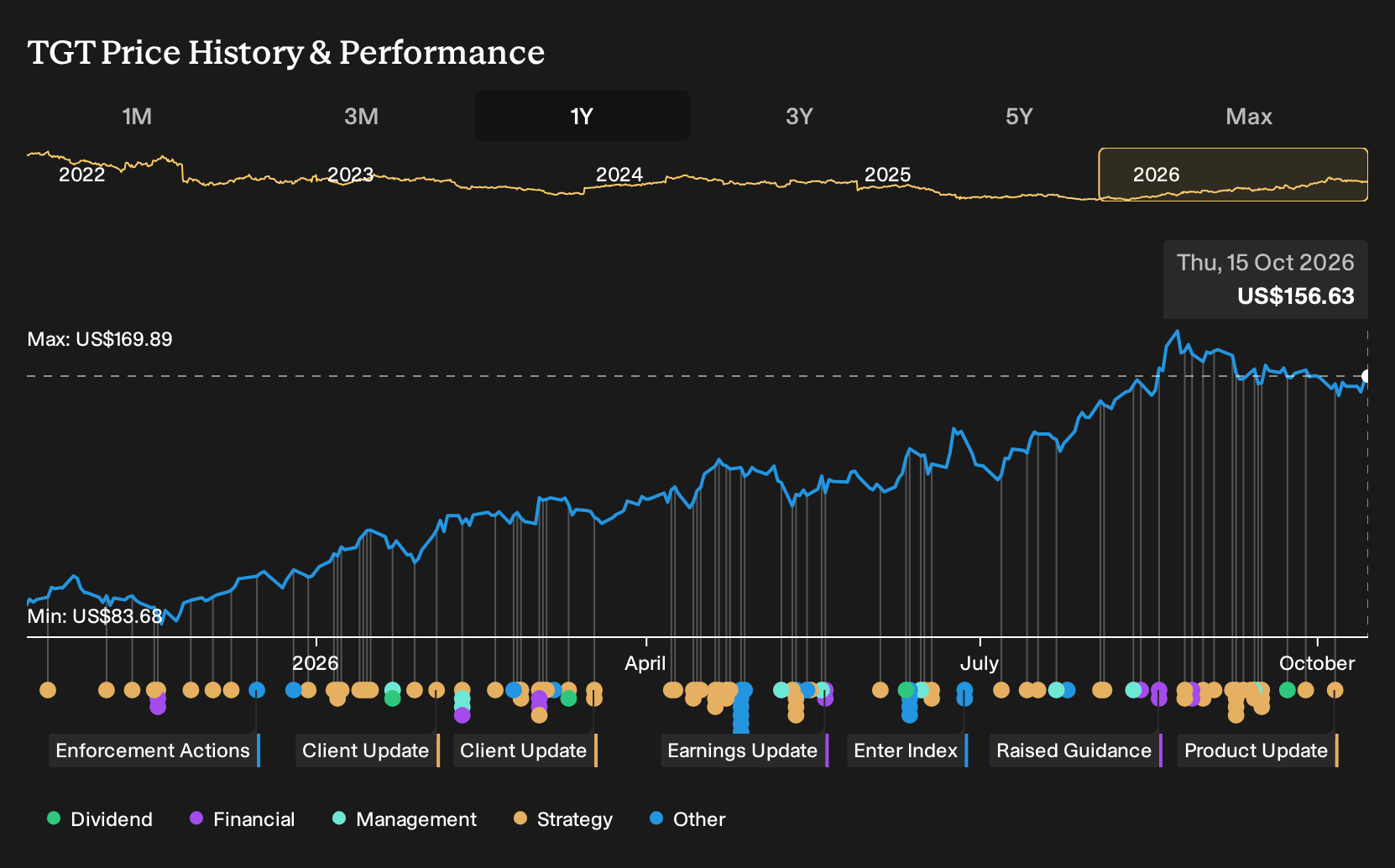
Exploring Other Perspectives
Bullish analysts frame Target’s biggest catalyst as faster AI and store driven revenue gains. They were penciling in about US$122.6b of revenue and US$4.9b in earnings by 2029, compared with the US$119.1b and US$4.6b consensus view. Both camps formed those expectations before this news, so you may see those stories evolve.
Explore 3 other Target fair value estimates, including one that suggests as much as 42% upside from the current price.
Decide For Yourself
Don't just follow the ticker. Dig into the data and build a conviction that's truly your own.
- A great starting point for your Target research is our analysis highlighting 4 key rewards and 2 important warning signs that could impact your investment decision.
- See our latest analysis for Target. The report includes a comprehensive fundamental analysis summarized in a single visual, the Snowflake, making it easy to evaluate Target's overall financial health at a glance.
Looking for more Target sized investment ideas?
If Target's story has you thinking about what else might fit your portfolio, use the Simply Wall St Screener to quickly narrow the universe to a few focused shortlists that match your priorities.
- If resilience matters most to you, start with a shortlist of companies screened for balance sheet strength and solid fundamentals by reviewing the list of solid balance sheet and fundamentals (25 results).
- If value is your priority, scan for stocks that combine quality metrics with attractive pricing by checking out the 33 high quality undervalued stocks.
- If you want to keep risk in tighter bounds, focus on businesses with more resilient profiles and lower risk scores by assessing the 32 resilient stocks with low risk scores.
This article by Simply Wall St is general in nature. We provide commentary based on historical data and analyst forecasts only using an unbiased methodology and our articles are not intended to be financial advice. It does not constitute a recommendation to buy or sell any stock, and does not take account of your objectives, or your financial situation. We aim to bring you long-term focused analysis driven by fundamental data. Note that our analysis may not factor in the latest price-sensitive company announcements or qualitative material. Simply Wall St has no position in any stocks mentioned.
Have feedback on this article? Concerned about the content? Get in touch with us directly. Alternatively, email editorial-team@simplywallst.com