


Nike Stock Rises On Rotation Into Consumer Stocks Over Tech
- Nike is contending with falling revenue, weakness in Greater China and pressure on margins, even as it trims costs under the Pace plan.
- At the same time, the brand is expanding loyalty touchpoints through Tesco’s Clubcard and gaining share in the sneaker resale market, highlighting a tension between brand strength and softer primary sales.
- We will examine how Nike's investment narrative is influenced by investors rotating toward consumer stocks despite ongoing revenue and margin pressures.
NIKE Investment Narrative Recap
To own Nike here, you need to believe the brand can turn falling revenue and margin pressure into a cleaner, more profitable mix over time. The near term story is still about stabilising core lines in North America and Greater China while the Pace cost program works through the system without eroding product quality or demand.
The key short term catalyst is evidence that revenue declines, including the 4% year on year drop and 22% fall in Greater China, start to moderate. The biggest risk is that weakness in Sportswear and Jordan drags on longer, making the expected FY27 high single digit revenue decline and sharper EBIT contraction tougher to absorb.
The Tesco Clubcard expansion is one of the most relevant updates for this setup. By plugging Nike into a loyalty program that reaches shoppers across more than 500 retailers, the group gains a new touchpoint for everyday engagement while it works to clean up its own digital and wholesale channels.
For catalysts, this partnership matters if it supports full price sell through and helps offset softness in primary sales, including Jordan revenue pressure, without forcing heavier discounting. The risk is that greater exposure to third party loyalty ecosystems complicates Nike Digital repositioning or dilutes the premium feel that management wants as it restructures the marketplace.
NIKE Consensus Set Up In Numbers
NIKE's narrative projects US$46.0b revenue and US$3.5b earnings by 2029. This assumes revenue stays broadly flat over the next three years and implies an earnings increase of about US$0.4b from current earnings of US$3.1b.
Analysts are effectively asking you to weigh a business with pressured demand today against a 2029 snapshot that pairs modest revenue expectations with slightly higher profitability. The move from US$3.1b to US$3.5b in earnings by that year lines up with assumed margin expansion from 6.7% to 7.6%, rather than a big top line swing.
On this setup, the story is less about NIKE chasing aggressive growth and more about extracting more profit from roughly the same revenue base. That helps explain why the average analyst target implies a P/E multiple of 21.2x on those projected earnings compared with about 17.0x on current earnings.
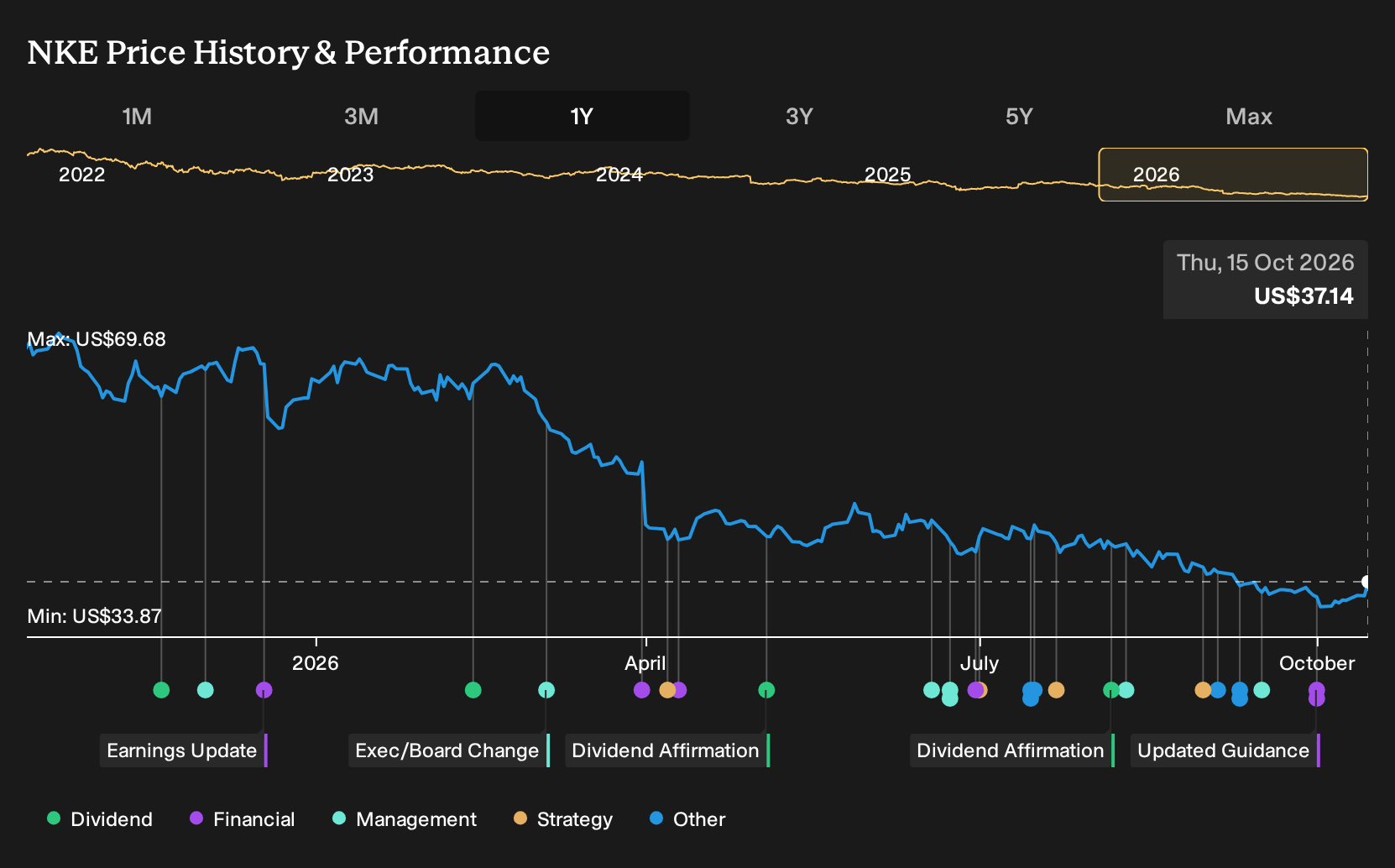
Uncover why NIKE's fair value indicates a value roughly in line with its current price.
Exploring Other Perspectives
Some of the most optimistic analysts frame the Tesco Clubcard move as the catalyst that could help Nike reignite top line momentum, with their pre news models pointing to revenue of about US$51.0b and earnings of US$5.7b by 2029. That is far above the consensus US$46.0b and US$3.5b view. These forecasts were set before the recent loyalty and resale headlines, so you should expect that both the cautious and bullish stories may evolve from here.
Explore 10 other NIKE fair value estimates, including one that suggests there may be as much as 30% potential upside from the current price.
Form Your Own Verdict
Disagree with existing narratives? Extraordinary investment returns rarely come from following the herd, so go with your instincts.
- A great starting point for your NIKE research is our analysis highlighting 2 key rewards and 1 important warning sign that could impact your investment decision.
- See our latest analysis for NIKE. The report includes a comprehensive fundamental analysis summarized in a single visual, the Snowflake, making it easy to evaluate NIKE's overall financial health at a glance.
Looking for more NIKE investment ideas?
Once you have a view on NIKE, it can help to line it up against other opportunities so you can see where the trade offs really sit in your portfolio.
- For investors hunting for companies with stronger balance sheets than NIKE, start with this list of solid balance sheet and fundamentals (25 results) to see which businesses pair healthy finances with resilient fundamentals.
- If capital preservation is high on your list, compare NIKE with a 32 resilient stocks with low risk scores that screens for stocks where risk scores skew lower.
- If you prefer to back earlier stage opportunities alongside established brands like NIKE and are comfortable with higher volatility, then scan through a curated 13 elite penny stocks with strong financials that already pass basic financial quality checks.
This article by Simply Wall St is general in nature. We provide commentary based on historical data and analyst forecasts only using an unbiased methodology and our articles are not intended to be financial advice. It does not constitute a recommendation to buy or sell any stock, and does not take account of your objectives, or your financial situation. We aim to bring you long-term focused analysis driven by fundamental data. Note that our analysis may not factor in the latest price-sensitive company announcements or qualitative material. Simply Wall St has no position in any stocks mentioned.
Have feedback on this article? Concerned about the content? Get in touch with us directly. Alternatively, email editorial-team@simplywallst.com